
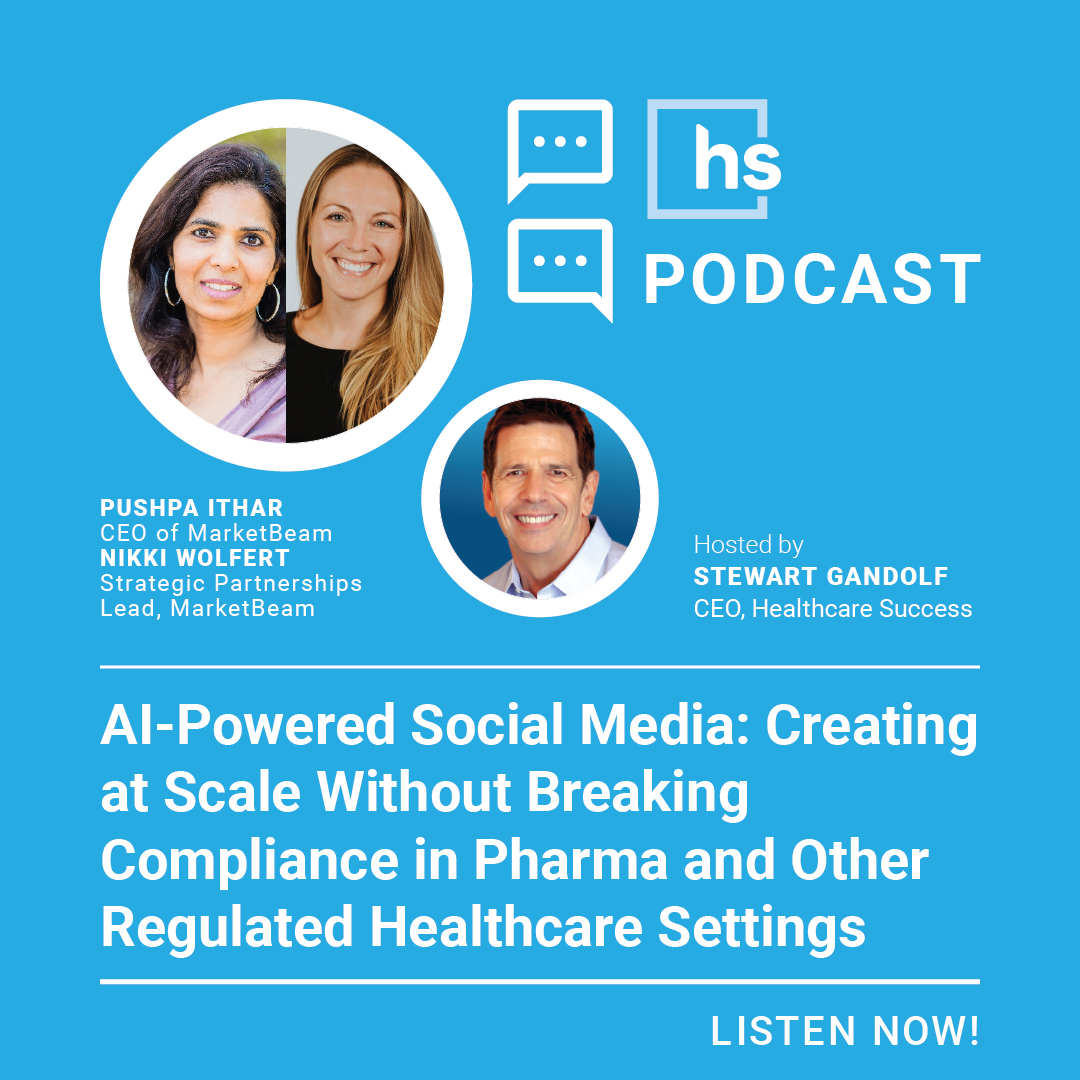
For decades, pharmaceutical marketing has operated under a paradox: the urgent need to communicate life-saving information to patients and healthcare providers (HCPs) weighed against a rigid, often glacial, regulatory review process. In the era of social media, where trends emerge and vanish in hours, the traditional “Medical, Legal, and Regulatory” (MLR) review cycle—which can often stretch to 12 weeks—has become a critical strategic bottleneck.
However, a fundamental shift is occurring in how life sciences companies approach digital engagement. The integration of AI-powered social media compliance in pharma is moving the regulatory “guardrails” from the end of the production line to the very beginning. By embedding compliance into the generative process, firms are finding they can scale their digital presence without increasing their risk profile or overwhelming their legal teams.
This evolution is not merely about producing more content; it is about changing the economics of healthcare communication. When compliance is treated as an environmental constraint rather than a final hurdle, the “expensive waiting room”—where high-quality content expires before it ever reaches the public—begins to disappear. The goal is a transition from a one-way broadcast model to a dynamic, two-way engagement that meets the expectations of a digitally native patient population.
The MLR Bottleneck: Why Speed and Compliance Often Clash
In regulated healthcare settings, every claim, image, and hashtag must be vetted to ensure it does not mislead the public or violate strict mandates regarding off-label promotion. In the United States, the FDA’s Office of Prescription Drug Promotion (OPDP) monitors these communications closely, issuing warning letters when promotional materials lack fair balance or omit critical safety information.

Historically, the workflow has been linear: a creative team drafts content, submits it to the MLR committee, receives a list of corrections, and iterates. This manual loop is increasingly unsustainable. As the volume of required digital assets grows—driven by the need for platform-specific content for TikTok, Instagram, and LinkedIn—the rate of content creation has far outpaced the rate of human review.
The result is a systemic choke point. When a simple change to a call-to-action button on a Facebook ad requires a multi-week review cycle, the marketing agility required for modern social media is lost. This lag often leads to “lukewarm” content—material that is so heavily sanitized to ensure approval that it loses its resonance and effectiveness with the target audience.
Moving Compliance Upstream: The Domain-Trained Approach
The breakthrough in scaling healthcare content lies in “upstream” compliance. Rather than using general-purpose AI to write copy and then asking a human to fix the errors, industry leaders are deploying domain-trained reasoning layers. These are AI systems specifically trained on the nuances of healthcare regulation, including label information, disease state data, and FDA warning letters from the past decade.
By feeding an AI the specific reasons why previous campaigns were rejected or why the regulator issued a warning, the system learns to anticipate the MLR committee’s objections. This allows the AI to perform automated pre-checks, reference validation, and annotation support in real-time as the content is being created.
This shift increases the “first-pass approval rate.” When the AI understands that a specific image of a child playing sports may be inappropriate for a medication treating a severe bleeding disorder like hemophilia, it flags the discrepancy before the content ever reaches the review board. This reduces the friction between creative and legal teams, transforming the MLR process from a gatekeeper into a streamlined verification step.
The AI Spectrum in Healthcare Marketing
To operationalize this at scale, healthcare organizations are utilizing four distinct types of artificial intelligence, each serving a different role in the compliance ecosystem:
- Generative AI: Used for the initial ideation, drafting baseline copy, and summarizing complex medical papers into accessible social posts.
- Predictive AI: Analyzes historical performance data and feedback loops to determine which types of compliant messaging are most likely to engage specific patient demographics.
- Agentic AI: Employs specialized “agents” to handle discrete tasks—such as one agent verifying a clinical reference while another checks the post against brand voice guidelines—working in tandem to complete a workflow.
- Industry-Trained Models: The foundational layer that incorporates regulatory frameworks (such as FDA or EMA guidelines) to ensure the AI operates within the legal boundaries of the specific jurisdiction.
The Human Element: AI as a Force Multiplier
A common concern among healthcare professionals is that AI will replace the nuanced judgment of medical writers and regulatory experts. However, in a highly regulated environment, the “human layer” remains non-negotiable. The objective is not to remove human oversight but to free experts from the mundane, repetitive tasks of reference checking and formatting.
When AI handles the operational heavy lifting, social media teams can shift their focus toward high-value strategic work, such as mapping the patient journey or refining the emotional resonance of a campaign. In med-tech and biopharma—where teams are often lean—AI acts as a force multiplier, allowing a modest team to achieve the output of a much larger agency without sacrificing quality.
AI enhances the ability to monitor social platforms for pharmacovigilance. The ability to automatically flag potential adverse events (AEs) or product quality complaints in social media comments is a critical compliance requirement that is nearly impossible to manage manually at scale.
Evaluating AI Vendors for Regulated Healthcare
For healthcare leaders evaluating new platforms to manage their social presence, the criteria must extend beyond creative capabilities. The primary focus should be on accountability and auditability. Because the legal responsibility for a post remains with the manufacturer, the AI system must provide a transparent trail of how a piece of content was generated and verified.
Key questions for vendors should include:
- How is the model trained? Does it use general web data, or is it trained on specific regulatory datasets and warning letters?
- What are the guardrails? How does the system prevent the AI from making unsubstantiated medical claims or “hallucinating” clinical data?
- Is there an audit trail? Can the system produce a report showing who created, reviewed, and approved the content for every single post?
- How is institutional knowledge captured? Can the system learn from the specific “tribal knowledge” and preferences of the company’s internal MLR board?
Key Takeaways for Healthcare Leaders
- Shift Upstream: Embed compliance guidelines into the AI creation process to increase first-pass approval rates and reduce review cycles.
- Avoid the “Waiting Room”: Use AI to ensure content is produced at a pace that matches the review capacity, preventing assets from expiring before publication.
- Focus on Domain Training: Prioritize AI tools trained on industry-specific data, including FDA/EMA guidelines and historical warning letters.
- Augment, Don’t Replace: Position AI as a tool for operational efficiency, leaving strategic oversight and empathy-driven messaging to human experts.
- Prioritize Auditability: Ensure any AI tool provides a rigorous audit trail to maintain legal accountability for all public-facing communications.
The future of pharmaceutical social media is not found in bypassing regulation, but in mastering it through technology. By integrating compliance into the very fabric of content creation, the industry can finally move toward a model of authentic, real-time engagement that respects both the law and the patient’s need for timely, accurate information.

As regulatory bodies continue to update their guidance on digital health and AI-generated content, the next critical checkpoint will be the evolving frameworks for AI transparency in medical advertising. Organizations that build these compliant systems now will be best positioned to adapt as the rules of the digital pharmacy continue to evolve.
Do you believe AI can truly replace the nuance of a human regulatory review, or will it always be a supporting tool? Share your thoughts in the comments below or join the conversation on our professional networks.