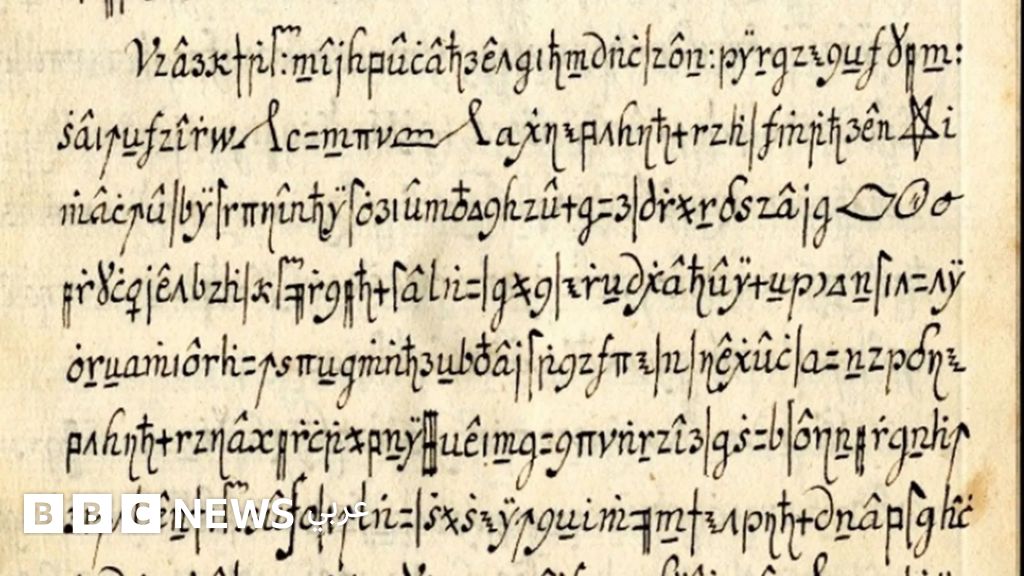
In the quiet, climate-controlled archives of Europe’s greatest libraries, thousands of parchment fragments have long remained silent, their messages obscured by time, damage, or the idiosyncrasies of medieval scribes. For centuries, historians and cryptographers have labored to decode these remnants of the past. Today, however, the landscape of paleography and historical research is undergoing a seismic shift as artificial intelligence reveals secrets of mysterious medieval texts, turning what was once a lifetime of manual labor into a process of rapid, digital discovery.
From my desk here in Sofia, I have watched the evolution of digital humanities with keen interest. The intersection of machine learning and historical inquiry is not merely a technological novelty; it is a profound expansion of our collective memory. By training sophisticated neural networks on the handwriting patterns of centuries past, researchers are now able to “read” the illegible, effectively resurrecting voices that have been lost to the decay of the Middle Ages.
The application of AI in this field—specifically through technologies like Optical Character Recognition (OCR) and Handwriting Text Recognition (HTR)—is bridging the gap between raw data and historical narrative. These systems do not simply transcribe; they analyze structural patterns, ink composition, and linguistic shifts, allowing scholars to place fragmented manuscripts into their proper geographical and temporal contexts. According to research published by the University of Oxford, these computational tools are proving instrumental in restoring damaged scrolls that were previously considered beyond salvage.
The Mechanics of Digital Paleography
To understand the magnitude of this breakthrough, one must appreciate the sheer complexity of medieval manuscripts. Unlike modern printed works, these texts were often written in varying dialects, using non-standardized abbreviations and scripts that evolved significantly between the 5th and 15th centuries. Traditionally, a researcher would spend years mastering a specific regional script, such as Carolingian minuscule or Gothic cursive, before even beginning the transcription process.
Modern AI models, particularly those leveraging deep learning architectures, approach this differently. By processing thousands of images of known manuscripts, these algorithms learn to recognize the “latent features” of a scribe’s hand. As reported by the journal Nature, researchers are now successfully applying these models to decipher scrolls from the Vesuvius Challenge, using X-ray tomography combined with machine learning to read carbonized papyri without the physical risk of unrolling them.
This development is not restricted to a single region. Across Europe, from the Vatican Apostolic Library to the British Library, institutions are digitizing their collections to feed these hungry algorithms. The result is a searchable, interconnected web of historical data that allows us to trace the movement of ideas, trade, and culture with a granularity that was previously impossible. This is the new frontier of geopolitics—understanding our history through the precision of data science.
Beyond Transcription: Contextualizing History
The true power of using artificial intelligence in historical research lies in its ability to perform cross-referencing at a scale no human team could match. When an AI identifies a fragment, it does not stop at the text; it can compare the linguistic markers against millions of other records to identify the likely origin, the school of thought, and even the potential author of the document.
For instance, the use of AI has been pivotal in the study of the “Dead Sea Scrolls” and other fragmentary collections. By analyzing the ink’s chemical signature and the parchment’s fiber, AI can help confirm whether two fragments separated by hundreds of miles in different museum collections were once part of the same scroll. This has been documented in various studies supported by the Library of Congress digital initiatives, which emphasize the importance of metadata in preserving the integrity of historical records.
What does this mean for the general public? It means that the “mysteries” of the Middle Ages are becoming less mysterious. We are moving toward a future where a student in a classroom can query a database and receive a contextualized, translated, and verified analysis of a 12th-century manuscript in seconds. This democratization of historical access is a victory for human rights and education, ensuring that our heritage is not locked away in ivory towers but is instead a living, breathing component of our modern digital existence.
Key Takeaways: AI in Historical Research
- Speed and Accuracy: AI reduces the time required for transcription from years to weeks, while maintaining high accuracy rates in recognizing historical shorthand and abbreviations.
- Non-Invasive Analysis: Technologies like X-ray tomography combined with machine learning allow researchers to read fragile or damaged texts without physical contact.
- Global Collaboration: Digital archives allow scholars from different continents to work on the same manuscript simultaneously, fostering a truly global approach to historical study.
- Data-Driven Discovery: AI can identify patterns in linguistic and paleographic data that are often invisible to the human eye, leading to new revelations about authorship and provenance.
The Ethical Dimension of Digital Restoration
As we embrace these technologies, we must remain cognizant of the ethical implications. The use of AI in history is not without its challenges. There is the risk of “algorithmic bias,” where an AI might interpret a text through the lens of the data it was trained on, potentially smoothing over unique regional variations or misinterpreting the intent of a medieval author. It is essential that these digital tools remain “human-in-the-loop” systems, where the machine provides the data, but the historian provides the interpretation.
the digitization of cultural heritage must be handled with respect for the regions of origin. As an international journalist, I have seen how the control of historical data can become a point of contention. Transparent and open-access policies for these digital archives are vital to ensuring that the history of all nations is treated with equal rigor and respect.
The next major checkpoint for this field will be the International Congress on Medieval Studies, where researchers are expected to present new findings on the integration of generative AI in identifying previously unknown scribal hands. As these technologies continue to mature, we can expect a steady stream of updates regarding the recovery of lost texts, particularly those from the early medieval period which remain the most fragmented.
The intersection of the ancient and the digital is a testament to human ingenuity. We are not just using machines to read the past; we are using them to ensure that the wisdom, failures, and triumphs of our ancestors remain a permanent part of our future. I invite you to share your thoughts on the role of technology in preserving our shared heritage—does the use of AI change the way you perceive the “authenticity” of historical discovery? Let us keep the conversation going in the comments below.