
The rapid integration of generative artificial intelligence into corporate networks has fundamentally altered the cybersecurity landscape, creating an accelerated cycle of innovation for both defensive teams and malicious actors. While AI-powered tools offer organizations the ability to automate threat detection and respond to breaches in real time, these same models provide hackers with the capability to generate sophisticated phishing campaigns, automate vulnerability discovery, and craft highly convincing social engineering attacks at scale.
According to the Cybersecurity and Infrastructure Security Agency (CISA), the primary threat stems from the lowered barrier to entry for cybercriminals. Where historically complex attacks required significant technical expertise, modern large language models (LLMs) can now assist individuals with limited coding knowledge in writing malicious scripts or translating malware into different programming languages. This shift has forced security operations centers to move beyond traditional, signature-based defense mechanisms toward more adaptive, behavioral-based detection strategies.
The Mechanics of AI-Driven Attacks
The most immediate risk organizations face involves the use of AI to enhance social engineering. Historically, phishing emails were often identifiable by grammatical errors or awkward phrasing. Today, generative AI allows attackers to produce perfectly localized, context-aware communications that mimic the tone and style of internal corporate leadership. As noted in the 2023 Threat Landscape report from the European Union Agency for Cybersecurity (ENISA), the ability of AI to synthesize vast amounts of publicly available data allows for “spear-phishing” on an industrial scale, making it increasingly difficult for employees to distinguish between legitimate requests and fraudulent attempts to harvest credentials.
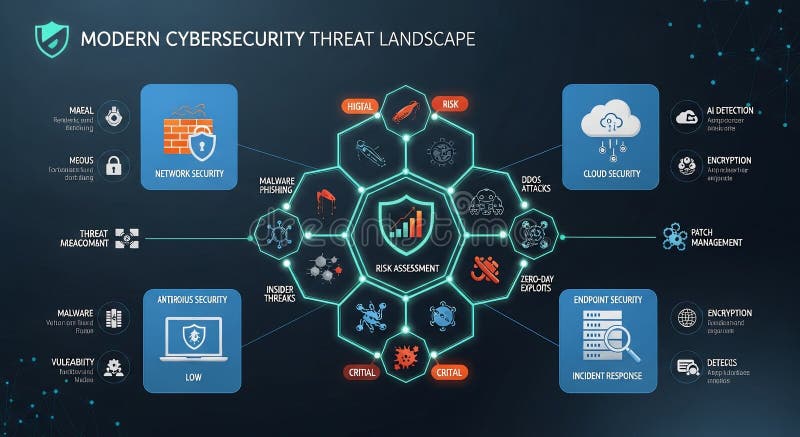
Beyond human-centric attacks, AI is being utilized to identify vulnerabilities in software code. By analyzing open-source repositories or proprietary codebases, attackers can use AI models to detect “zero-day” vulnerabilities—flaws that have not yet been patched by developers. The United Kingdom’s National Cyber Security Centre (NCSC) has cautioned that as AI systems become more autonomous, the speed at which these vulnerabilities can be weaponized will likely outpace the human capacity to issue and deploy security patches.
Defensive Innovation and the Cat-and-Mouse Game
The cybersecurity industry is responding to these threats by deploying its own AI-driven defensive layers. Modern Security Information and Event Management (SIEM) platforms now incorporate machine learning to establish “baselines” for normal network activity. When an AI-driven attack deviates from these patterns—such as an unusual volume of data exfiltration or an unauthorized attempt to access administrative credentials—the system can automatically quarantine the affected endpoint.
However, this creates a perpetual game of “cat-and-mouse.” As defenders implement new AI models to identify malicious traffic, attackers are beginning to experiment with “adversarial machine learning.” This involves intentionally feeding biased or corrupted data into defensive AI systems to “poison” their training sets, essentially teaching the security software to ignore specific types of malicious activity. The National Institute of Standards and Technology (NIST) AI Risk Management Framework emphasizes that organizations must prioritize the integrity of their training data to prevent these types of subversions, noting that a model is only as secure as the data it is built upon.
What Organizations Should Do Next
For businesses looking to mitigate these risks, the consensus among cybersecurity policy experts is that AI security should not be viewed as a standalone IT project, but as a core component of overall operational risk management. This involves several critical steps:

- Implementing Zero Trust Architecture: Assuming that the network is already compromised and requiring continuous verification for every user and device, as recommended by NIST Special Publication 800-207.
- Human-in-the-Loop Verification: Maintaining human oversight for critical security decisions, ensuring that AI-generated alerts are validated before triggering automated system shutdowns.
- Regular Adversarial Testing: Conducting “red team” exercises where security professionals use AI tools to attempt to breach their own systems, identifying gaps before malicious actors can exploit them.
As the regulatory environment matures, organizations should monitor the European Union’s Artificial Intelligence Act, which aims to establish clear compliance standards for high-risk AI systems. The act is expected to influence international standards on transparency and accountability for AI developers and users alike. The next major update regarding international cybersecurity cooperation is expected during the upcoming State Department-led dialogues on cyber policy, where global partners will discuss frameworks for responsible AI deployment.
The threat posed by AI is not that it makes hacking “easier” in a vacuum, but that it removes the friction that once served as a natural barrier to entry for cybercriminals. By prioritizing robust data hygiene, continuous monitoring, and employee awareness training, organizations can build resilience against this evolving class of digital threats. We welcome reader insights on how your organizations are adapting; please share your experiences in the comments below.
Related reading