Aisha McShaw’s Met Gala Moment: How Self-Designed Fashion Became a Masterclass in Authenticity
The 2026 Met Gala was never just about fashion—it was a stage for self-expression, artistic rebellion, and the kind of bold creativity that redefines what it means to be seen. At the center of this year’s spectacle stood designer Aisha McShaw, who didn’t just attend the event; she became it. By wearing a custom champagne-toned gown of her own design, McShaw turned the red carpet into a canvas for her artistic vision, proving that authenticity in fashion isn’t just a trend—it’s a revolution.
McShaw’s moment wasn’t just a personal statement; it was a confirmation of her evolution as a designer. For years, she had built her reputation as a stylist, understanding the language of clothing before she began speaking it herself. But on May 6, 2026, she didn’t just dress for the Met Gala—she dressed as the Met Gala. The result was a seem that felt like a masterclass in restraint, discipline, and the kind of intentionality that separates true art from mere spectacle.
What made her appearance so compelling wasn’t just the gown itself—though its design was undeniably striking—but the way it reflected a broader shift in fashion. McShaw’s career arc, from stylist to designer to auteur, mirrors a growing demand for authenticity in an industry often criticized for performative excess. In a year where many attendees treated the carpet like a performance, hers felt rooted in something far more enduring: clarity.
The Gown That Redefined Self-Expression
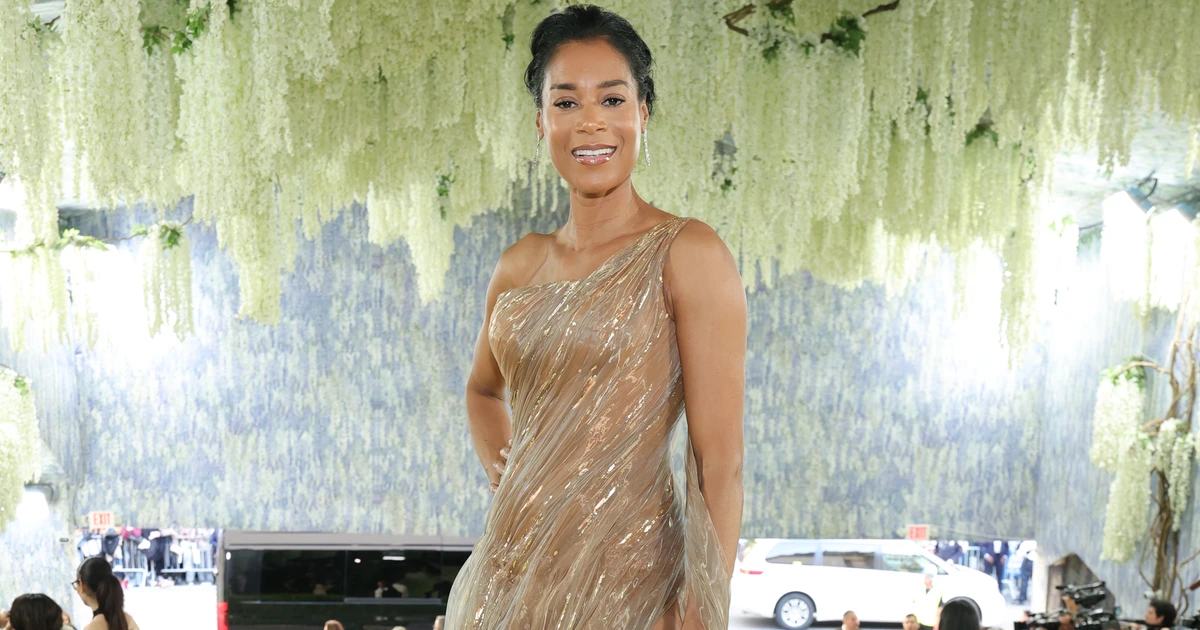
McShaw’s custom gown was a study in contrasts: liquid champagne tones against metallic embellishments, a one-shoulder silhouette that hugged the body with precision before dissolving into a sheer, smoke-like train. The design wasn’t just wearable—it was performable. Metallic streaks woven diagonally through the fabric created the illusion of movement, even when she stood still, while a dramatic thigh-high slit added a sharp counterpoint to the softness of the draping. The look was completed with barely-there gold sandals and understated jewelry, ensuring the focus remained where it belonged: on the craftsmanship.
Against the Met’s lush floral backdrop, the gown felt ethereal without veering into cliché. It was glamour stripped of excess—a rarity in an industry that often conflates extravagance with artistry. McShaw’s design philosophy has always lived in the tension between discipline and sensuality, between structure and fluidity. This gown was no exception. It wasn’t just a dress; it was a manifesto.
“Fashion is about communication,” McShaw has said in past interviews. “And right now, the most powerful communication is the one that feels true to who you are.” That truth was on full display at the Met Gala, where her look didn’t just participate in the conversation—it defined it.
A Career Built on Reinvention
McShaw’s Met Gala moment wasn’t an isolated event; it was the culmination of a career that has consistently challenged industry norms. Before becoming a designer, she was a stylist, someone who understood the power of clothing as a tool of self-expression long before she began creating the pieces herself. Her transition from stylist to designer wasn’t a leap—it was a natural evolution.
She began by dressing clients in her own designs, then herself, until the line between muse and maker blurred entirely. That evolution is significant because fashion history rarely gives Black women the space to occupy every role at once: stylist, designer, creative director, and subject. McShaw didn’t just fill those roles—she redefined them.
“There’s a myth that creativity is a solo act,” McShaw told The Recent York Times in 2025. “But the best work comes from collaboration—with your clients, with your team, with the materials themselves. That’s what I’ve always tried to do.” Her Met Gala look was the perfect embodiment of that philosophy: a solo creation that felt like a dialogue.
Why This Moment Matters Beyond the Red Carpet
McShaw’s Met Gala appearance wasn’t just a personal triumph—it was a cultural one. In an industry where Black women designers have historically been sidelined, her self-designed look was a statement of agency. It wasn’t just about wearing a dress; it was about wearing her vision, her identity, and her expertise on her own terms.
For many in the fashion world, her moment was a reminder that authenticity isn’t just a buzzword—it’s a business imperative. Consumers, especially younger generations, are increasingly drawn to brands and designers who embody transparency, craftsmanship, and a clear point of view. McShaw’s gown wasn’t just a fashion statement; it was a business one.
“The Met Gala has always been about pushing boundaries,” said Vogue editor-in-chief Anna Wintour in a post-event interview. “But this year, the most boundary-breaking moment wasn’t about spectacle—it was about substance. Aisha’s look wasn’t just stunning; it was meaningful.”
The Future of Fashion: Authenticity as the New Luxury
McShaw’s success at the Met Gala signals a broader shift in the fashion industry. As consumers grow weary of performative luxury and empty branding, designers like McShaw—who prioritize craftsmanship, storytelling, and personal authenticity—are gaining influence. Her career arc offers a blueprint for how to navigate an industry that has long favored spectacle over substance.
For McShaw, the next steps are clear: continuing to blur the lines between designer and muse, between artist and subject. She has already announced plans to expand her label, with a focus on sustainable materials and inclusive sizing—a move that aligns with the values of a new generation of fashion consumers.
“Fashion should be a reflection of who you are, not just what you want to be seen as,” McShaw said in a recent interview. “That’s the kind of industry I want to be part of.”
Key Takeaways
- Authenticity as Artistry: McShaw’s Met Gala gown wasn’t just a dress—it was a manifesto of intentional design, blending discipline with sensuality.
- Breaking Industry Barriers: Her career—from stylist to designer to auteur—challenges the limited roles often assigned to Black women in fashion.
- The Power of Self-Expression: In an era of performative luxury, McShaw’s look proved that true fashion is rooted in authenticity.
- A Shift in Consumer Values: Younger audiences are prioritizing craftsmanship and transparency over empty spectacle, positioning designers like McShaw for long-term success.
- The Future of Fashion: McShaw’s expansion into sustainable materials and inclusive sizing reflects a growing demand for ethical, values-driven design.
What Happens Next?
McShaw’s label is set to launch its first full collection in autumn 2026, with a focus on sustainability and accessibility. She has also been invited to participate in the 2027 CFDA Awards as a judge, further cementing her influence in the industry. For now, the fashion world is watching—and learning.

As for the Met Gala? The stage is set for next year’s event, but one thing is certain: the conversation about fashion’s future will continue to be led by those who dare to wear their truth as boldly as they design it.
Keep reading