
Alan Greenspan, the influential economist who served as the chairman of the Federal Reserve for nearly two decades, has died at the age of 100. Over the course of his tenure, which spanned from 1987 to 2006, Greenspan became one of the most recognizable figures in global finance, overseeing a period defined by significant technological expansion and relative macroeconomic stability, alongside the challenges of the late 1990s dot-com bubble and the early 2000s recession.
According to official records from the Federal Reserve History archives, Greenspan was appointed by President Ronald Reagan and took office on August 11, 1987. He served under four different U.S. presidents—Reagan, George H.W. Bush, Bill Clinton, and George W. Bush—before retiring on January 31, 2006. His legacy remains a subject of intense debate among economists, particularly regarding his approach to interest rate policy and the deregulation of financial markets during his time at the helm of the U.S. central bank.
A Legacy of Monetary Policy and Market Stability
Greenspan’s leadership was characterized by a pragmatic, data-driven approach to monetary policy. During his time at the Federal Reserve, he navigated the 1987 stock market crash, the 1997 Asian financial crisis, and the aftermath of the September 11, 2001, terrorist attacks. His ability to manage interest rates to control inflation while fostering economic growth earned him the moniker “The Maestro” in the mid-1990s, a term popularized by journalist Bob Woodward in his 2000 biography of the chairman.
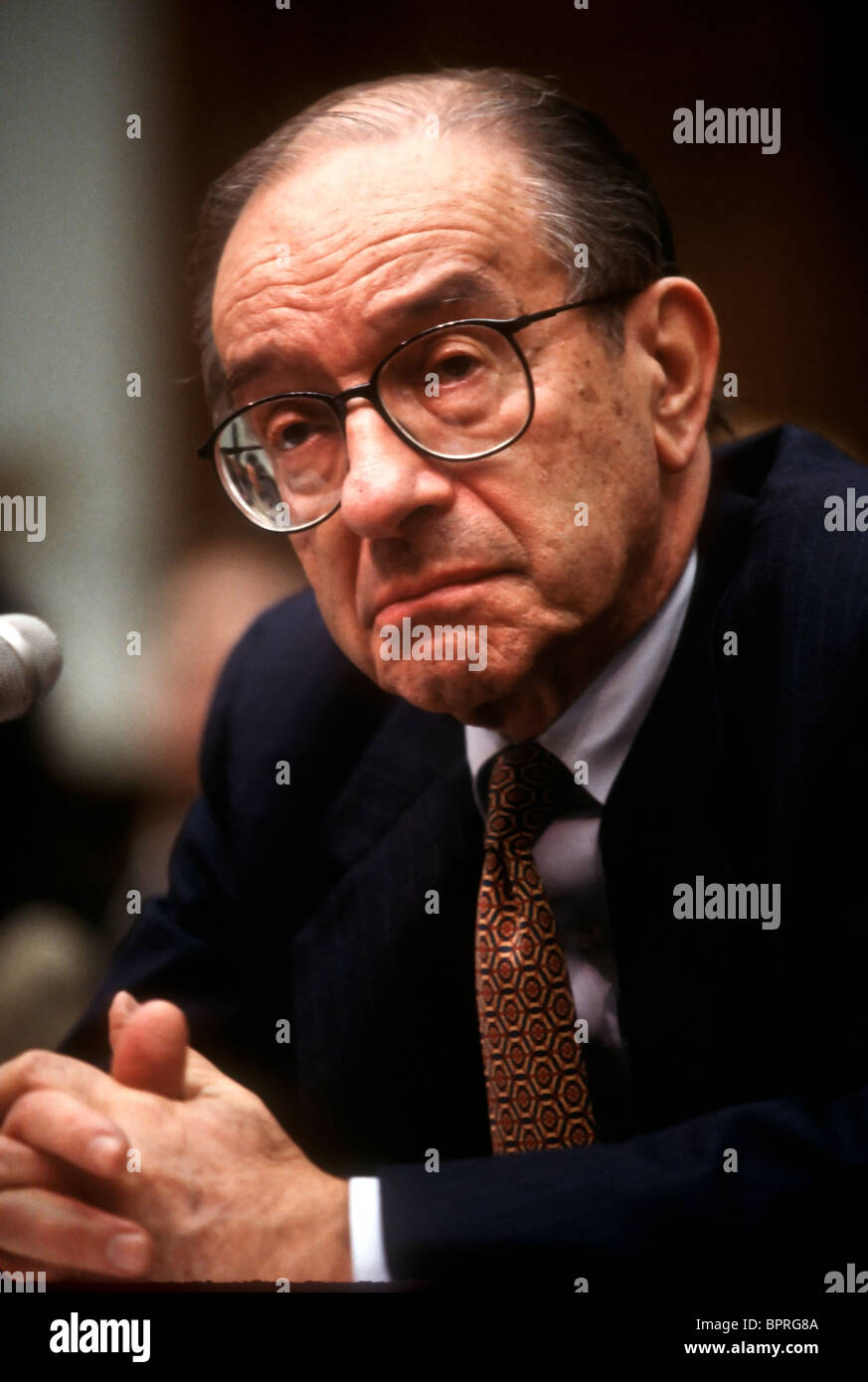
However, the latter years of his chairmanship faced criticism. Economists at the International Monetary Fund have noted that while the “Great Moderation”—a period of low volatility in inflation and output—was largely attributed to his policies, his advocacy for financial innovation and limited oversight of complex derivatives contributed to the environment that preceded the 2008 financial crisis. Greenspan himself acknowledged in a 2008 congressional hearing that he had found a “flaw” in his ideology, specifically regarding the assumption that financial institutions could self-regulate to protect shareholder interests.
Early Life and Path to the Federal Reserve
Before his appointment to the Federal Reserve, Alan Greenspan established himself as a prominent private-sector economist. Born in New York City in 1926, he studied at New York University, where he earned his doctorate in economics. He founded the economic consulting firm Townsend-Greenspan & Co. in 1954, which provided him with deep insights into corporate trends and market behavior. His work in the private sector led to his first major government role as the chairman of the Council of Economic Advisers under President Gerald Ford from 1974 to 1977, as documented by the Gerald R. Ford Presidential Library.

His transition to the Federal Reserve was marked by a commitment to price stability. Throughout his tenure, he prioritized maintaining low inflation as the primary mandate for the Fed. While this focus helped anchor long-term economic expectations, it also led to intense scrutiny during periods of rapid asset price appreciation, such as the late 1990s technology boom. Investors and policymakers continue to study his “Greenspan Put”—a market perception that the Fed would intervene with interest rate cuts to prevent severe market downturns—as a case study in central bank influence on investor behavior.
Understanding the Impact of the Greenspan Era
The impact of Greenspan’s policies extends far beyond his departure from public office. By the time he stepped down, the Federal Reserve had evolved into a more transparent institution, though it remained firmly focused on the dual mandate of maximum employment and stable prices. His tenure saw the federal funds rate fluctuate significantly, from a high of over 9% in the late 1980s to a low of 1% in the early 2000s, reflecting the volatile economic shifts of the era as recorded in Federal Reserve Economic Data (FRED).
For modern observers, Greenspan represents the end of an era of central banking that relied heavily on individual discretion and the personal credibility of the chairman. The current Federal Reserve framework, while still maintaining the tools he utilized, has moved toward more rule-based communication and explicit inflation targeting. His life and career remain a foundational subject for those interested in the history of global markets and the evolution of economic policy in the United States.
Public interest in his life is expected to remain high as historians and financial analysts continue to publish assessments of his long-term influence. Readers seeking official historical documents, transcripts of his testimonies before the U.S. Congress, and detailed records of Federal Open Market Committee (FOMC) meetings can access these resources through the FRASER digital library, maintained by the Federal Reserve Bank of St. Louis. We welcome your reflections and analysis on the legacy of the former chairman in the comments section below.
Related reading