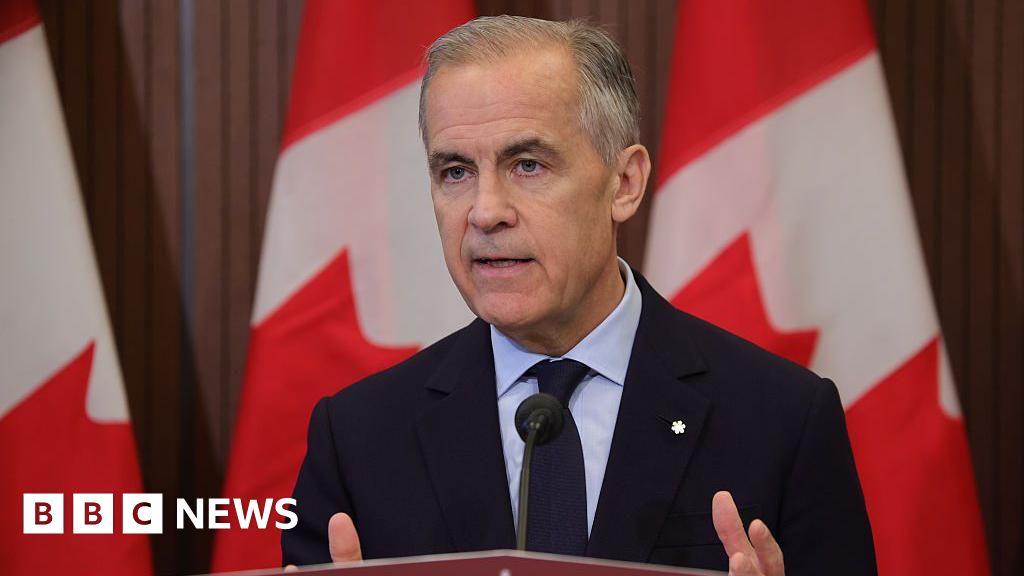
In a sharp critique of the rising political volatility in Western Canada, prominent economist Mark Carney has characterized the upcoming Alberta separation referendum as a “dangerous bluff,” drawing a stark comparison to the economic and political upheaval seen during the United Kingdom’s departure from the European Union.
The remarks come as political tensions between Edmonton and Ottawa reach a critical juncture. The western province is scheduled to hold a pivotal vote this October to determine whether Alberta should remain a constituent part of Canada or proceed with a binding referendum on formal secession. Carney’s assessment suggests that the movement may be less about a definitive path toward independence and more about utilizing the threat of separation as political leverage in ongoing negotiations with the federal government.
For the global markets and the Canadian economy, the stakes of the October vote extend far beyond provincial borders. As a central pillar of Canada’s energy sector and fiscal stability, any movement toward Alberta secession carries profound implications for national unity, trade relations, and the long-term economic landscape of North America.
The October Vote: A Defining Moment for Alberta
The scheduled vote in October represents a significant escalation in the long-standing debate over provincial autonomy and federalism in Canada. According to current developments, the referendum will ask voters a fundamental question: should Alberta maintain its current status within the Canadian federation, or should the province move forward with a binding separation referendum?
Unlike previous non-binding expressions of regional discontent, this upcoming vote is positioned as a formal mechanism to gauge the province’s intent regarding sovereignty. If the results favor separation, it would trigger a constitutional and legal process of unprecedented complexity, potentially forcing a restructuring of the Canadian state.
The political driver behind this movement has been a perceived imbalance in federal-provincial relations, with proponents of separation citing issues ranging from resource management and taxation to regional representation. However, the transition from political rhetoric to a formal, binding vote indicates that the separatist movement has gained significant institutional traction within the province.
The ‘Dangerous Bluff’ and the Brexit Analogy
Mark Carney’s intervention focuses on the strategic intent behind the referendum. By labeling the move a “dangerous bluff,” Carney suggests that the threat of secession is being employed as a high-stakes negotiation tactic. The implication is that the push for separation is designed to extract greater concessions from the federal government regarding economic policy and provincial rights, rather than serving as a sincere pursuit of statehood.
The comparison to Brexit—the United Kingdom’s exit from the European Union—serves to highlight the potential for systemic disruption. Much like the Brexit process, an Alberta secession would introduce significant layers of uncertainty into established trade corridors, regulatory frameworks, and economic dependencies. The “Brexit” comparison underscores several key risks:
- Market Volatility: The sudden threat of a major economic actor exiting a federation can trigger capital flight and investor hesitation.
- Regulatory Fragmentation: The decoupling of provincial and federal standards, particularly in the energy and environmental sectors, could create significant hurdles for cross-border commerce.
- Political Instability: The process of separation often leads to prolonged periods of legislative deadlock and social polarization, mirroring the political climate seen in the UK post-referendum.
While the scale of the Canadian federation differs from that of the EU, the underlying principle remains: the sudden fracturing of a deeply integrated economic union creates friction that can take decades to resolve.
Economic Implications: Fiscal Federalism at Risk
From an economic perspective, the potential secession of Alberta poses a challenge to the principle of fiscal federalism that has underpinned Canada’s stability. Alberta is a primary driver of Canada’s Gross Domestic Product (GDP), largely due to its vast energy resources and highly productive industrial base.

A separation would necessitate a complete reconfiguration of Canada’s transfer payment systems and equalization formulas. Currently, the fiscal relationship between the provinces is designed to balance regional disparities. the departure of a major net contributor like Alberta would fundamentally alter the financial equilibrium of the remaining provinces and the federal government.
the global energy market relies on the stability of Canadian regulatory and export frameworks. Any ambiguity regarding Alberta’s status could impact long-term investment in the oil and gas sector, affecting not only provincial revenues but also the national trade balance and Canada’s standing in the global energy transition.
Key Takeaways: The Alberta Referendum Landscape
- The Vote: Alberta will hold a vote in October regarding its status within Canada and the potential for a binding separation referendum.
- Carney’s Critique: Economist Mark Carney has labeled the movement a “dangerous bluff” and compared its potential impact to Brexit.
- Strategic Intent: Analysts suggest the referendum may be used as leverage to increase provincial influence in federal negotiations.
- Economic Risk: A successful secession movement could lead to significant regulatory, fiscal, and trade disruptions across North America.
As the October deadline approaches, all eyes will be on the political maneuvering in both Edmonton and Ottawa. The outcome of this vote will likely dictate the trajectory of Canadian federalism and the economic stability of the region for years to come.
The next major checkpoint will be the official commencement of the referendum campaign period leading up to the October vote.
What are your thoughts on the economic implications of the Alberta referendum? Share this article and join the conversation in the comments below.