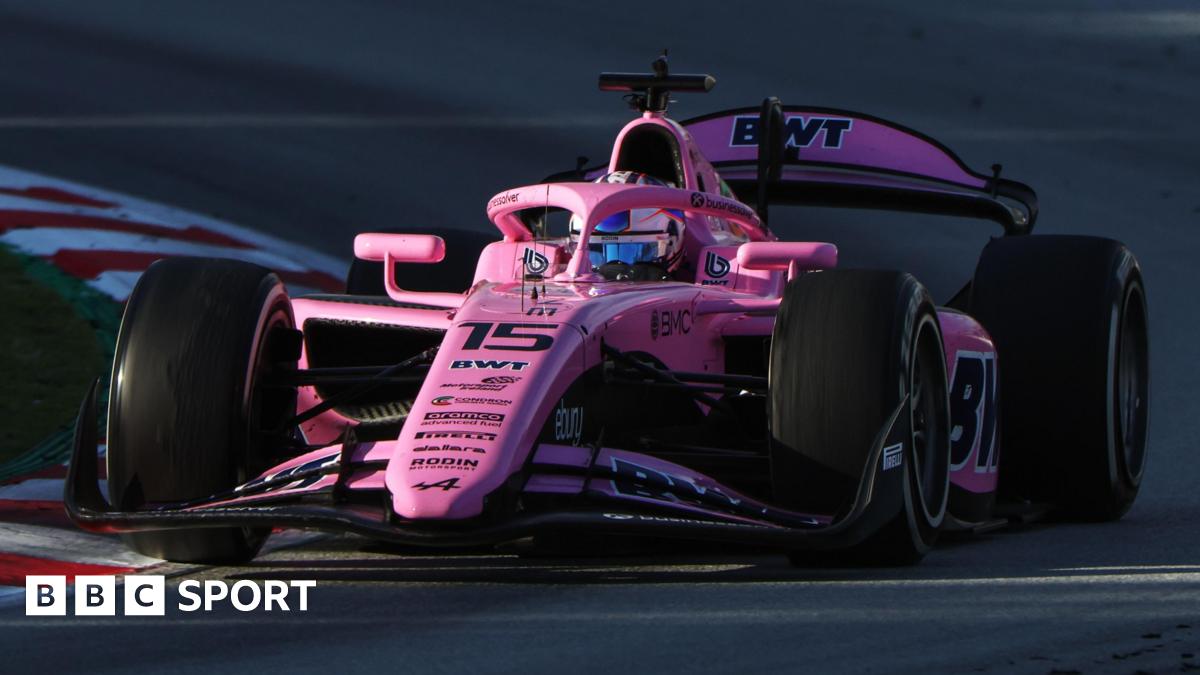
Alex Dunne Secures Alpine Junior Programme Spot After Red Bull Deal Collapses
The Formula 2 driver, Alex Dunne, is poised to join Alpine’s junior programme, marking a significant turn in his career trajectory after a previously agreed-upon deal with Red Bull Racing fell through. The situation, complicated by the impending departure of Red Bull motorsport advisor Helmut Marko and questions surrounding his authority to act independently, ultimately led to a payout for Dunne and a swift shift in allegiances. The 2026 season promises to be a crucial one for the young Irish driver as he aims to progress towards Formula 1, navigating the requirements of the FIA Super Licence system and contributing to Alpine’s development efforts.
Dunne, who impressed in his rookie Formula 2 season, finishing fifth overall despite several disqualifications for technical infringements, had initially attracted the attention of Red Bull and its influential motorsport chief, Helmut Marko. Discussions were reportedly underway regarding a potential place within the Red Bull junior driver programme, a pathway that has launched the careers of numerous Formula 1 stars, including Sebastian Vettel and Max Verstappen. But, the deal unravelled after it emerged that Marko had signed Dunne without prior consultation with Red Bull’s shareholders, a move that reportedly strained relations further in the wake of the team’s internal restructuring following the death of co-founder Dietrich Mateschitz in late 2022.
Marko’s Departure and the Red Bull Restructuring
Helmut Marko’s long-standing role as Red Bull’s motorsport advisor came to an end at the close of 2025, a departure framed as a personal decision to step down. However, reports suggest a more complex backstory, with increasing scrutiny from Red Bull’s parent company and a shift in accountability following Mateschitz’s death. The Race details how this change in oversight brought a level of accountability that Marko, accustomed to a more autonomous role, found challenging. This shift in dynamics appears to have contributed to a series of clashes, including controversial remarks about Sergio Perez and a fallout over attempts to remove Marko himself earlier in 2024.
The Dunne situation further highlighted these tensions. According to reports, Marko signed Dunne to the junior programme against the wishes of Red Bull’s shareholders, necessitating a financial settlement to release the driver from the agreement. This incident, coupled with concerns over other junior driver decisions, reportedly led to Red Bull intervening to overturn Marko’s choices. The fallout from this episode and others, ultimately contributed to the decision for Marko to step down from his role.
Dunne’s Path to Alpine
Following the collapse of the Red Bull deal, Dunne’s prospects appeared to cool, particularly concerning a potential move to Alpine. A key obstacle was the lack of a Super Licence, a requirement for competing in Formula 1. Drivers accumulate points towards a Super Licence based on their performance in feeder series like Formula 2, with a minimum of 40 points needed to qualify for a full licence. Dunne finished the 2025 Formula 2 season in fifth place, falling short of the 40-point threshold needed for a Super Licence. He needed to finish third to qualify.
Despite this setback, Dunne’s talent and potential have not gone unnoticed. He has already gained valuable experience with McLaren, participating in several testing sessions and two FP1 (Free Practice 1) sessions, where he demonstrated competitive pace. During a test session in Austria, Dunne set the fourth-quickest time in FP1, narrowly behind McLaren’s Oscar Piastri, showcasing his ability to quickly adapt to Formula 1 machinery. His performance in these sessions, combined with his strong showing in Formula 2, has clearly attracted the attention of other teams, including Alpine.
Recent indications suggest that a deal with Alpine is now firmly in place. Dunne appeared at the first Formula 2 test of the 2026 season sporting Alpine livery on his Rodin Motorsport car, signaling a formal agreement. Alpine, who utilized Jack Doohan and Ryo Hirakawa for young driver practice sessions in 2025, are obligated to provide four practice sessions to young drivers during the upcoming season, offering Dunne valuable opportunities to gain experience and demonstrate his capabilities in a Formula 1 environment.
The Role of Junior Drivers in Formula 1
Junior driver programmes play a vital role in Formula 1, serving as a breeding ground for future talent. These programmes provide young drivers with the resources and support they need to develop their skills, gain experience, and ultimately compete at the highest level. Beyond on-track experience, junior drivers often contribute significantly to team development through simulator work and data analysis. More experienced junior drivers, like Dunne, can also participate in private tests and FP1 sessions, providing valuable feedback to engineers and helping to refine car setup.
The FIA Super Licence system is designed to ensure that drivers competing in Formula 1 possess the necessary skills and experience to handle the demands of the sport safely, and effectively. The points system rewards consistent performance in feeder series and provides opportunities for drivers to accumulate points through participation in Formula 1 practice sessions. This system aims to maintain a high standard of driver competence and prevent unqualified individuals from entering the sport.
Dunne’s move to Alpine represents a significant opportunity for the young Irish driver to continue his development and pursue his dream of racing in Formula 1. While the path ahead will undoubtedly be challenging, his talent, dedication, and the support of the Alpine team will provide him with the best possible chance of success. The 2026 Formula 2 season, which begins alongside the Formula 1 calendar in Melbourne from March 6-8, will be a crucial proving ground for Dunne as he strives to accumulate the necessary Super Licence points and demonstrate his potential to Alpine’s technical team.
The situation also underscores the evolving dynamics within Red Bull Racing, as the team navigates a recent era without the long-standing influence of Helmut Marko. The restructuring and increased oversight from the parent company suggest a more centralized approach to driver development and team management, potentially impacting the future of Red Bull’s junior programme and its ability to identify and nurture emerging talent.
Alpine will be hoping Dunne can provide a boost to their young driver program, and potentially become a future Grand Prix driver for the team. The team has a history of investing in young talent, and Dunne’s arrival suggests a continued commitment to this strategy.
The next key date for Alex Dunne will be the start of the Formula 2 season in Melbourne, where he will aim to make a strong start and begin accumulating the Super Licence points needed to progress towards his Formula 1 ambitions. Fans and motorsport enthusiasts will be watching closely to spot how the young Irish driver performs and whether he can fulfill his potential on the world stage.