
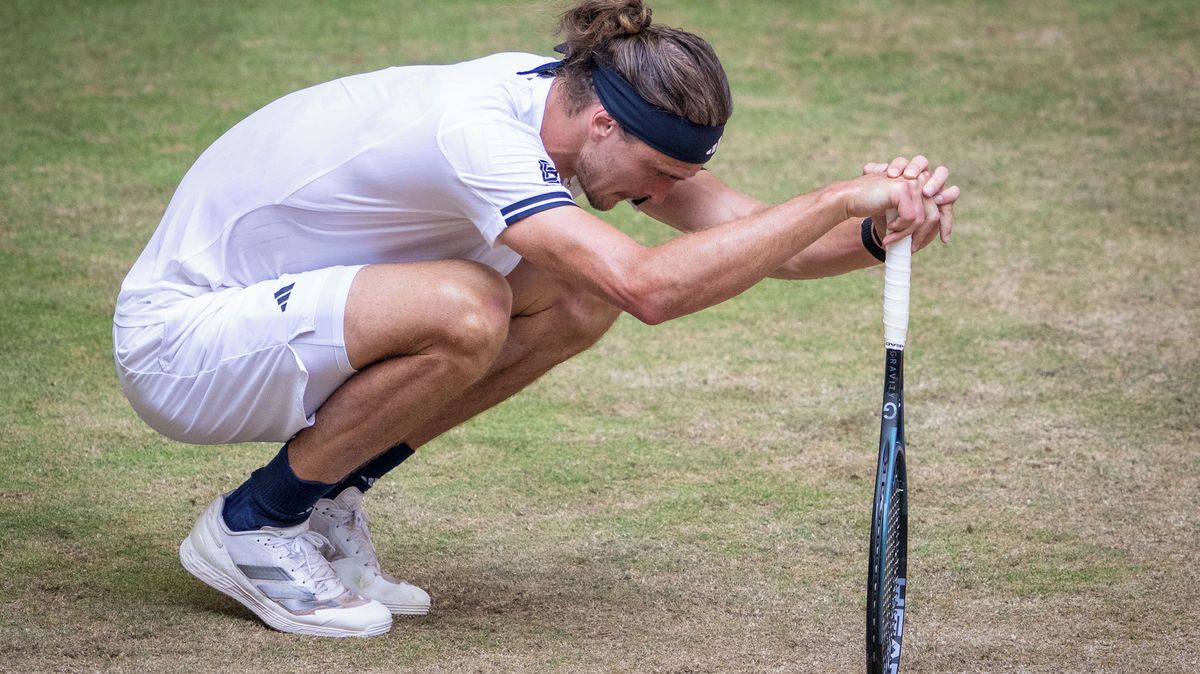
Professional tennis player Alexander Zverev, a former French Open finalist and current world-ranked competitor, experienced a significant health-related setback during his recent match against Taylor Fritz at the Terra Wortmann Open in Halle, Germany. The incident, which disrupted the flow of the match, has brought renewed focus to Zverev’s ongoing management of Type 1 diabetes while competing at the elite level of professional sports.
According to reports from the tournament site, Zverev struggled with a technical failure involving his continuous glucose monitoring (CGM) system during the contest. The disruption in data transmission reportedly complicated his ability to track blood sugar levels in real-time, a critical requirement for his medical regimen. Taylor Fritz, who secured the victory in the encounter, acknowledged the visible distress of his opponent during the post-match press conference, noting that it was evident Zverev was facing a physical challenge beyond standard match fatigue.
The Impact of Type 1 Diabetes on Professional Athletic Performance
Alexander Zverev has been vocal about his diagnosis of Type 1 diabetes since 2022, when he announced the formation of the Alexander Zverev Foundation to support children living with the condition. As a medical professional, I have observed that managing insulin-dependent diabetes under the physiological stress of a professional tennis match—which can last for several hours in high-temperature environments—presents a complex clinical challenge. The American Diabetes Association (ADA) emphasizes that athletes with Type 1 diabetes require precise monitoring to prevent hypoglycemia (dangerously low blood sugar) or hyperglycemia (dangerously high blood sugar), both of which can impair cognitive function and physical coordination during competition.

The incident in Halle highlights the reliance of modern athletes on medical technology. Continuous glucose monitors are essential tools that transmit glucose readings to external devices, allowing athletes to make informed decisions about nutrition and insulin administration during breaks in play. When these sensors experience technical malfunctions or connectivity issues, it forces the athlete to revert to manual finger-prick testing, which is significantly more time-consuming and less efficient in the middle of a high-stakes professional match.
Technical Challenges and Regulatory Standards in Sports
While the specific details of the technical failure in Halle remain under review, the broader issue of medical equipment in tennis is governed by the International Tennis Federation (ITF) and the specific rules of the ATP Tour. Athletes are permitted to use medically necessary equipment, provided it does not offer a competitive advantage or interfere with the pace of play. The ATP Tour has previously recognized the necessity of these devices for players managing chronic health conditions, allowing for accommodations that prioritize the health and safety of the participant.
From a clinical perspective, the stress of competition can cause rapid fluctuations in glucose levels, often referred to as the “fight-or-flight” response, which releases hormones like adrenaline and cortisol. These hormones can interfere with the body’s insulin sensitivity, making precise management even more difficult. The situation faced by Zverev underscores the vulnerability of even the most sophisticated medical technology when subjected to the rigors of professional sports travel and intense physical exertion.
What Happens Next for Zverev and Medical Oversight
The immediate concern for athletes managing chronic conditions after such an incident is recovery and the recalibration of their medical protocols. Alexander Zverev is expected to continue his recovery and preparation for upcoming ATP events, with medical staff likely conducting a thorough audit of his monitoring equipment to prevent future technical failures. There has been no official statement regarding a change in his competition schedule or additional medical procedures following the Halle Open.

For fans and observers, this event serves as a reminder of the unseen labor involved in managing health conditions while performing at the highest level of human athleticism. The Alexander Zverev Foundation continues to advocate for increased awareness and resources for pediatric patients. Further updates regarding his health and participation in the tour will be provided by his team through official ATP channels as the season progresses.
Have you or a loved one navigated the challenges of managing a chronic health condition while maintaining an active lifestyle? Share your experiences in the comments below, or join the conversation on our social media platforms.