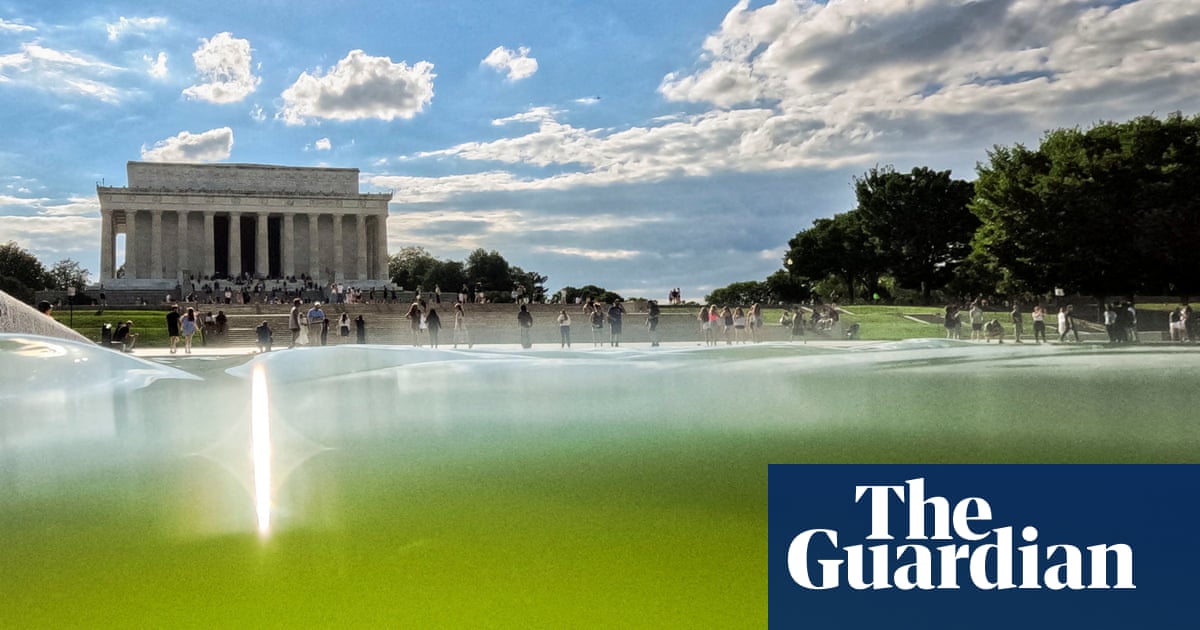
Washington D.C.’s Reflecting Pool, a centerpiece of the National Mall, has turned green just weeks after a $14.2 million renovation aimed at restoring its iconic “American flag blue” hue. The algae bloom, now visible in satellite imagery and on-site photos, has prompted the National Park Service (NPS) to deploy crews for cleanup—a process that could take days and raise questions about long-term maintenance costs and environmental factors.
According to National Park Service officials, the pool’s water quality is monitored daily, and the current bloom is being treated with approved algae-control measures. However, the recurrence of green discoloration—despite the renovation—has drawn attention to the challenges of preserving the pool’s appearance amid rising temperatures and nutrient runoff in the region.
The Reflecting Pool, which sits between the Lincoln Memorial and the Washington Monument, underwent a two-year renovation project completed in early 2024. The $14.2 million investment included deep cleaning, structural repairs, and the installation of a new filtration system designed to prevent algae growth. Yet, within weeks of the project’s conclusion, visitors and local media reported the water turning green again, sparking speculation about whether the renovation addressed underlying environmental causes.
Why is the pool turning green again? Experts cite a combination of factors: warmer-than-average spring temperatures in the D.C. area, increased runoff from nearby construction sites, and the natural presence of algae spores in the water. The NPS has not yet confirmed whether the filtration system is operating as intended, though preliminary reports suggest it may require adjustments.
National Park Service satellite imagery shows the algae bloom in the Reflecting Pool, April 2024.
BREAKING: Despite a $14.2M renovation, Washington D.C.’s Reflecting Pool has turned green again due to algae. NPS crews are on-site to address the issue. #NationalMall #DCNews
How Much Did the Renovation Cost—and Was It Worth It?
The $14.2 million renovation, funded by the U.S. Congress and private donors, was the largest single investment in the Reflecting Pool’s history. The project included:

- A complete drain and refill of the pool’s 2.5 million gallons of water.
- Installation of a new UV filtration system to kill algae and bacteria.
- Repairs to the pool’s concrete lining and drainage infrastructure.
- Enhanced monitoring equipment to track water quality in real time.
Yet, just three weeks after the renovation’s completion, the pool’s water turned green again, raising questions about whether the filtration system is fully functional. According to a Washington Post report, NPS officials have not yet attributed the recurrence to a specific failure but are investigating whether the system requires recalibration.
Key Takeaway: While the renovation addressed structural issues, environmental factors—particularly algae spores and nutrient runoff—remain a persistent challenge. The NPS has not ruled out additional maintenance work, which could add to the pool’s long-term costs.
What’s Next for the Reflecting Pool?
The NPS has confirmed that crews are actively treating the algae bloom using a combination of chemical and mechanical methods. The process is expected to take 3–5 days, during which time the pool may remain closed to the public for safety reasons.
In a statement, the NPS said:
“We are closely monitoring the situation and working around the clock to restore the pool’s appearance. Our priority is ensuring the safety of visitors while maintaining the integrity of this iconic landmark.”
Looking ahead, the NPS has not yet announced whether further renovations or additional funding will be required. However, environmental scientists warn that without addressing the root causes—such as reducing nutrient runoff from nearby construction and managing water temperatures—the pool could face similar issues in the future.
How Does This Compare to Past Issues?
The Reflecting Pool has a history of algae-related problems. In 2018, the pool turned green just two months after a $3.5 million renovation, leading to a congressional hearing on maintenance practices. At the time, officials blamed a combination of warm weather and insufficient filtration.
This time, however, the stakes are higher. The 2024 renovation was intended to be a long-term solution, but the rapid return of algae suggests that environmental conditions may be outpacing even the most advanced filtration technology.
Comparison Table: Past vs. Present Issues
| Issue | Year | Renovation Cost | Time Until Recurrence | Primary Cause |
|---|---|---|---|---|
| Algae Bloom | 2018 | $3.5 million | 2 months | Warm weather + insufficient filtration |
| Algae Bloom | 2024 | $14.2 million | 3 weeks | Nutrient runoff + algae spores + potential filtration issue |
While the 2024 renovation was significantly more expensive, the rapid recurrence of algae suggests that environmental factors may be a more persistent issue than previously anticipated.
What Does This Mean for Visitors?
For now, the Reflecting Pool remains accessible, though the NPS has advised visitors to avoid swimming in the water due to the algae. The pool is still open for walking and sightseeing, but the green discoloration may affect photo opportunities—a concern for tourists visiting during peak season.

If you’re planning a trip to Washington D.C., check the National Mall visitor guidelines for the latest updates on pool access and water quality.
FAQ: What You Need to Know
Q: Is the Reflecting Pool safe to visit?
A: Yes, the pool is open for walking and sightseeing, but the NPS advises against swimming due to algae. The water is not considered hazardous, but the green discoloration may be off-putting for some visitors.
Q: How long will the cleanup take?
A: The NPS expects the cleanup to take 3–5 days, depending on weather conditions and the effectiveness of the treatment.
Q: Will the pool turn green again after this?
A: There is no guarantee, but environmental experts warn that without addressing nutrient runoff and water temperature, similar issues could recur in the future.
Q: Who is responsible for maintaining the pool?
A: The National Park Service is responsible for the Reflecting Pool’s upkeep, with oversight from the U.S. Congress and private donors.
Q: Can I see photos of the algae bloom?
A: Yes, the NPS has released satellite imagery and on-site photos. You can view them here.
For the latest updates, follow the National Mall official page or check local news outlets.
What Happens Next?
The NPS has not yet announced a timeline for a full assessment of the filtration system or additional renovations. However, given the rapid recurrence of algae, officials are expected to review maintenance protocols in the coming weeks.
If you have concerns about the Reflecting Pool’s condition, you can submit feedback to the NPS via their online form.
In the meantime, visitors are encouraged to enjoy the rest of the National Mall, including the Lincoln Memorial, Washington Monument, and Smithsonian museums.
Share your thoughts: Have you visited the Reflecting Pool recently? What did you think of the algae issue? Let us know in the comments below.
Worth a look