Unlocking Earthquake Secrets: Scientists Trigger Controlled Quakes to predict Future Risks
For centuries, humanity has lived with the looming threat of earthquakes. Now, a groundbreaking project deep beneath the Swiss Alps is offering an unprecedented prospect to understand - and perhaps predict – these powerful natural events. The FEAR (Fault Exploration and Artificial Rupture) project isn’t just studying earthquakes; it’s deliberately triggering them, offering a unique window into the mechanics of fault rupture.
A Unique Laboratory: The Bedretto Underground laboratory
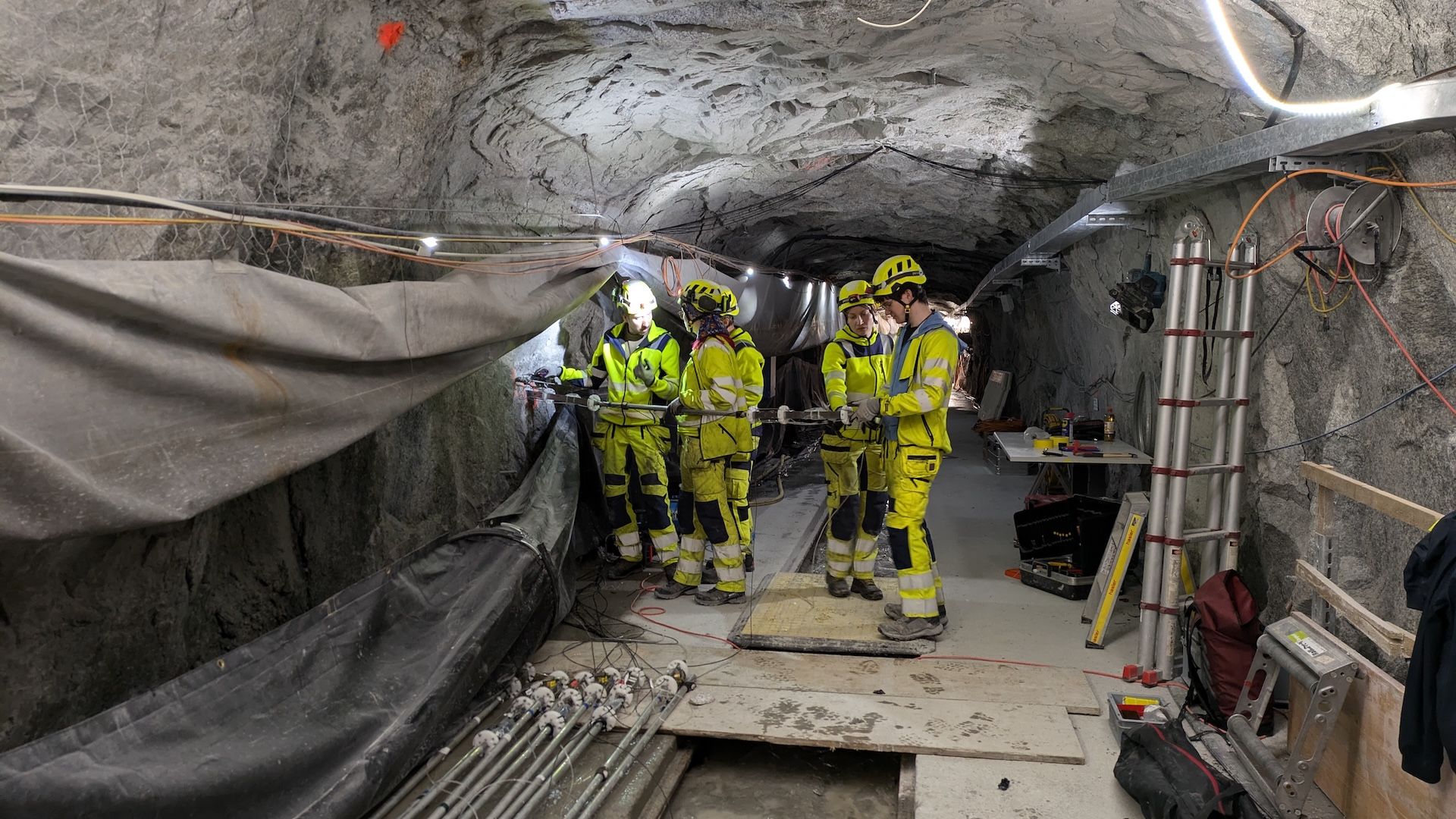
The research takes place within a pre-existing tunnel originally built for a railway project, now repurposed as the Bedretto Underground Laboratory for Geosciences and Geoenergies. This location provides scientists with incredibly close access to a naturally occurring fault line. This isn’t theoretical modeling; it’s hands-on investigation.
The rocks surrounding these faults naturally experience minor slips, resulting in small earthquakes. However, the FEAR project takes a more proactive approach. Researchers are carefully pumping water into the fault to induce quakes on a controlled schedule.
“They woudl have taken place sooner or later in the history of the Alps,but we make sure they happen next week,” explains project lead Domenico Giardini. This controlled environment is key to unlocking critical insights.
How Does Triggering Earthquakes Help?
The concept behind the FEAR project isn’t entirely new. It mirrors, in a controlled setting, processes already observed in areas with oil and gas extraction.
Here’s how it effectively works:
* Wastewater Injection: Oil and gas companies frequently enough inject wastewater from wells into faulted areas.
* Lubrication: This water acts as a lubricant, reducing friction along the fault line.
* Rupture: Reduced friction makes it easier for the fault to rupture,causing an earthquake.
Tho, the FEAR project differs considerably. Giardini and his team have deployed a dense network of seismometers and accelerometers directly on the fault. This allows for precise measurement of fault movement in response to the induced pressure changes.
So far,the team has triggered hundreds of thousands of quakes,even those with magnitudes of zero or negative magnitudes – a testament to the sensitivity of their instruments.(yes, negative magnitude earthquakes are possible, representing energy release below the threshold of traditional measurement.)
What’s Next for the FEAR Project?
The research is evolving, with plans to explore the impact of temperature on earthquake evolution. Next week, researchers will begin injecting hot water into the fault. In March, they will escalate the experiments, triggering quakes up to magnitude 1.
The ultimate goal is ambitious: to understand the parameters that govern earthquake size.If scientists can reliably trigger quakes of a specific magnitude in a controlled environment, they can apply that knowledge to real-world scenarios.
Imagine being able to assess a dangerous fault before it breaks, calculating the stresses needed to trigger a quake of a certain size. This could revolutionize earthquake preparedness and mitigation.
Applying Lessons to Real-World Threats
The implications of this research extend far beyond the Swiss Alps. Giardini points to the devastating February 2023 earthquake on the Turkey-Syria border as a prime example.
“We know that fault will continue toward the south and toward the north. We want to try to understand, is the next quake going to be a 7 or an 8 or 8.5?” he asks.
Early findings suggest that the amount of strain in the rocks surrounding the fault is a crucial factor. Researchers are also gaining insights into how earthquakes can “jump” from one fault to another - a phenomenon that can amplify risk.
“We are seeing examples that we produce ourselves underground that look very much like what happens in nature,” Giardini notes.This validation is a meaningful step forward in our understanding of earthquake processes.
A New Era in Earthquake Science
The FEAR project represents a paradigm shift in earthquake research. By moving beyond observation and into controlled experimentation, scientists are gaining unprecedented insights into the forces that shape our planet. This knowledge is vital for protecting communities around the world from the devastating impacts of earthquakes. You can learn more about earthquake causes in Switzerland at the Swiss Seismological Service website. Further facts on induced seismicity can be found through the U.S. Department of Energy.
Image credit: Bedretto Underground Laboratory for
![NWSL Team of the Week: Debinha & KC Current Overcome Injuries | [Date]](https://i0.wp.com/sportshub.cbsistatic.com/i/r/2025/11/03/51cc8b21-78d2-465f-be06-8a814398e5cc/thumbnail/1200x675/448bf0281f77311e581633acde152b60/untitled-design-2025-11-03t212953-708.png?resize=150%2C150&ssl=1 "NWSL Team of the Week: Debinha & KC Current Overcome Injuries | [Date]")