
Beyond Fibrils: How Polymer Physics is Rewriting Our Understanding of Alzheimer’s Disease
Alzheimer’s disease (AD) presents a monumental challenge to global healthcare, a challenge that intensifies with our aging population. For decades,research has largely focused on pharmacological interventions and conventional biomedical approaches. However, the intricate complexity of AD demands a broader perspective – one that draws insights from seemingly disparate scientific fields.Now, a groundbreaking study from Tokyo Metropolitan University is doing just that, leveraging principles of polymer physics to illuminate the formation of tau protein fibrils, a hallmark of the disease, and potentially opening doors to entirely new therapeutic strategies.
The Problem with tau: From Stabilizer to Saboteur
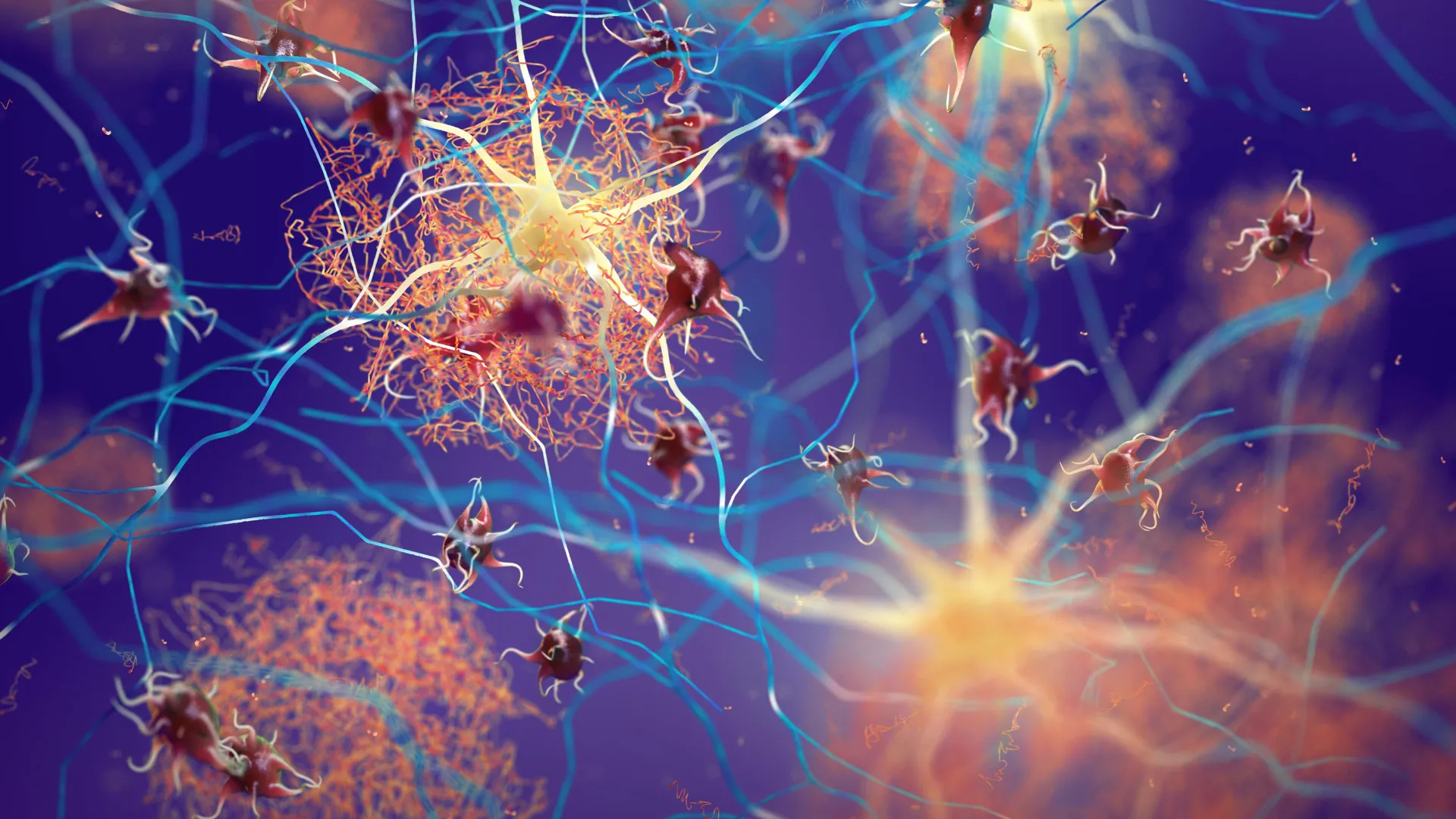
to understand this breakthrough, it’s crucial to grasp the role of tau protein. In a healthy brain, tau acts as a vital stabilizing force within neurons, supporting microtubules – the cellular structures responsible for transporting essential nutrients and signals. However, in Alzheimer’s, tau undergoes a dramatic transformation. It misfolds, losing its normal function and beginning to aggregate into tangled bundles known as tau protein fibrils.
These fibrils disrupt the neuron’s internal transport system, effectively starving the cell and impairing dialog. This disruption is strongly correlated with the cognitive decline characteristic of AD and other neurodegenerative conditions. The prevailing approach has been to target these established fibrils, attempting to break them down or prevent their further growth. But what if the key lies before the fibril even forms?
A Polymer Physics Perspective: Crystallization and the Birth of Fibrils
Researchers,led by Professor Rei Kurita,hypothesized that the formation of tau fibrils might share similarities with the way polymers organise into crystals. Polymers - long chains of repeating molecular units – don’t typically crystallize by simply adding individual chains. Instead, they navigate a series of intermediate steps, forming precursor structures before achieving an ordered crystalline state.
Applying this concept to tau proteins, the team discovered a striking parallel. Fibril formation isn’t a spontaneous event; it’s preceded by the assembly of loose, transient clusters of tau proteins, measuring just tens of nanometers in size. Utilizing advanced techniques like small-angle X-ray scattering and fluorescence analysis, they confirmed the existence of these crucial precursor structures.
The Key finding: Reversible Clusters and the Power of Electrostatic Screening
What sets this research apart is the revelation that these early-stage tau clusters are surprisingly soft and reversible. the team demonstrated that these clusters could be dissolved simply by adjusting the concentration of sodium chloride in the presence of heparin, a naturally occurring anticoagulant.
Crucially, when the formation of these clusters was disrupted or prevented altogether, fibril formation was dramatically reduced. The researchers attribute this affect to the influence of charged ions on tau-heparin interactions. Increasing ion concentrations enhances “electrostatic screening,” effectively weakening the attraction between tau proteins and hindering their ability to cluster.
This finding is significant as it suggests that the initial aggregation of tau proteins isn’t an irreversible step towards fibril formation.It’s a dynamic process that can be influenced and potentially halted.
A Paradigm Shift in Alzheimer’s Treatment?
This research signals a potential paradigm shift in Alzheimer’s treatment strategies. Instead of focusing solely on dismantling established fibrils – a challenging and often ineffective approach - the focus could shift to preventing the formation of these reversible precursor clusters.
By intervening at this early stage,therapies could potentially halt the cascade of events leading to neurodegeneration. This preventative approach offers a more proactive and potentially more effective strategy for combating Alzheimer’s disease.
Beyond Alzheimer’s: Implications for Other Neurodegenerative Diseases
The implications of this research extend beyond Alzheimer’s disease. The principles governing protein aggregation are common across a range of neurodegenerative conditions, including Parkinson’s disease.Understanding the underlying mechanisms of precursor cluster formation could unlock new therapeutic avenues for a wider spectrum of debilitating neurological disorders.
Research Support: This work was supported by JST SPRING Program Grant number JPMJSP2156, JSPS KAKENHI Grant Numbers 22K07362, 25K21773, 24H00624, 22H05036, 23K21357, 25K02405, 23H00394, 23KK0133, and 20H01874, JST Moonshot R&D Program Grant Number JPMJMS2024, and AMED Grant Number 24wm0625303 and 25dk0207073.





