Berlin, Germany – A surge of funding is bolstering Alzheimer’s disease research across Europe, with significant investments announced recently by both the Belgian Stopalzheimer foundation and the French Fondation Alzheimer. These initiatives, totaling over €10 million, aim to accelerate the development of new therapies, improve diagnostic tools, and deepen our understanding of these devastating conditions. The announcements, made in late February 2026, underscore a growing global commitment to tackling the rising tide of dementia.
Alzheimer’s disease and related dementias represent one of the most significant medical, social, and societal challenges of our time. The require for innovative research is paramount, as current treatments offer limited relief and a cure remains elusive. These recent funding commitments reflect a recognition of the urgency and complexity of the problem, and a willingness to invest in potentially groundbreaking research.
Stopalzheimer Awards €5 Million to 23 Research Projects
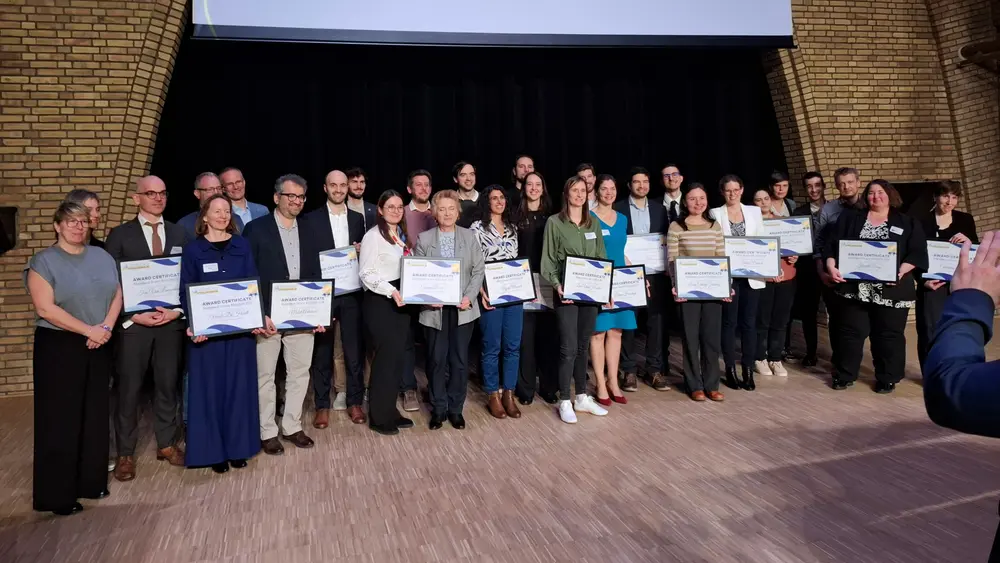
On February 23, 2026, the Belgian foundation Stopalzheimer announced the awarding of over €5 million to 23 research projects focused on Alzheimer’s disease and other forms of dementia. The grants, announced at a ceremony in Leuven, Belgium, are intended to accelerate the development of new therapies, improve diagnostic tools, and deepen understanding of these debilitating conditions. The funding reflects a growing awareness of the significant impact of Alzheimer’s disease on individuals, families, and healthcare systems.
“Today, we are investing in ideas that could make a difference tomorrow: from early detection to new treatments that can slow down or even stop the disease,” said Joost Martens, director of Stopalzheimer. The funding is distributed across researchers at various career stages. Thirteen established researchers will receive grants of €300,000 each over a three-year research period. Emanuela Pasciuto from the University of Antwerp was awarded an additional €50,000 as the winner of the Young Researcher Award. Ten projects led by young researchers will receive €110,000 each for a two-year research period. The projects underwent a rigorous international evaluation process by independent experts and Stopalzheimer’s Scientific Advisory Board, assessed on scientific quality and potential impact on patients and their loved ones.
A significant portion of the funded projects will be conducted at KU Leuven and VIB-KU Leuven, solidifying Leuven’s position as a leading international center for dementia research. One project, led by Prof. Koen Van Laere of KU Leuven, will utilize ultra-high-resolution PET scans to visualize the earliest brain changes associated with Alzheimer’s disease. This innovative approach could lead to earlier diagnosis and intervention, potentially improving patient outcomes.
Fondation Alzheimer Launches 2026 Call for Projects with €300,000 per Project
Simultaneously, the French Fondation Alzheimer announced its 2026 call for projects, supporting innovative and/or at-risk research in the field of Alzheimer’s disease and Alzheimer-related diseases. The foundation prioritizes facilitating research and innovation beyond the scope of current knowledge to generate new hypotheses. Projects are funded for a maximum of 36 months, with a maximum allocated budget of €300,000 per project. This funding excludes indirect costs and personnel costs already covered by other sources.
Applicants must hold a tenure-track position in a French academic research laboratory and work in the field of Alzheimer’s disease and related diseases. Research contributions should cover a range of dementias, including Alzheimer’s disease, Lewy body dementia, Parkinson’s dementia, frontotemporal dementia, corticobasal syndrome, progressive supranuclear palsy, primary progressive aphasia (all types), and posterior cortical atrophy. The Fondation Alzheimer emphasizes the importance of considering sex/gender factors within these fields when addressing the main scientific question. The foundation encourages open science and patient and public involvement in research projects.
Eligibility and Application Process
The applicant is designated as project coordinator, responsible for signing the agreement and monitoring the project. Applications must be submitted in English via Proposal Central, and an ORCID account is required for submission. This streamlined process aims to encourage broad participation from qualified researchers across France.
The Growing Need for Alzheimer’s Research
The global prevalence of Alzheimer’s disease is rapidly increasing, driven by aging populations and a lack of effective preventative measures or cures. According to the Alzheimer’s Association, more than 6.7 million Americans are living with Alzheimer’s disease in 2023, and this number is projected to reach nearly 13 million by 2050. These statistics highlight the urgent need for increased research funding and innovative approaches to combat this devastating disease.
The challenges in Alzheimer’s research are multifaceted. The disease is complex, with multiple contributing factors and varying disease progression. Developing effective therapies requires a deep understanding of the underlying biological mechanisms, as well as the ability to deliver drugs to the brain. Early diagnosis is also crucial, as interventions are likely to be more effective when initiated in the early stages of the disease. The recent funding announcements from Stopalzheimer and the Fondation Alzheimer represent a significant step forward in addressing these challenges.
Focus on Innovative Approaches
Both foundations are prioritizing innovative and at-risk projects, recognizing that breakthroughs often come from exploring unconventional ideas. This approach is essential for overcoming the limitations of traditional research methods and accelerating the pace of discovery. The emphasis on patient and public involvement also reflects a growing recognition of the importance of incorporating the perspectives of those affected by the disease into the research process.
Looking Ahead
The coming months will be critical as researchers submit proposals to the Fondation Alzheimer and begin work on the projects funded by Stopalzheimer. The outcomes of these initiatives have the potential to significantly impact the lives of millions of people affected by Alzheimer’s disease and related dementias. The scientific community will be closely watching these developments, hoping for breakthroughs that can bring us closer to a cure.
The next key date to watch is the application deadline for the Fondation Alzheimer’s 2026 call for projects, which will be announced on their website. Researchers interested in applying are encouraged to review the eligibility criteria and application guidelines carefully. Stopalzheimer will continue to monitor the progress of the funded projects and provide updates on their website.
What are your thoughts on these recent funding initiatives? Share your comments below, and let’s continue the conversation about Alzheimer’s research and the search for a cure.
Keep reading