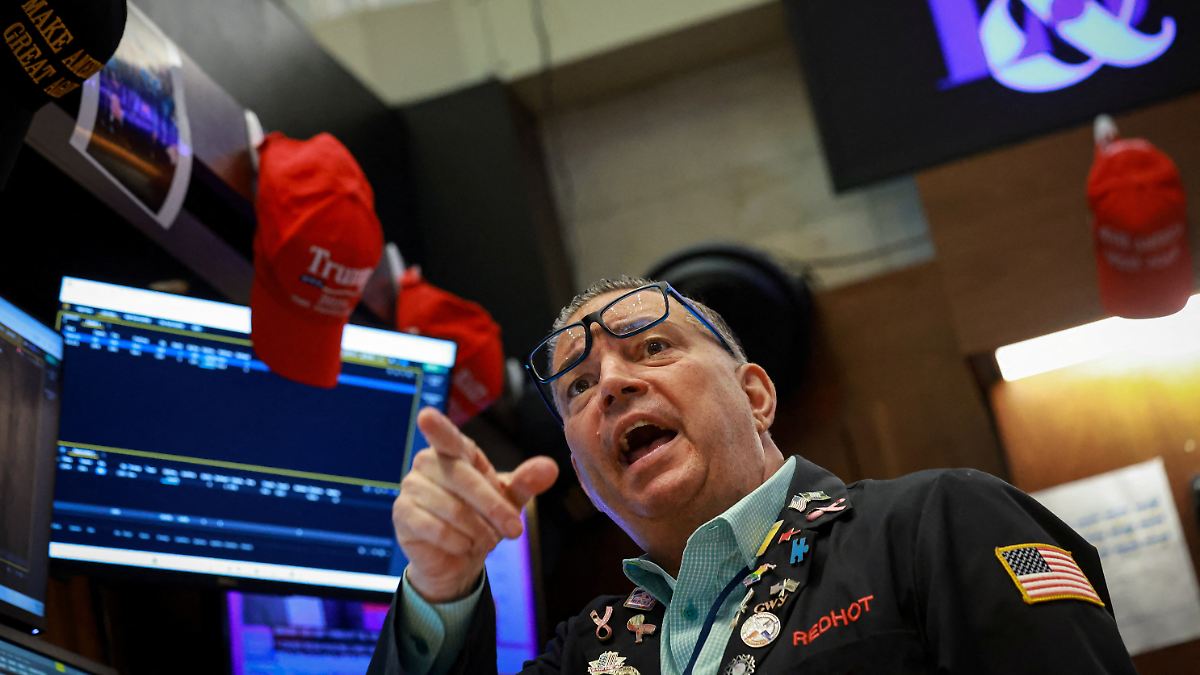
Wall Street Surges to Records as AI Boom and Iran Peace Hopes Fuel Market Rally
Wall Street’s three major indices closed at record highs on Tuesday, May 6, 2026, as investors bet heavily on two major catalysts: a potential U.S.-Iran peace agreement and surging demand for artificial intelligence infrastructure. The S&P 500 climbed 1.46% to 7,365.12 points, the Nasdaq Composite jumped 2.02% to 25,838.94, and the Dow Jones Industrial Average gained 1.24% to 49,910.59, all setting recent closing records. The rally extended overnight into Asian markets, where futures pointed higher.
The market surge was led by artificial intelligence and semiconductor stocks, with Advanced Micro Devices (AMD) surging nearly 19% on upbeat second-quarter guidance. The VanEck Semiconductor ETF (SMH) rose 5%, while Intel (INTC) gained 4.5%. Nvidia (NVDA), the dominant player in AI chips, added 5.7%, though its gains were more modest compared to AMD’s performance. The broader tech sector also benefited, with Walt Disney (DIS) climbing 7.5% and Uber (UBER) jumping 8.3% on reports of improved global logistics conditions tied to reduced geopolitical tensions.
Underpinning the AI-driven rally is AMD’s aggressive push into the AI inference market with its MI300X chip, which is positioned to challenge Nvidia’s long-standing dominance. Analysts note that AMD’s strategy—combining high-performance computing with cost-effective solutions—is resonating with data center operators looking to diversify their AI infrastructure. “This is more than a quarterly earnings beat; it’s a validation of AMD’s long-term AI strategy,” said Sandeep G., a semiconductor analyst with Seeking Alpha.
Meanwhile, the market’s optimism was further fueled by reports of a U.S.-Iran agreement covering an Iranian nuclear enrichment moratorium. While details remain preliminary, the prospect of reduced geopolitical risks—particularly in the Strait of Hormuz—has eased inflationary pressures. Brent crude oil prices tumbled 7.83% on the news, trimming expectations for Federal Reserve rate hikes and boosting risk assets globally.
AI Infrastructure: The New Growth Engine
AMD’s stock surge reflects broader investor enthusiasm for AI-related infrastructure. The company’s MI300X chip, designed for high-performance AI workloads, is seen as a critical tool for enterprises looking to deploy large-scale AI models without the prohibitive costs associated with Nvidia’s offerings. “The MI300X isn’t just competitive with Nvidia’s H100; it offers a more balanced approach for mixed workloads,” explained Oliver Rodzianko, a tech analyst at Seeking Alpha. “This is particularly appealing to hyperscale cloud providers who need flexibility.”
Beyond AMD, the semiconductor sector saw broad-based strength. TSMC, the world’s largest semiconductor foundry, reported early signs of formidable competition in advanced node production, which could further pressure pricing and benefit AI chip demand. Meanwhile, Super Micro Computer (SMCI) saw an 8.2% gain as investors bet on its role in building AI-optimized data centers.
Yet not all AI-related stocks performed equally. While Nvidia’s gains were solid, its stock remained flat compared to AMD’s explosive move, reflecting lingering concerns about its market share in the inference segment. “Nvidia is still the 800-pound gorilla, but AMD is quickly becoming the agile challenger,” noted Beth Kindig, a market strategist at Seeking Alpha.
Geopolitical Risks and Market Sentiment
The Iran peace talks added another layer of optimism to an already bullish market. While President Donald Trump described the agreement as “preliminary,” his warning that airstrikes would resume if Iran rejected the proposal underscored the fragile nature of the negotiations. The delay in Project Freedom—a plan to redirect shipping routes away from the Strait of Hormuz—further signaled cautious optimism about de-escalation.
European markets also reflected the cross-border rally. In Frankfurt, the DAX rose 2.1%, with shares in MTU, Airbus, Lufthansa, and TUI gaining as investors anticipated reduced defense spending pressures. The Vienna Stock Exchange saw kräftige Gewinne (strong gains) as hopes of a de-escalation in the Iran conflict boosted confidence in export-dependent sectors.
What Happens Next?
The market’s reaction to these developments underscores the delicate balance between geopolitical risks and technological innovation. While AI infrastructure remains a key driver of growth, the sustainability of the rally will depend on:
- AI adoption timelines: Enterprises must continue investing in AI infrastructure, which requires sustained capital expenditure.
- Geopolitical stability: Any breakdown in U.S.-Iran negotiations could trigger volatility, particularly in energy markets.
- Monetary policy: The Federal Reserve’s next moves will be critical, especially as inflation pressures ease.
- AMD’s execution: The company must deliver on its MI300X promises and expand its data center partnerships.
Key Takeaways
- Record highs: All three major U.S. Indices—Dow, S&P 500, and Nasdaq—closed at new all-time highs on May 6, 2026.
- AI leadership: AMD surged 18.6% on strong AI chip demand, challenging Nvidia’s dominance in the inference market.
- Geopolitical tailwinds: Hopes of a U.S.-Iran nuclear agreement reduced energy price risks and boosted risk assets.
- Semiconductor strength: The VanEck Semiconductor ETF (SMH) rose 5%, with Intel and TSMC also gaining.
- European spillover: Frankfurt and Vienna exchanges saw gains as export sectors benefited from reduced geopolitical tensions.
- Next catalysts: Watch for AMD’s Q2 earnings, Federal Reserve policy updates, and U.S.-Iran negotiation progress.
Expert Insights: Why This Rally Matters
Dr. Olivia Bennett, Chief Editor of World Today Journal, notes that the market’s reaction reflects two critical trends: the maturing AI infrastructure cycle and the growing influence of geopolitical developments on financial markets. “We’re seeing a convergence of technological and geopolitical factors that are reshaping investor sentiment,” she said. “The AI boom isn’t just about hype; it’s about real demand for hardware that can handle increasingly complex models. Meanwhile, the Iran talks show how quickly markets can pivot on diplomatic breakthroughs.”


For investors, the rally presents both opportunities and risks. While AI stocks offer long-term growth potential, the sector remains volatile. Geopolitical risks, though reduced, are never fully eliminated. “Diversification remains key,” Bennett advises. “Those betting solely on AI or geopolitical plays may find themselves exposed if either narrative shifts.”
Where to Find Official Updates
For the latest developments:
- U.S.-Iran negotiations: Follow statements from the White House (whitehouse.gov) and Iran’s Foreign Ministry (mfa.gov.ir).
- AMD earnings: Check the company’s investor relations page (amd.com) for Q2 2026 updates.
- Federal Reserve policy: Monitor the Federal Reserve’s official communications for rate decision timelines.
- Semiconductor sector: Track earnings reports from Nvidia (nvidia.com), Intel (intel.com), and TSMC (tsmc.com).
What do you think? Will the AI boom sustain this rally, or are we seeing a temporary spike driven by geopolitical hopes? Share your insights in the comments below or on our social channels.
Next checkpoint: Watch for AMD’s Q2 earnings report (expected May 22, 2026) and the next U.S.-Iran negotiation update, which may come as early as May 10, 2026.
Related reading
- Innenraum-Design: Wie das schwedische Wohnzimmer ins Auto einzog – Motor1.com Deutschland
- Fannie Mae and Freddie Mac Tighten Condo Mortgage Requirements: Delays and Denials Expected
- Roberville-les-Bains Sees Record Tourism Surge Due to Extreme Heatwaves (world-today-news.com)
- Andy Burnham sees modest polling bounce but inherits record-low support (time.news)