
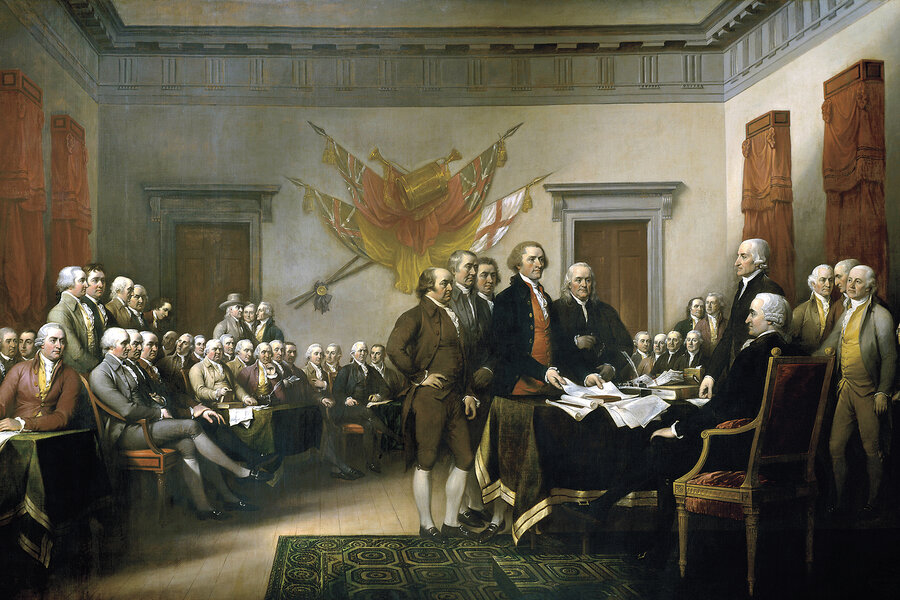
As the United States prepares to mark America’s 250th anniversary on July 4, 2026, the milestone serves as more than a chronological marker; It’s a global mirror. The Semiquincentennial arrives at a moment of profound internal tension, where the celebratory spirit of a national birthday clashes with a deep, systemic questioning of what those founding ideals actually mean in a modern, polarized society.
For two and a half centuries, the Declaration of Independence has functioned as a foundational text not only for the American experiment but for the global pursuit of self-determination. Its assertion that “all men are created equal” provided a philosophical catalyst that sparked revolutions, dismantled empires, and informed the drafting of human rights charters across the globe. Yet, as the country approaches this anniversary, the gap between those written ideals and the lived experience of millions remains a central point of national contention.
From a global economic and political perspective, the stability and identity of the United States continue to influence international markets and democratic norms. When the U.S. Grapples with its identity, the reverberations are felt worldwide. The upcoming celebrations are therefore not merely local festivities, but a public accounting of whether the promises made in 1776 can be reconciled with the complexities of the 21st century.
The Global Echo of 1776: A Blueprint for Sovereignty
The impact of the Declaration of Independence extended far beyond the thirteen colonies. By codifying the right of a people to alter or abolish a government that becomes destructive to their basic rights, the document reset the global understanding of political legitimacy. This shift moved the source of power from the “divine right of kings” to the “consent of the governed.”
This ideological shift was instrumental in the late 18th and 19th centuries. The French Revolution’s Declaration of the Rights of Man and of the Citizen (1789) drew direct inspiration from American ideals of liberty and equality. Similarly, independence movements across Latin America in the early 1800s utilized the American precedent to justify their break from Spanish and Portuguese colonial rule. The National Archives preserves the original document that served as this global blueprint, detailing the grievances and aspirations that redefined the relationship between the state and the individual.
Even in the post-colonial era of the 20th century, the language of the Declaration continued to resonate. Leaders of independence movements in Africa and Asia often referenced the American struggle for sovereignty to frame their own quests for freedom. The universality of the document’s claims—despite the failures of the authors to apply them universally at the time—created a standard of human rights that continues to be invoked by activists and diplomats globally.
The Paradox of Freedom: Ideals vs. Reality
The central tension of America’s 250th anniversary lies in the paradox of its inception. The same document that proclaimed a universal right to liberty was authored and signed by individuals who held enslaved people in bondage. This contradiction is not a historical footnote; it is a primary driver of the current political and social polarization within the United States.

For many, the anniversary is a time of pride in the resilience of democratic institutions and the gradual expansion of rights. For others, it is a moment for solemn reflection on the “unfinished work” of the American project. The struggle to reconcile the rhetoric of equality with the history of chattel slavery and the displacement of indigenous populations has transformed the Semiquincentennial from a simple celebration into a complex civic dialogue.
This friction is visible in how different communities approach the commemorations. While some focus on the military triumphs of the Revolutionary War, others emphasize the roles of free people of color, women, and enslaved individuals who fought and died for a freedom they were not guaranteed to enjoy. This divergent storytelling reflects a broader national struggle to define a shared history that is both honest about its failures and hopeful about its potential.
Navigating National Identity Amidst Polarization
The current political climate in the U.S. Has seeped into the planning and perception of the 250th anniversary. Political polarization has created a divide in how the milestone is framed: as a “proud national milestone” to be celebrated with fanfare, or as a “chance to reflect” on systemic inequities and the fragility of democratic norms.
This divide is not merely about history, but about the current trajectory of the country. Issues such as voting rights, judicial appointments, and the definition of citizenship are viewed through the lens of the founding documents. The Declaration of Independence is often cited by opposing political factions to justify contradictory positions, illustrating how the document’s broad ideals can be interpreted to support a wide array of political philosophies.
Economically, this instability can create a climate of uncertainty. Global investors often look to the social cohesion of the United States as a proxy for its long-term institutional stability. A country that can successfully navigate its anniversary by finding a common narrative of progress—even one that acknowledges pain—is a country that demonstrates the resilience of its democratic framework.
Key Takeaways: The Semiquincentennial Perspective
- Global Legacy: The 1776 Declaration shifted the global political paradigm from monarchical rule to the consent of the governed, influencing revolutions in France and Latin America.
- Core Paradox: The anniversary highlights the tension between the ideal of universal equality and the historical reality of slavery and exclusion.
- Civic Dialogue: The 250th anniversary is acting as a catalyst for a national conversation on identity, forcing a reconciliation between historical pride and historical accountability.
- Institutional Stability: The ability of the U.S. To manage this milestone amidst deep polarization is a key indicator of its democratic health and global standing.
The Semiquincentennial as a Mirror for the Future
As the United States moves toward July 2026, the goal of the commemorations is increasingly becoming a quest for a “more perfect union.” This phrase, taken from the Preamble of the Constitution, suggests that the American project is an ongoing process rather than a finished product. The 250th anniversary offers a rare opportunity to redefine the national narrative for the next century.

The challenge for the U.S. Is to move beyond a binary of “blind celebration” versus “total condemnation.” A more sustainable path involves a synthesis: acknowledging the brilliance of the founding ideals while remaining rigorously honest about the failures to implement them. By doing so, the U.S. Can transform the Semiquincentennial into a bridge toward greater civic unity.
For the rest of the world, the outcome of this process is significant. If the United States can successfully navigate this period of intense self-examination and emerge with a renewed commitment to its founding principles of liberty and equality, it will reaffirm the viability of democratic governance in an era of rising authoritarianism. If it remains fractured, the milestone may instead serve as a cautionary tale about the limits of ideological foundations when they are not matched by social cohesion.
the resonance of the Declaration of Independence in 2026 will not be found in the fireworks or the parades, but in the country’s willingness to address the gaps in its own promise. The “reset” that occurred in 1776 provided the world with a vision of what a free society could be; the task of the 250th anniversary is to determine what that society must become to survive and thrive in a globalized age.
The next major confirmed checkpoint for these celebrations will be the official rollout of the national commemorative program and the coordination of state-level events leading up to the primary festivities on July 4, 2026. We encourage our readers to share their perspectives on how national milestones should balance celebration with historical reflection in the comments below.