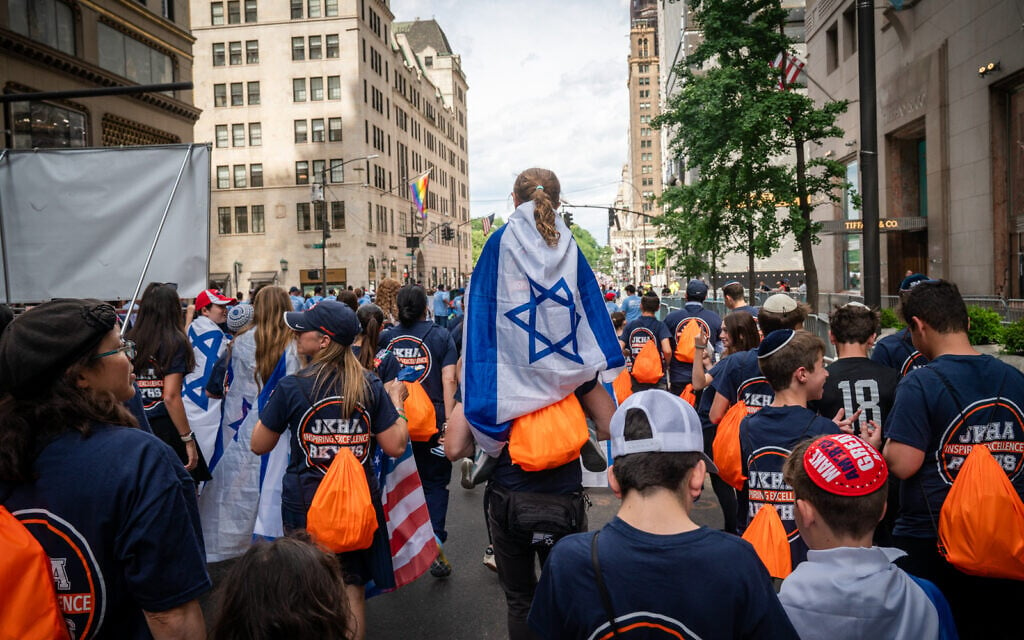
The annual Celebrate Israel Parade in New York City serves as more than a public display of cultural heritage; it acts as a complex intersection where American Jewish identity, civic participation, and international geopolitical advocacy converge. For many participants, the event is a tangible expression of a dual commitment, reflecting how American Jews navigate their relationship with the State of Israel while remaining deeply integrated into the fabric of American society. As the parade moves through the streets of Manhattan, it highlights the ongoing dialogue surrounding how diaspora communities maintain a sense of belonging to a ancestral homeland while exercising their rights as citizens in the United States.
This event, organized by the Jewish Community Relations Council of New York (JCRC-NY), typically draws thousands of marchers and spectators, turning Fifth Avenue into a site of symbolic unity. According to the JCRC-NY official archives, the parade has evolved over decades from a local celebration into one of the largest gatherings of its kind globally, providing a platform for diverse organizations, schools, and political groups to demonstrate their support for the U.S.-Israel relationship. Understanding the parade requires looking beyond the music and costumes to the underlying question of how identity is constructed in a modern, pluralistic democracy.
The Evolution of Civic Expression
Historically, the parade has functioned as an anchor for the Jewish community in New York, offering a space to articulate collective values. The act of marching is often framed by participants as a form of civic engagement, mirroring other ethnic and cultural parades that define the city’s diverse landscape. By physically occupying public space, attendees assert their presence and their priorities within the American political discourse. This practice is consistent with the broader tradition of group advocacy in the United States, where identity-based organizations leverage public visibility to influence public opinion and policy, as noted by the Pew Research Center’s studies on Jewish identity.

The significance of the event often shifts in response to the geopolitical climate. During periods of heightened tension in the Middle East, the parade frequently takes on a more pronounced advocacy role. Participants often cite the need to demonstrate solidarity during times of crisis, transforming the march into a visible counterpoint to rising concerns about antisemitism or political instability abroad. For the organizers, the challenge lies in balancing the celebratory nature of the day with the serious, often divisive, political realities that define the contemporary U.S.-Israel relationship.
Navigating Duality in Identity
The tension between being “American” and being “pro-Israel” is a frequent topic of internal community discussion. Many American Jews identify as both patriotic citizens of the United States and passionate supporters of the State of Israel, a position that is sometimes scrutinized by external observers. Scholars of American Jewish history often point out that this duality is not unique to this community; many immigrant and diaspora groups in the United States maintain similar attachments to their countries of origin. The parade provides a structured environment where this identity is not only accepted but celebrated.

However, the diversity of opinion within the American Jewish community means that the parade does not represent a monolithic viewpoint. While the event is broadly characterized by its support for Israel, the nuances of that support—ranging from unconditional backing of government policies to critical engagement—are subject to ongoing debate. The Anti-Defamation League has documented the complexities of these community dynamics, emphasizing that the parade serves as a microcosm of the broader, often contentious, discourse occurring in synagogues, community centers, and academic institutions across the country.
Impact and Community Cohesion
Beyond the political implications, the parade functions as a vital social mechanism for community cohesion. It brings together disparate factions—secular, religious, institutional, and grassroots—under a single, shared banner. For younger generations, the event is often an introduction to community leadership and public activism, providing a space to connect with their heritage in a tangible way. The logistical success of the event, which requires extensive coordination with the New York City Police Department for security and traffic control, underscores the institutional weight behind the gathering.
As the community looks toward future iterations, the question remains how the parade will adapt to changing demographics and shifting political landscapes. The organizers continue to navigate the balance between tradition and the evolving priorities of a younger, more diverse generation of American Jews. Whether the parade will continue to serve primarily as a site of celebration or transition into a more overtly political forum remains a subject of active discourse within the community.
The next scheduled organizational update regarding community events and programming for the upcoming season can be found on the JCRC-NY website. We invite our readers to share their perspectives on how cultural parades influence civic identity in the comments section below.
Keep reading