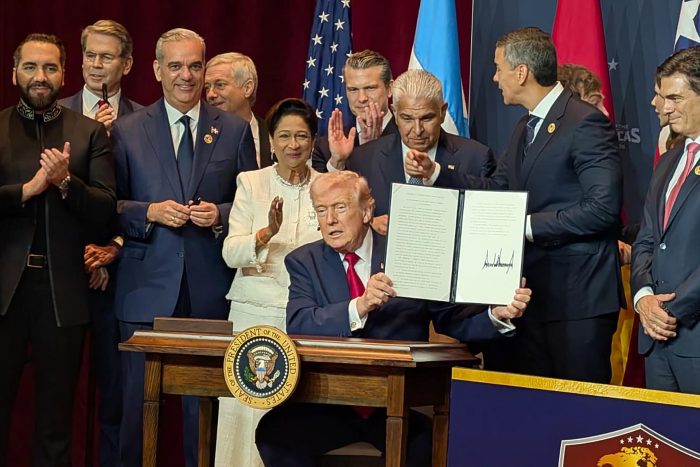
Doral, Florida – A US-led initiative aimed at bolstering regional security cooperation to combat drug trafficking and related threats has seen participation from twelve Latin American nations, but notably, Chile remained on the sidelines. The “Conference of the Americas Against Cartels,” held on March 4th and 5th, 2026, culminated in a joint declaration outlining a commitment to enhanced collaboration, border security, and a strategy of “peace through strength.” While the agreement signals a renewed US focus on hemispheric security, Chile’s absence raises questions about the coalition’s immediate viability and the evolving geopolitical landscape in Latin America.
The declaration, available for review here, commits signatory nations to expanding bilateral and multilateral security cooperation, strengthening border controls, and protecting critical infrastructure. The initiative comes at a time of increased US international activity, following recent unilateral interventions in Venezuela and, more recently, Iran, signaling a more assertive foreign policy approach under the Trump administration. The coalition aims to consolidate a new hemispheric security framework under US leadership, broadening the fight against organized crime to encompass issues of narcoterrorism and infrastructure protection.
Chile’s Institutional Position and the Upcoming Presidential Transition
Chile’s decision not to sign the declaration stems from an institutional technicality related to the country’s ongoing presidential transition. The Chilean delegation to the conference was led by José Antonio Kast, the recently elected President, but in a capacity that lacked the executive authority to formally commit the nation to a security alliance. According to reports, Kast will not assume office until a later date, meaning he currently lacks the constitutional power to bind Chile to international agreements. This procedural hurdle meant Chile could participate in discussions but not formally endorse the joint declaration.
Key Players and Concerns Regarding Regional Participation
The absence of Mexico and Colombia from the agreement has drawn considerable attention, given their central roles in the ongoing struggle against drug cartels. Both nations have historically been key partners with the United States in counter-narcotics efforts. Their non-participation raises questions about the coalition’s overall effectiveness and its potential to address the complex challenges posed by transnational criminal organizations. The ad hoc nature of the alliance – its specific structure and long-term goals – also fuels debate regarding its sustainability and geopolitical implications for the region. The initiative’s success will depend on securing broader regional buy-in and addressing the concerns of key stakeholders.
Coordinating the new security framework will be Kristi Noem, a former Secretary of Homeland Security for the United States and a prominent figure in Donald Trump’s immigration policies. Noem has been designated as a special envoy tasked with articulating and implementing the coalition’s regional strategy. Her appointment underscores the Trump administration’s commitment to prioritizing border security and combating illegal immigration alongside efforts to disrupt drug trafficking networks. Noem’s previous role suggests a focus on a comprehensive approach that links immigration enforcement with counter-narcotics operations.
The Scope of the Agreement: Beyond Drug Trafficking
The joint declaration extends beyond simply targeting drug cartels. It encompasses a broader range of threats, including narcoterrorism and the protection of critical infrastructure. This expanded scope reflects a growing recognition that drug trafficking is often intertwined with other forms of organized crime, including terrorism and cyberattacks. Protecting critical infrastructure – such as energy grids, transportation networks, and communication systems – is seen as essential to national security and economic stability. The agreement’s emphasis on a holistic approach suggests a desire to address the root causes of instability and prevent the spread of criminal activity.
Geopolitical Implications and US Foreign Policy
The formation of this coalition is occurring within a broader context of shifting geopolitical dynamics in Latin America and a more assertive US foreign policy. The Trump administration has demonstrated a willingness to seize unilateral action in response to perceived threats, as evidenced by interventions in Venezuela and Iran. This approach has raised concerns among some regional actors about US interference in their internal affairs. The coalition’s success will depend on building trust and fostering genuine partnerships with Latin American nations, rather than imposing a US-centric agenda. The initiative also comes as several Latin American countries grapple with internal political and economic challenges, creating a complex environment for regional cooperation.
The principle of “peace through strength,” enshrined in the declaration, signals a willingness to employ robust measures to combat drug trafficking and related threats. This could include increased military assistance, intelligence sharing, and law enforcement cooperation. However, it also raises concerns about potential human rights abuses and the risk of escalating violence. Balancing security concerns with respect for human rights and the rule of law will be a critical challenge for the coalition.
Looking Ahead: Next Steps and Potential Challenges
The immediate next step for the coalition will be to finalize the details of its implementation, including the allocation of resources, the establishment of clear lines of communication, and the development of joint operational plans. Kristi Noem is expected to travel throughout the region in the coming weeks to meet with government officials and discuss the coalition’s objectives. A key challenge will be to address the concerns of Mexico and Colombia and potentially bring them on board. Securing their participation would significantly enhance the coalition’s credibility and effectiveness.
the coalition will need to navigate the complex political landscape of Latin America, where there is a diversity of views on how to address the challenges of drug trafficking and organized crime. Some countries may be reluctant to embrace a US-led initiative, while others may have reservations about the coalition’s emphasis on military force. Building consensus and fostering a spirit of cooperation will be essential to the coalition’s long-term success.
The assumption of office by José Antonio Kast in Chile will be a crucial moment. Once in power, he will be able to formally assess Chile’s participation in the coalition and determine the extent of the country’s commitment to the initiative. His administration’s stance on regional security cooperation will likely shape Chile’s role in the broader effort to combat drug trafficking and related threats. The timing of his inauguration remains a key factor in determining the coalition’s future trajectory.
As the coalition moves forward, it will be important to monitor its impact on the ground and assess its effectiveness in achieving its stated goals. Regular evaluations and transparent reporting will be essential to ensure accountability and build public trust. The success of this initiative will ultimately depend on its ability to deliver tangible results and improve the lives of people throughout the region.
The next official update regarding the coalition’s progress is expected during a press briefing scheduled for April 15th, 2026, led by Special Envoy Kristi Noem. Readers are encouraged to share their thoughts and perspectives on this developing story in the comments section below.