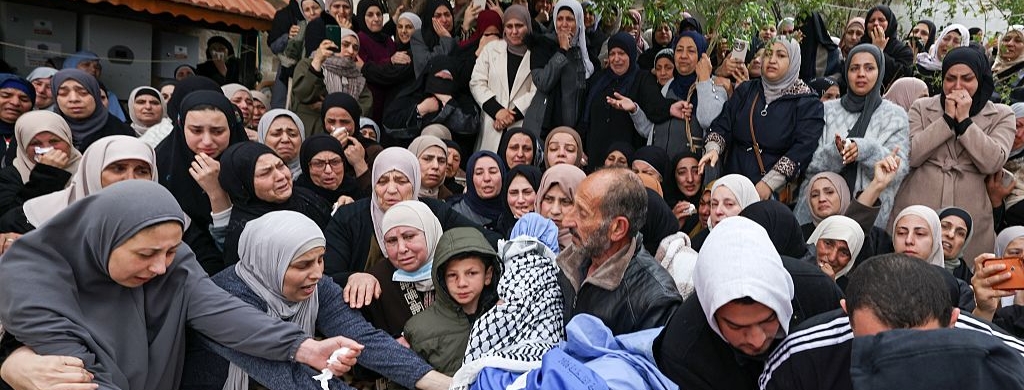
The killing of a Palestinian family – Waed Bani Owda, her husband Ali Bani Owda, and their two young children, Othman, 7, and Mohammed, 5 – in the occupied West Bank on March 15, 2026, has sparked international condemnation and renewed scrutiny of Israel’s use of force against Palestinians. The incident, which occurred in Tammoun, underscores a disturbing pattern of escalating violence in the region and raises serious questions about accountability for civilian deaths. The family was reportedly shot while traveling in their car, with initial reports suggesting Israeli forces, operating undercover, opened fire on the vehicle. This tragic event adds to a growing number of Palestinian fatalities in the West Bank since October 7, 2023, and the subsequent intensification of the Israeli-Palestinian conflict.
The circumstances surrounding the Bani Owda family’s deaths are particularly concerning, with allegations that the Israeli military unit involved was posing as Palestinians and driving a vehicle with Palestinian license plates. This tactic, if confirmed, raises significant ethical and legal questions about the conduct of the operation. Amnesty International has expressed deep concern that the attack may amount to an extrajudicial execution, given the lack of evidence suggesting the family posed an immediate threat. The organization is calling for a thorough, independent, and impartial investigation into the incident, emphasizing the require to hold those responsible accountable for any unlawful killings. The trauma inflicted extends beyond the immediate loss of life, as the couple’s two other children, who were also in the car, witnessed the horrific event and will carry the emotional scars for years to come.
This incident is not isolated. Since the beginning of 2026, and particularly since the start of the US-Israeli war on Iran on February 28th, there has been a marked increase in the number of Palestinians killed in the West Bank. According to data compiled by the United Nations Office for the Coordination of Humanitarian Affairs (OCHA), at least 1,071 Palestinians have been killed by Israeli security forces and settlers in the occupied West Bank since October 7, 2023, including 233 children. OCHA reports detail a worrying trend of unlawful killings and excessive force used against Palestinians, often with impunity. This escalating violence is occurring against a backdrop of ongoing Israeli occupation and a complex geopolitical landscape, further exacerbating tensions and hindering efforts towards a peaceful resolution.
Rising Concerns Over Lethal Force and Impunity
The Bani Owda family tragedy has amplified calls for greater accountability and an conclude to what human rights organizations describe as Israel’s institutionalized violence against Palestinians. Amnesty International, in a statement released following the incident, highlighted Israel’s long history of failing to protect Palestinians and to independently investigate and prosecute offenses committed against them. The organization argues that this impunity is a key component of Israel’s system of apartheid, which it alleges is characterized by discriminatory laws, policies, and practices that systematically oppress Palestinians. Amnesty International’s February 2024 report details a shocking spike in the use of unlawful lethal force by Israeli forces in the West Bank, documenting numerous cases of arbitrary killings and excessive force against Palestinians.
Heba Morayef, Regional Director for the Middle East and North Africa at Amnesty International, stated that wilful killings of Palestinians in the Occupied Palestinian Territory constitute grave breaches of the Fourth Geneva Convention and amount to war crimes. She emphasized the urgent need for states with influence over Israel to adopt tangible measures to end the cycle of impunity and to bring about a just and lasting resolution to the conflict. The Fourth Geneva Convention, adopted in 1949, outlines the protection of civilians during wartime and establishes rules regarding the occupation of foreign territory. Violations of the convention are considered serious breaches of international humanitarian law.
The Context of the US-Israeli War on Iran
The recent surge in violence in the West Bank is occurring against the backdrop of the ongoing US-Israeli war on Iran, which began on February 28, 2026. While the direct link between the conflict in Iran and the increased violence in the West Bank is complex, analysts suggest that the heightened regional tensions have created a more volatile environment, contributing to an escalation of hostilities. The war in Iran has also diverted international attention and resources, potentially reducing pressure on Israel to adhere to international law and human rights standards in the occupied territories. The conflict in Iran itself has resulted in significant casualties and displacement, further destabilizing the region and exacerbating humanitarian concerns.
The situation is further complicated by the presence of Israeli settlers in the West Bank, who have been accused of carrying out attacks against Palestinians with impunity. Amnesty International has documented numerous instances of settler violence, including assaults, property destruction, and harassment, often with the complicity or direct involvement of Israeli forces. The organization’s April 2024 report details a state-backed deadly rampage by Israeli settlers, underscoring the urgent need to dismantle the structures that enable and perpetuate settler violence. The expansion of Israeli settlements in the West Bank is considered illegal under international law and is a major obstacle to achieving a two-state solution.
International Law and the Occupied Palestinian Territory
The legal status of the Occupied Palestinian Territory (OPT) is a central issue in the Israeli-Palestinian conflict. The OPT, which includes the West Bank, East Jerusalem, and the Gaza Strip, was captured by Israel during the 1967 Six-Day War. The international community, with few exceptions, does not recognize Israel’s annexation of East Jerusalem and considers the West Bank to be occupied territory. As an occupying power, Israel is obligated under international law, including the Fourth Geneva Convention, to protect the rights of the Palestinian population and to refrain from actions that could be considered violations of international humanitarian law.
However, critics argue that Israel has consistently failed to uphold these obligations, engaging in practices such as settlement construction, land confiscation, and the imposition of restrictions on Palestinian movement and access to resources. These actions, they contend, constitute violations of international law and contribute to the ongoing oppression of Palestinians. The International Criminal Court (ICC) has opened an investigation into alleged war crimes committed in the OPT, but the investigation has faced political obstacles and delays. The ICC’s jurisdiction over the OPT is contested by Israel, which does not recognize the court’s authority.
The Path Forward: Accountability and Justice
Addressing the escalating violence in the West Bank and ensuring accountability for human rights violations requires a multifaceted approach. International pressure on Israel to adhere to international law and to end its occupation of the OPT is crucial. States with influence over Israel must be willing to impose meaningful consequences for violations of international law, including sanctions and restrictions on military aid. Independent and impartial investigations into all alleged unlawful killings and other human rights abuses are essential, and those responsible must be held accountable, regardless of their position or affiliation.
efforts to address the root causes of the conflict, such as the ongoing occupation, the expansion of settlements, and the denial of Palestinian rights, are necessary to create a sustainable peace. A just and lasting resolution to the Israeli-Palestinian conflict must be based on international law, relevant UN resolutions, and the principle of equal rights for all. The international community must also provide increased humanitarian assistance to Palestinians in the OPT, addressing their urgent needs and supporting their resilience in the face of ongoing challenges.
Key Takeaways:
- The killing of the Bani Owda family highlights a disturbing trend of escalating violence against Palestinians in the West Bank.
- Amnesty International is calling for an independent investigation into the incident, alleging it may amount to an extrajudicial execution.
- The surge in violence is occurring against the backdrop of the US-Israeli war on Iran and a broader context of Israeli occupation.
- International pressure on Israel to uphold international law and ensure accountability for human rights violations is crucial.
The situation in the West Bank remains highly volatile, and further escalation is possible. The United Nations Security Council is scheduled to discuss the recent violence on March 22, 2026, and is expected to consider a resolution calling for a ceasefire and an independent investigation into the killings. The outcome of this meeting will be a key indicator of the international community’s willingness to address the crisis. We encourage readers to share their thoughts and perspectives on this critical issue in the comments below.
Worth a look