/https://i.s3.glbimg.com/v1/AUTH_59edd422c0c84a879bd37670ae4f538a/internal_photos/bs/2023/9/a/ADHw8tTxeIOgg8RSchWQ/atlantic-ocean-22463667157-.jpg)
The Atlantic Meridional Overturning Circulation (AMOC), a critical system of ocean currents that regulates the global climate, is weakening at a rate that could trigger catastrophic environmental feedback loops. New computer modeling suggests that a complete collapse of this system—which includes the Gulf Stream—could transform the Southern Ocean from a carbon sink into a massive carbon source, accelerating global warming far beyond previous estimates.
According to research led by Da Nian of the Potsdam Institute for Climate Impact Research, an AMOC collapse could trigger significant mixing in the Southern Ocean, releasing up to 640 billion tonnes of carbon dioxide stored in deep waters into the atmosphere New Scientist. This release of stored carbon could potentially heat the planet by an additional 0.2°C, creating a dangerous feedback loop where warming causes the current to sluggish, which in turn releases more carbon and fuels further warming.
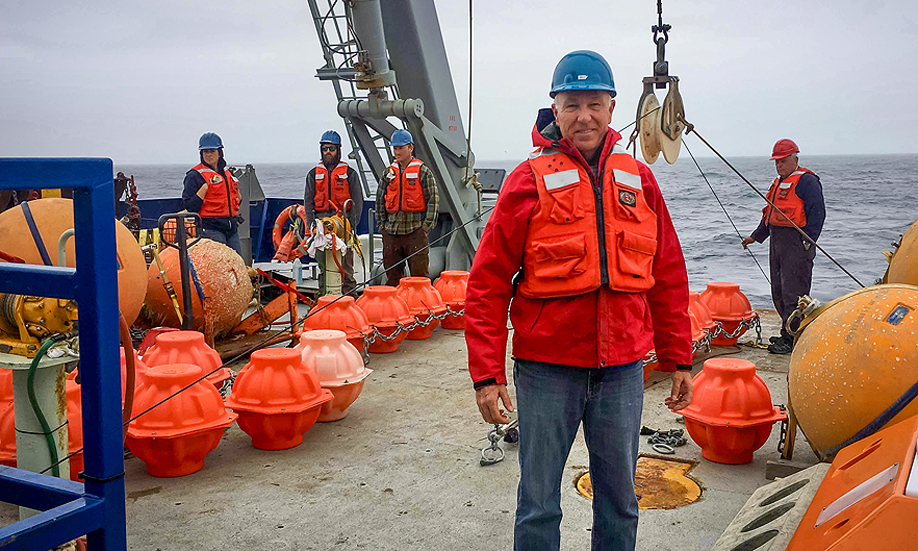
The AMOC functions as a conveyor belt, driven by differences in water density. It transports warm, salty water from the Gulf of Mexico to the North Atlantic, where the water cools, becomes denser, and sinks to the seafloor before returning southward. However, scientists believe that fresh meltwater from the Greenland ice sheet is diluting this salt concentration, hindering the sinking process and slowing the entire circulation. Recent buoy measurements indicate that the southward returning flow is weakening, with the AMOC already having declined by an estimated 15 per cent New Scientist.
The implications of this decline extend far beyond the Atlantic. While the AMOC is essential for warming Europe, its failure would not result in uniform global cooling. Instead, it would create sharp polar contrasts and disrupt weather patterns across multiple continents, potentially altering the stability of the Earth’s climate system.
The Tipping Point: From Carbon Sink to Carbon Source
For decades, the Southern Ocean has acted as a vital buffer against climate change by absorbing vast amounts of atmospheric CO2. However, a recent paper published in the journal Nature Communications Earth and Environment warns that a total AMOC collapse could flip this dynamic. By releasing deep-ocean carbon, the Southern Ocean would transition from a carbon sink to a carbon source Down To Earth.

This transition is not merely a theoretical risk. Observational data from four mooring arrays in the western Atlantic, covering latitudes from 16.5°N to 42.5°N, has shown a consistent weakening of the western boundary overturning of the AMOC over the last two decades Down To Earth. A separate study published in Science Advances suggests that the system may be approaching a tipping point, particularly in the western Atlantic Ocean.
The scale of the potential carbon release is staggering. The emission of as much as 640 billion tonnes of CO2 near Antarctica would represent a massive injection of greenhouse gases into the atmosphere New Scientist. Johan Rockström, co-author of the study and researcher at the Potsdam Institute, emphasizes the “domino effects” of such a collapse, noting that when one climate pillar fails, it can trigger a series of other failures that amplify the original crisis.
Regional Climate Disruptions and Polar Contrasts
A collapse of the AMOC would not affect the globe uniformly; rather, it would redistribute heat in ways that could make certain regions uninhabitable or economically devastated. The most immediate impact would be felt in Europe, where the lack of warm water from the Gulf Stream could lead to significantly colder winters New Scientist.

Beyond Europe, the disruption would extend to global precipitation patterns. Scientists warn that an AMOC shutdown could disrupt monsoons in Africa and Asia, which are critical for agriculture and water security for billions of people New Scientist. The shift in heat distribution would too create extreme temperature disparities at the poles.
Model simulations indicate that while the global average temperature would rise due to the released carbon, regional effects would be stark: the Arctic could see cooling of up to 7°C, while parts of Antarctica could experience warming of up to 6°C Down To Earth. This sharp polar contrast would further destabilize global weather systems and ocean circulation.
Summary of AMOC Collapse Impacts
| Impact Area | Projected Effect | Key Detail |
|---|---|---|
| Global Temperature | Increase | Additional 0.2°C warming from carbon release New Scientist |
| Southern Ocean | Role Reversal | Flips from carbon sink to carbon source Phys.org |
| Carbon Emission | Massive Release | Up to 640 billion tonnes of CO2 near Antarctica New Scientist |
| Arctic Region | Extreme Cooling | Cooling of up to 7°C Down To Earth |
| Antarctic Region | Extreme Warming | Warming of up to 6°C in some parts Down To Earth |
| Global Weather | Systemic Failure | Disrupted monsoons in Asia and Africa New Scientist |
Why This Matters for Global Policy
The realization that the AMOC collapse could trigger a massive release of carbon from the deep ocean adds a new layer of urgency to climate mitigation efforts. For years, the focus has been on reducing current emissions from fossil fuels. However, these findings highlight the danger of “tipping points”—thresholds where a system shifts into a new state that cannot be easily reversed, even if human emissions are curtailed.
The “big mixing” described by Da Nian suggests that the ocean’s ability to store carbon is not a permanent solution. If the circulation that keeps carbon sequestered in the deep water fails, the ocean becomes an active driver of warming rather than a protector against it. This underscores the precarious nature of the Earth’s climate regulation systems and the potential for unforeseen “domino effects” that could accelerate the pace of global warming beyond current policy projections.
As the AMOC continues to weaken—already down by an estimated 15 per cent—the window for preventing a total collapse may be narrower than previously thought. The integration of this new data into global climate models is essential for governments to understand the true risk of inaction and the potential for sudden, non-linear shifts in the global environment.
Climate scientists and policymakers continue to monitor the western Atlantic mooring arrays and the Greenland ice sheet melt to determine how close the system is to its final tipping point. Further updates on the stability of the Atlantic circulation are expected as new observational data from these arrays are analyzed.
We invite our readers to share this report and join the conversation in the comments section below. How should global policy shift in response to these tipping point risks?
Related reading