Beyond DNA: How Ancient Proteins Are Rewriting the Story of Human Evolution
For decades, the quest to map human ancestry has relied almost exclusively on the decoding of ancient DNA. While genomic sequencing has provided a fragmented map of our past, it faces a fundamental biological barrier: time. As organic matter ages, the double helix fragments, and the chemical bases that carry our genetic instructions degrade. This decay creates a “hard limit” on how far back researchers can peer into the evolutionary timeline.
However, a breakthrough in the field of paleoproteomics is bypassing these limitations. By shifting the focus from fragile DNA to more resilient proteins, scientists are uncovering connections between human species that were previously invisible. New research published in the journal Nature suggests that the mystery of our lineage may be solved through the study of ancient enamel, revealing a complex web of interbreeding that links Homo erectus to both Denisovans and modern Homo sapiens.
This discovery provides a critical missing link in the evolutionary history of Asia, suggesting that the genetic legacy of Homo erectus may have been passed down to us through an intermediary group: the Denisovans.
The Power of Paleoproteomics
To understand why this discovery is so significant, one must understand the technological shift from genomics to paleoproteomics. While DNA is the blueprint of life, proteins—the functional building blocks of cells—are far more durable. In the harsh conditions of fossilization, DNA often breaks down entirely, leaving researchers with a “blank” evolutionary record. Proteins, however, can survive for much longer periods, preserved within the hard structures of teeth and bone.
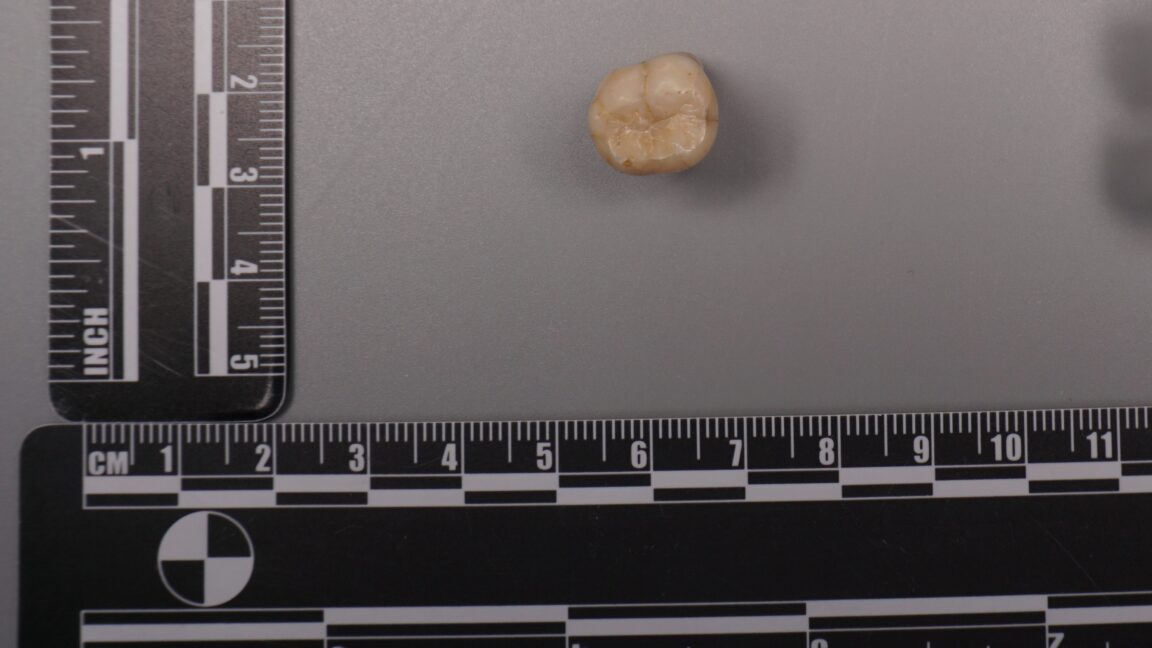
Paleoproteomics is the study of these ancient proteins. By analyzing the specific sequences of amino acids—the building blocks that make up proteins—researchers can identify unique biological markers that distinguish one species from another. In this recent study, scientists utilized this method to extract enamel proteins from the teeth of six Homo erectus individuals. This approach allowed them to bypass the degradation limits that have long prevented the direct genomic sequencing of Homo erectus.
The analysis of these six teeth revealed two specific amino acid variants present in all samples. Most importantly, researchers identified one variant that is known to have existed in Denisovans and continues to exist in some segments of the modern human population. This shared molecular signature provides compelling evidence of biological interaction between these distinct lineages.
Connecting the Evolutionary Chain
The implications of these findings suggest a multi-stage process of genetic exchange. For years, we have known that as Homo sapiens migrated out of Africa, they interbred with the Neanderthals and Denisovans they encountered in Eurasia. While the Denisovan genome has hinted at interbreeding with an even earlier, unidentified group, the identity of that ancestor has remained a subject of intense debate.
The protein data now points directly to Homo erectus. The evidence suggests an evolutionary relay: Homo erectus interbred with Denisovans, who in turn interbred with Homo sapiens. Through this process, specific genetic traits from Homo erectus were carried forward, eventually finding their way into the modern human gene pool.
Homo erectus was a remarkably successful and long-lived species. They were the first Homo species to migrate from Africa into Eurasia and Southeast Asia, maintaining a presence across these vast territories for an immense stretch of time. They existed from approximately 1.89 million years ago until roughly 110,000 years ago, long before the emergence of modern humans.
Katerina Harvati-Papatheodorou, the director of paleoanthropology at the Eberhard Karls University of Tübingen, noted that while the study is based on a limited number of amino acid variants, the data is transformative. Although she was not involved in the study, Harvati-Papatheodorou emphasized that the work “sheds important light on relationships between H. Erectus and Denisovans,” which have historically been difficult for scientists to evaluate. She added that these findings bring “important new information to the discussion of human evolution in Asia, and to the importance of interbreeding across hominin lineage.”
Rewriting the Map of Asia
This discovery does more than just add a name to a lineage; it reshapes our understanding of the human landscape in Asia. The presence of these shared protein variants underscores the idea that Eurasia was not a series of isolated pockets of humanity, but rather a dynamic environment of movement, encounter, and integration.
The ability to track these movements through paleoproteomics allows scientists to bridge the gap between the deep past of Homo erectus and the more recent genomic history of the Denisovans. As researchers continue to analyze more specimens from sites like Sunjiadong and other key fossil localities, we can expect a more granular view of how different hominin groups interacted as they traversed the globe.
Key Takeaways: The Paleoproteomic Breakthrough
- New Methodology: Researchers used paleoproteomics to study ancient enamel proteins, bypassing the limitations of degrading DNA.
- The Evidence: Analysis of six Homo erectus teeth revealed two amino acid variants, one of which is shared with Denisovans and modern humans.
- Evolutionary Link: The findings suggest a chain of interbreeding: Homo erectus $rightarrow$ Denisovans $rightarrow$ Homo sapiens.
- Historical Context: Homo erectus lived between 1.89 million and 110,000 years ago and was the first of our genus to spread extensively across Eurasia and Southeast Asia.
Looking Ahead
The success of this study marks a turning point in paleoanthropology. As protein sequencing technology becomes more refined, the “dark ages” of human evolution—periods where DNA is too degraded to be useful—will begin to brighten. The focus will likely shift toward larger sample sizes and more diverse geographic locations to confirm the extent of these interbreeding events.

The scientific community will continue to scrutinize these findings as more paleoproteomic data becomes available from other archaic human species. For now, the message is clear: our ancestors were far more interconnected than we ever imagined.
As this research progresses, we will continue to monitor updates from the paleoanthropology community regarding further protein analysis of archaic hominins.
What do you think about this new way of looking at our history? Does the shift from DNA to protein change how you view human evolution? Let us know in the comments below and share this article with your network.