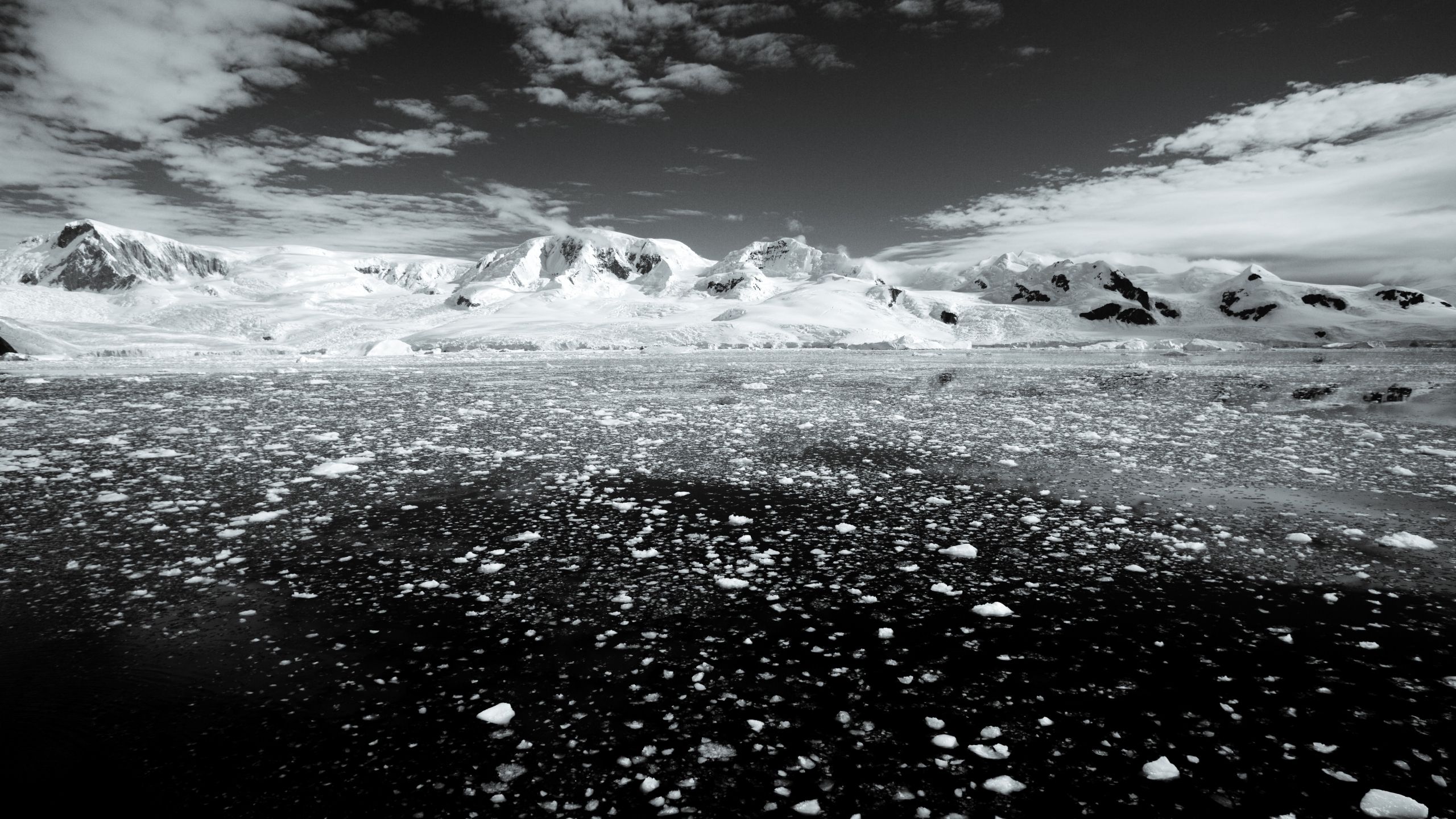
A record-breaking area of winter sea ice nearly the size of Texas—approximately 300,000 square kilometers—has failed to form in the Bellingshausen Sea off western Antarctica, according to satellite data analyzed by the National Snow and Ice Data Center (NSIDC) and confirmed by the British Antarctic Survey (BAS). This absence, which scientists describe as “unprecedented” in modern records, suggests a possible permanent decline in Antarctic sea ice, with profound implications for global climate systems and coastal communities.
The missing ice sheet, roughly equivalent to the land area of the United Kingdom or the U.S. state of Texas, marks the lowest winter sea ice extent ever recorded in this region since satellite monitoring began in 1979. “This is not just a one-year anomaly,” said Dr. Walter Meier, a sea ice scientist at NSIDC. “The trend is clear: we’re seeing a sustained decline that aligns with long-term warming patterns in the Southern Ocean.” The BAS has attributed the loss to a combination of rising ocean temperatures and shifting wind patterns driven by climate change.
While Arctic sea ice has received more public attention, Antarctic ice—particularly in the Bellingshausen and Amundsen Seas—has been declining at an even faster rate in recent years. A 2023 study published in The Cryosphere journal found that Antarctic sea ice loss has accelerated by 120% since 2016, with winter ice now at its lowest levels in 45 years. The implications extend beyond polar regions: melting Antarctic ice contributes to global sea level rise, while changes in ice cover disrupt marine ecosystems and weather patterns worldwide.
Why Is This Antarctic Ice Gap Significant?
The Bellingshausen Sea ice gap is significant for three key reasons. First, winter sea ice acts as a natural insulator for the ocean, reflecting sunlight and preventing excessive heat absorption. Its absence allows more solar radiation to penetrate the water, further warming the Southern Ocean—a process that exacerbates ice melt in a feedback loop. Second, the region is home to critical penguin colonies and krill populations, which are already under stress from climate shifts. Third, the loss of winter ice suggests that even the most remote parts of the planet are no longer immune to human-induced climate change.
Dr. Caroline Holmes, a climate scientist at BAS, explained that the missing ice “is a canary in the coal mine for Antarctic climate systems.” She noted that while some Antarctic regions have seen temporary ice increases due to natural variability, the Bellingshausen Sea’s consistent decline since 2016 is “a clear signal of anthropogenic forcing.” The World Meteorological Organization (WMO) has previously warned that Antarctic ice loss could trigger irreversible changes in ocean currents, with potential consequences for global weather patterns.
How Does This Compare to Past Antarctic Ice Trends?
While Antarctic sea ice has historically shown more variability than Arctic ice, recent trends have defied expectations. From 1979 to 2014, Antarctic winter sea ice actually expanded slightly, puzzling scientists. However, since 2016, the continent has experienced a dramatic reversal. Satellite data from NASA’s Earth Observatory shows that the Bellingshausen Sea, in particular, has lost an average of 13,000 square kilometers of winter ice per year over the past decade—a rate of decline nearly double that of the Arctic.
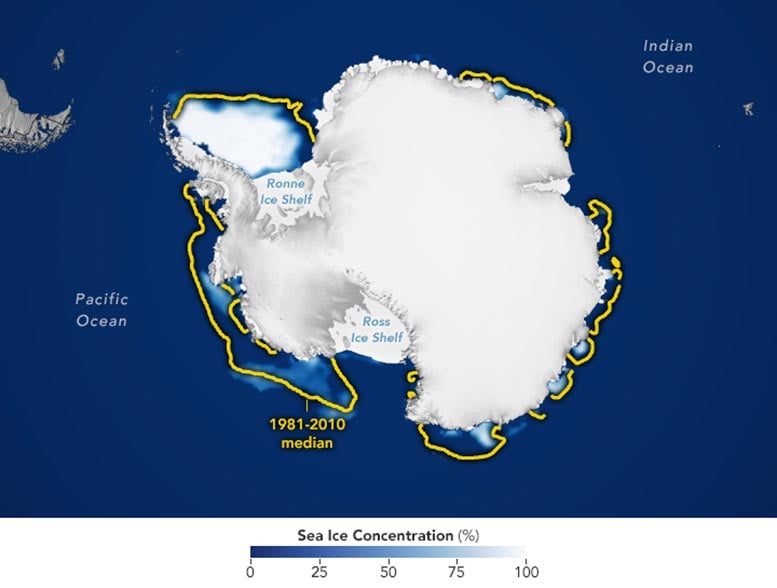
A 2022 study in Nature Climate Change attributed this shift to strengthening winds around Antarctica, driven by the ozone hole’s recovery and rising greenhouse gas concentrations. These winds push ice away from the coast, creating open water that absorbs more heat. The current ice gap in the Bellingshausen Sea is now 1.5 million square kilometers smaller than the 1981–2010 average for this time of year, according to NSIDC data.
Key Comparison:
| Metric | 1981–2010 Average (Winter) | 2024 Record Low (Winter) | Change |
|---|---|---|---|
| Bellingshausen Sea Ice Extent | ~1.8 million km² | ~300,000 km² (missing) | -83% (vs. historical average) |
| Global Antarctic Winter Ice Extent | ~18 million km² | ~16.9 million km² | -6% (since 2016) |
| Rate of Decline (Annual) | Stable/expanding | ~13,000 km² lost per year | Accelerating since 2016 |
Source: NSIDC, NASA Earth Observatory, 2024
What Are the Consequences for Global Climate and Ecosystems?
The disappearance of this Texas-sized ice sheet has immediate and long-term consequences. In the short term, the exposed ocean absorbs more carbon dioxide, potentially accelerating climate change. Long-term effects include:
- Sea Level Rise: While Antarctic sea ice doesn’t directly contribute to sea level rise (unlike glaciers), its loss weakens the ice shelves that buttress land-based ice. The Thwaites Glacier, often called the “Doomsday Glacier,” is particularly vulnerable. A 2023 study in Science Advances estimated that Thwaites alone could raise global sea levels by over 65 centimeters if it collapses.
- Marine Ecosystem Disruption: Penguins, seals, and whales rely on sea ice for breeding and feeding. The Adelie penguin population in the Bellingshausen Sea has declined by 70% since the 1970s, according to BAS research. Krill, a keystone species, are also affected as their food sources shift.
- Weather Pattern Shifts: Antarctic ice loss can alter the Southern Hemisphere’s atmospheric circulation, potentially leading to more extreme weather events in Australia, South America, and southern Africa. A 2021 study in Geophysical Research Letters linked declining Antarctic ice to stronger storms in the Southern Ocean.
For coastal communities, the stakes are equally high. The Intergovernmental Panel on Climate Change (IPCC) projects that global sea levels could rise by up to 1 meter by 2100 if current trends continue, displacing hundreds of millions of people. “This isn’t just an Antarctic problem,” said Dr. Meier. “It’s a global problem with local impacts.”
What Happens Next? Monitoring and Policy Responses
Scientists are now focused on two critical questions: Is this ice loss permanent, and what can be done to mitigate its effects? The NSIDC and BAS are deploying research vessels and drones to study the region’s ocean currents and ice dynamics. Meanwhile, the United Nations Environment Programme (UNEP) has highlighted Antarctic ice loss as a priority in its 2024 Emissions Gap Report, calling for accelerated action to meet the Paris Agreement targets.
Policy responses are evolving. The Antarctic Treaty Consultative Meeting, held in July 2024, discussed establishing new marine protected areas to safeguard vulnerable ecosystems. However, progress has been slow due to geopolitical tensions over resource claims in the region. “We need urgent international cooperation,” said UNEP Executive Director Inger Andersen. “The Antarctic ice sheet is a bellwether for the planet’s health.”
For readers seeking updates, the following resources provide real-time data and analysis:
- National Snow and Ice Data Center (NSIDC) – Antarctic Sea Ice Tracker
- British Antarctic Survey – Climate Research
- World Meteorological Organization – Antarctic Climate Reports
- IPCC – Latest Sea Level Rise Projections
FAQ: Antarctic Sea Ice Loss – What You Need to Know
Q: Is this the first time Antarctic sea ice has been this low?

A: No, but it is the most extreme winter loss recorded. Previous lows occurred in 2017 and 2022, but this year’s absence of ice in the Bellingshausen Sea is unprecedented in its scale and persistence.
Q: Will this affect Arctic sea ice trends?
A: Indirectly. Antarctic ice loss can alter global ocean currents, which may influence Arctic temperatures. However, the two regions are not directly linked.
Q: Can we still reverse this trend?
A: According to the IPCC, rapid and sustained reductions in greenhouse gas emissions could slow the rate of ice loss. However, some changes—like the collapse of vulnerable glaciers—may become irreversible within decades.
Q: How does this impact penguins and other wildlife?
A: Penguins like Adelies and chinstraps rely on sea ice for breeding. Krill populations, which feed on ice algae, are also declining. The BAS reports that some colonies have already moved hundreds of kilometers south in search of stable ice.
Q: What can individuals do to help?
A: Supporting policies that reduce carbon emissions, such as renewable energy investments and sustainable transportation, is critical. Additionally, organizations like WWF and Greenpeace are advocating for Antarctic protections.
The next major checkpoint for Antarctic research will be the 2025 Antarctic Treaty Consultative Meeting, where nations are expected to discuss expanded protections for the region. In the meantime, scientists urge continued monitoring and global cooperation to address this “wake-up call” from the planet’s most remote frontier.
What are your thoughts on this unprecedented ice loss? Share your concerns or questions in the comments below—or help spread awareness by sharing this article.
Worth a look