Witnessing the Battle: Stunning Images Reveal how Antibiotics Destroy Bacteria in Real-Time
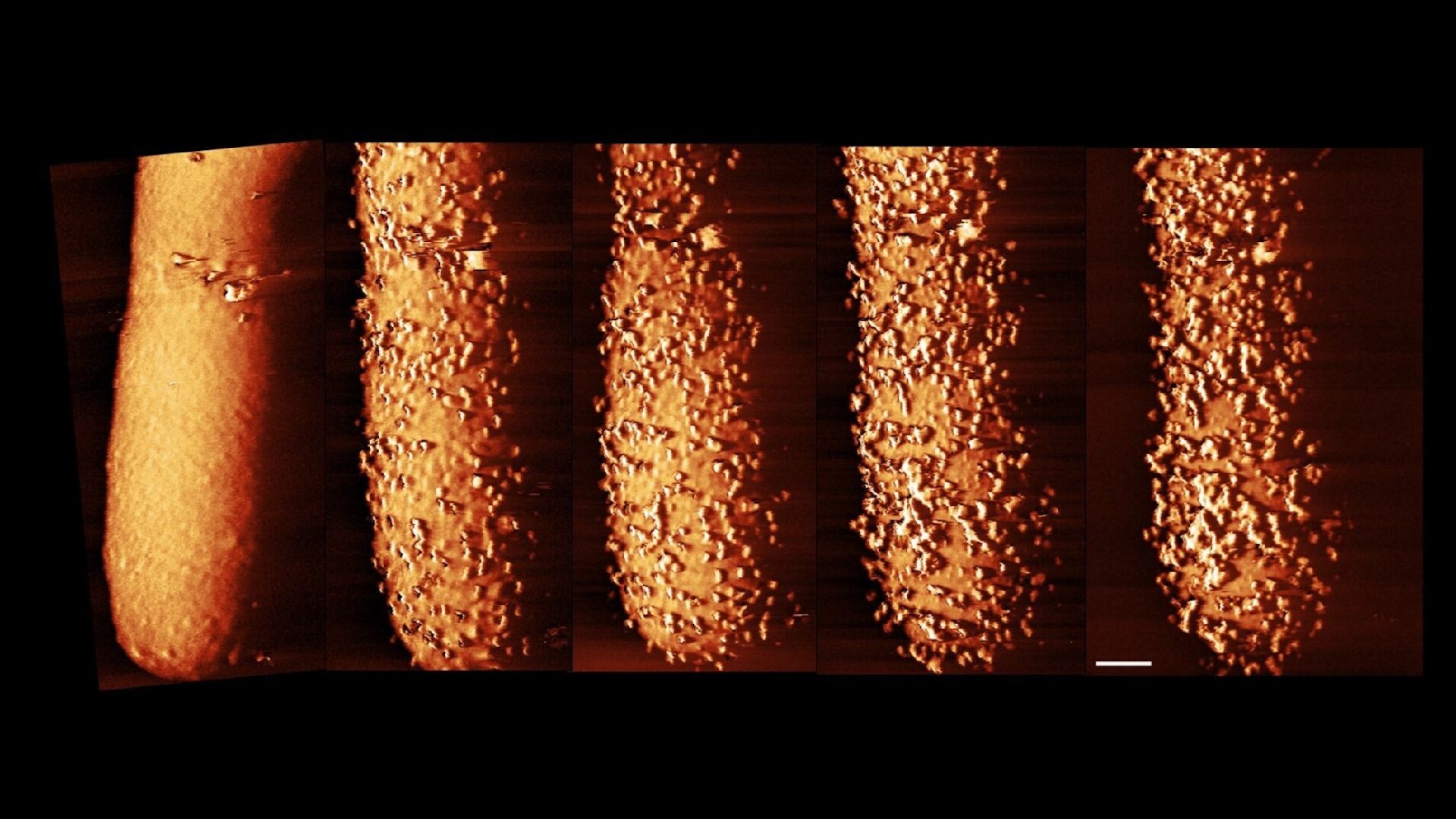
For decades, the intricate dance between antibiotics and bacteria has remained largely unseen. Now, groundbreaking research published in Nature Microbiology has changed that, offering the first-ever real-time visual of an antibiotic dismantling bacterial defenses. Researchers have captured astonishing images showcasing exactly how polymyxins, a class of powerful antibiotics, obliterate E. coli bacteria.
A New View of Antibiotic Action
Traditionally, understanding antibiotic mechanisms relied on indirect observations. This new study utilizes atomic force microscopy, a technique that allows scientists to “feel” surfaces at the atomic level. By gently scanning a tiny needle across bacterial cells, the team created detailed maps of their structure. This allowed them to observe the dynamic changes occurring as the polymyxin antibiotic went to work.
Here’s what they discovered:
* Rapid Structural Changes: Polymyxins trigger the rapid formation of bumps and protrusions on the bacteria’s outer membrane.
* Armor Shedding: As these bumps grow, the bacteria essentially shed its protective outer layer.
* breaching the Defenses: these gaps in the membrane provide entry points for the antibiotic to penetrate and destroy the cell.
“Our images directly demonstrate the extent to which polymyxins compromise bacterial armor,” explains Dr.Borrelli,a lead researcher on the project. “It’s as if the cell is attempting to build its wall so quickly that the structure becomes unstable, allowing the antibiotic to infiltrate.”
the Importance of Bacterial Activity
Interestingly, the study revealed a crucial limitation of polymyxins.These antibiotics are only effective against bacteria that are actively growing and dividing.
Consider this:
* Dormant Bacteria: Bacteria can enter a dormant state to survive harsh conditions, essentially pausing all growth and reproduction.
* No Armor Production: When dormant, bacteria don’t build or maintain their outer membrane armor.
* Antibiotic Ineffectiveness: Consequently, polymyxins can’t trigger the same destructive process in these “sleeping” cells.
This finding highlights a common bacterial survival strategy and a potential weakness in current antibiotic treatments.
Future Directions: Enhancing Antibiotic Effectiveness
The research team is now focused on leveraging these insights to improve antibiotic efficacy. Dr. Hoogenboom notes, “Our next challenge is to use these findings to make the antibiotics more effective.”
Potential strategies include:
* Combination Therapies: Combining polymyxins with treatments that stimulate armor production, potentially making bacteria more vulnerable.
* “Waking Up” Dormant Bacteria: Developing methods to rouse dormant bacteria,allowing the antibiotic to target them effectively.
This research represents a significant leap forward in our understanding of antibiotic action. By visualizing this microscopic battle, scientists are paving the way for smarter, more effective strategies to combat antibiotic resistance – a growing threat to global health.
Disclaimer: *This article is