Antioquia’s Shifting Political Landscape: Candidates’ Records on Petro’s Reforms Under Scrutiny
As Colombia approaches crucial legislative elections, the voting records of candidates seeking to represent the department of Antioquia in the national Congress are coming under intense scrutiny. A recent analysis reveals a complex picture, with representatives often adopting positions that appear to diverge from the prevailing political sentiment within the region. Whereas Antioquia has historically been a stronghold for conservative and right-leaning parties, the actions of some representatives in the Chamber have demonstrated surprising support for the reform agenda of President Gustavo Petro. This apparent disconnect has fueled debate and raised questions about the motivations behind these votes, particularly as candidates now seek re-election or higher office.
The dynamic in Antioquia highlights a broader trend within Colombian politics: the potential for regional interests to sometimes outweigh party affiliation, especially when it comes to key legislative decisions. The upcoming elections will be a critical test of whether voters prioritize consistent ideological alignment or reward representatives who demonstrate a willingness to compromise and engage with the national agenda, even if it means diverging from local expectations. The scrutiny of these voting records is particularly relevant as President Petro’s administration continues to push for significant social and economic changes, and the balance of power in Congress could determine the fate of these proposals.
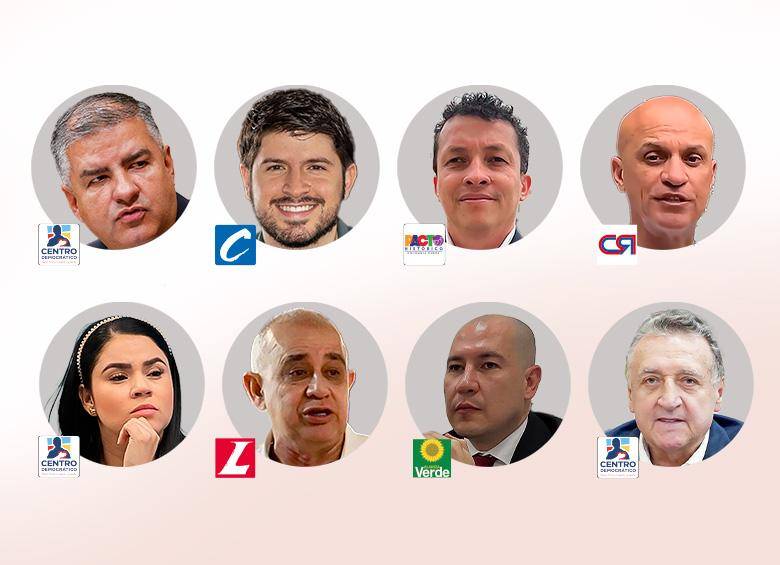
Of the 17 representatives who served Antioquia in the Chamber during the past four years, eight are now vying for re-election. Their legislative performance, particularly regarding President Petro’s key reforms, is a central focus of the current campaign. The reforms in question – encompassing tax policy, peace negotiations, labor laws, pension reform, and healthcare – have been deeply divisive, and the positions taken by these representatives offer a revealing glimpse into their priorities and allegiances. The analysis, originally reported by El Colombiano, categorizes representatives based on their consistency of support, opposition, or a fluctuating stance.
A Divided Chamber: Assessing the Voting Records
The analysis reveals that only seven of the 17 Antioquian representatives consistently opposed President Petro’s initiatives, representing 41% of the delegation. Five representatives steadfastly supported the government’s proposals, while another five adopted a more nuanced approach, voting in favor of some measures and against others. This breakdown underscores the internal divisions within Antioquia’s congressional representation and challenges the notion of a uniformly conservative stance. The upcoming elections will determine whether this balance shifts, potentially altering the dynamics within the Chamber and impacting the future of Petro’s legislative agenda.
Among those seeking to return to the Chamber are Luis Miguel López of the Conservative Party, Mauricio Parodi of Cambio Radical, Alejandro Toro of the Pacto Histórico, Luis Carlos Ochoa of the Liberal Party, Juan Camilo Londoño of the Green Alliance, and candidates from the Democratic Center party: Óscar Darío Pérez, John Jairo Berrío, and Yulieth Sánchez. Four representatives are aiming for seats in the Senate, while five will not be returning to Congress. The voting records of these eight candidates are now being closely examined by voters as they weigh their options.
The five key votes analyzed included the 2022 tax reform proposed by the Petro administration, the “Peace Total” law aimed at facilitating negotiations with armed groups, the 2023 labor and pension reforms (approved in 2024 and taking effect in 2025), and the ultimately shelved healthcare reform, which was archived in April 2024 by the Seventh Commission of the Senate. These votes represent pivotal moments in the government’s legislative agenda and provide a clear indication of each representative’s alignment with or opposition to Petro’s policies.
Varied Approaches: From Staunch Opposition to Conditional Support
Alejandro Toro, representing the Pacto Histórico, stands out as the sole candidate seeking re-election who consistently voted in favor of the government’s major reforms. His close ties to the team of former Medellín Mayor Daniel Quintero are well-known, and he currently holds the third position on the Pacto Histórico’s closed list for the Chamber. This unwavering support positions him as a key advocate for the Petro administration within Antioquia’s congressional delegation.
Conversely, the candidates from the Democratic Center consistently opposed the government’s initiatives, either by voting against them or by abstaining from sessions to disrupt quorum and register their protest. Jhon Jairo Berrio, a Democratic Center candidate, joined the Congress in 2023 after the Council of State annulled the election of Luz María Múnera of the Pacto Histórico in Antioquia, and therefore did not participate in the initial votes on the government’s early proposals. This late entry into the legislative process highlights the shifting composition of Antioquia’s congressional representation.
The positions of representatives from the Liberal, Conservative, Cambio Radical, and Green Alliance parties are more nuanced. Luis Miguel López of the Conservative Party consistently opposed the government’s initiatives, while his colleagues Andrés Felipe Jiménez and Daniel Restrepo were less vocal in their opposition. López now leads the Conservative Party’s list in the department. This internal divergence within the Conservative Party reflects the broader complexities of Antioquia’s political landscape.
Luis Carlos Ochoa of the Liberal Party voted in favor of the tax reform and the “Peace Total” law but later refrained from supporting the social reforms. María Eugenia Lopera, who is now running for the Senate, also supported the government’s agenda and is actively promoting Díver Franco for a seat in the Chamber. These examples demonstrate the varying degrees of support for Petro’s policies within the Liberal Party.
Juan Camilo Londoño of the Green Alliance voted in favor of the healthcare reform, the pension reform, and the “Peace Total” law. Mauricio Parodi of Cambio Radical, now leading his party’s list, only supported the “Peace Total” law, aligning with his party’s directive to abstain from voting on the social reforms. This illustrates how party discipline can influence individual representatives’ voting decisions.
Petro’s Criticism of Antioquia’s Autonomy Referendum
Beyond the legislative voting records, tensions between President Petro and the Antioquia government have been escalating, particularly regarding a proposed referendum on fiscal autonomy. President Petro has sharply criticized the referendum, arguing that it would create a two-tiered Colombia, favoring the wealthier regions of Medellín and Bogotá while marginalizing the rest of the country. In August 2025, Petro stated via social media that the initiative, backed by signatures primarily from Bogotá and Antioquia, would lead to a division of the nation, prioritizing the prosperity of these two cities at the expense of other departments. Publimetro reported on this criticism, highlighting Petro’s claim that the proposal was driven by a “uribista” (referencing former President Álvaro Uribe) agenda aimed at centralizing power in the two largest cities.
Similarly, El Tiempo detailed Petro’s concerns, noting that the project would allow departments and Bogotá to directly collect and manage taxes on income and assets. The governor of Antioquia, Andrés Julián Rendón, is spearheading the referendum effort, having collected over 3.3 million signatures, with 2.18 million validated by the National Registry, exceeding the required threshold to initiate the legislative process.
Key Takeaways
- Antioquia’s congressional delegation has demonstrated a mixed record of support for President Petro’s reforms, with significant internal divisions.
- Alejandro Toro of the Pacto Histórico is the only candidate seeking re-election who consistently supported the government’s agenda.
- Candidates from the Democratic Center consistently opposed the reforms, while those from other parties adopted more nuanced positions.
- President Petro has strongly criticized a proposed referendum on fiscal autonomy in Antioquia, arguing it would exacerbate regional inequalities.
- The upcoming elections will be a crucial test of voter preferences and could significantly alter the balance of power in Congress.
As the election approaches, voters in Antioquia face a critical decision. The choices they make will not only determine who represents them in Congress but also shape the future direction of Colombian politics. The next key date to watch is the official announcement of election results by the National Registry, expected in early March 2026. We encourage readers to engage in informed discussion and share their perspectives on these vital issues in the comments below.
Worth a look