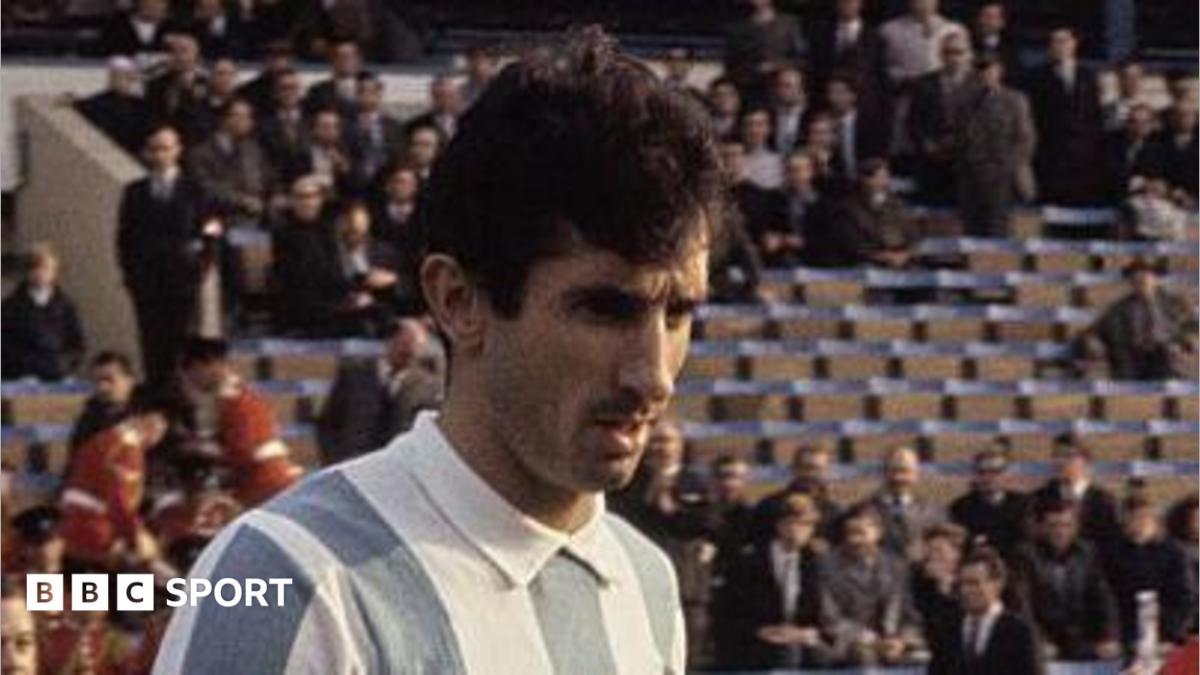
Antonio Rattín, the legendary Boca Juniors midfielder and former captain of the Argentina national football team, has died at the age of 89. His passing marks the end of an era for Argentine football, closing the chapter on a career defined by fierce loyalty to his club and a singular, unintentional contribution to the history of the sport: the inspiration for the yellow and red card system.
According to reports from the Argentine Football Association and international news outlets, Rattín passed away after a period of declining health. Known as “El Rata,” he spent his entire professional career with Boca Juniors, where he became an emblem of the club’s identity between 1956 and 1970. During his tenure, he secured four league titles and earned 60 caps for the national team, as noted by major sports reporting agencies.
The 1966 incident and the birth of the card system
While Rattín achieved significant success domestically, his name is most frequently linked to a controversial moment during the 1966 FIFA World Cup quarterfinals. During a match against England at Wembley Stadium, the Argentine captain was sent off by German referee Rudolf Kreitlein. The dismissal—for what the official described as “violence of the tongue”—proved to be a flashpoint in football history.
Rattín, who claimed he did not understand the referee’s decision due to the language barrier, refused to leave the pitch for several minutes, eventually sitting on the red carpet reserved for Queen Elizabeth II in protest. This incident prompted FIFA to seek a more universal method for officials to communicate disciplinary decisions to players and spectators. According to official FIFA historical records, the confusion surrounding Rattín’s removal directly influenced the introduction of the yellow and red card system, which was officially implemented at the 1970 World Cup.
A legacy of loyalty at Boca Juniors
Beyond the international stage, Rattín is remembered in Buenos Aires as the ultimate one-club man. In an era where player transfers were becoming increasingly common, his 15-year commitment to Boca Juniors solidified his status as a folk hero among the Xeneizes faithful. He was a commanding presence in the midfield, known for his physical stature and tactical reading of the game.
His impact extended into the administrative side of the sport, as he briefly served as a manager for the club and remained a prominent figure in Argentine sporting culture long after his retirement. The club issued a statement honoring his memory, highlighting his role in shaping the competitive spirit that defined Boca Juniors throughout the 1960s.
Remembering a football icon
Tributes have flowed from across the sporting world, with former teammates and contemporary players acknowledging his influence on the game’s evolution. While the 1966 dismissal remains his most famous global footprint, colleagues have emphasized his technical ability and leadership qualities as the true hallmarks of his career.
As the football community mourns his loss, the focus remains on his immense contribution to the growth of the sport in South America. His career serves as a reminder of a time when the game was defined by intense rivalries and the emergence of icons whose legacies would outlive their playing days. There are no further public memorial services announced at this time. Readers are encouraged to share their memories of his career in the comments section below.
Related reading