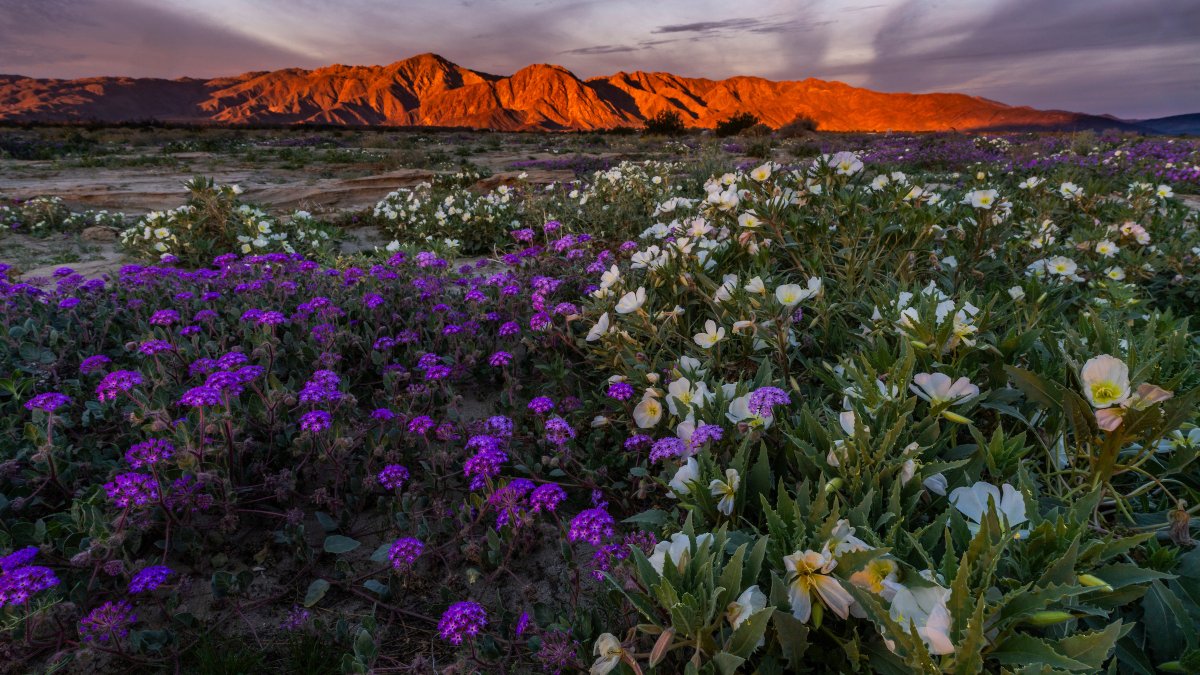
A Vibrant Transformation: Anza-Borrego Desert State Park Experiences Stunning Wildflower Super Bloom
A remarkable display of color is unfolding in the Anza-Borrego Desert State Park in Southern California, as recent rainfall has triggered a spectacular wildflower super bloom. The usually arid landscape has been transformed into a vibrant tapestry of purple, orange, and white, drawing the attention of nature enthusiasts and photographers alike. This bloom is particularly noteworthy as it follows a period of drought, highlighting the resilience of the desert ecosystem and the impact of timely precipitation. The California State Parks Department is anticipating a moderate-to-strong wildflower bloom across the state this year, with Anza-Borrego leading the way in showcasing this natural phenomenon.
The Anza-Borrego Desert State Park, located in San Diego County, is California’s largest state park, encompassing over 600,000 acres. The park’s unique biodiversity is particularly evident during these bloom events, which are relatively rare and depend on specific climatic conditions. According to the California State Parks Department, the current bloom is a “gorgeous winter wildflower bloom,” a fleeting spectacle that dramatically alters the desert’s appearance. These blooms aren’t simply aesthetic. they are crucial for the desert’s ecosystem, providing food and habitat for a variety of pollinators and wildlife.
What Fuels a Super Bloom?
Super blooms are not annual occurrences. They require a specific combination of factors, most importantly significant rainfall during the fall and winter months. This rainfall saturates the soil, allowing dormant wildflower seeds to germinate. The seeds can remain viable for years, waiting for the right conditions to sprout. The timing and amount of rainfall are critical; too little, and the seeds won’t germinate. Too much, and the seedlings can be washed away. The recent series of storms that drenched California provided the necessary moisture for a widespread bloom, particularly benefiting areas like Anza-Borrego.
Brianna Pinto of the California State Parks Department explained that these events “transform the landscape of the desert from something that’s brown and dry into a colorful array of desert sunflower, sand verbena and dune evening primrose.” The specific species that bloom vary depending on the location and rainfall patterns, but these are among the most commonly observed in Anza-Borrego. The park’s botany staff and dedicated volunteers play a vital role in monitoring the bloom and ensuring its preservation.
Planning a Visit to Witness the Bloom
For those planning to visit Anza-Borrego Desert State Park to witness the super bloom, the California State Parks Department offers resources to help plan a safe and enjoyable experience. An interactive map is available on the department’s website, highlighting areas where wildflowers are currently blooming. This map is regularly updated as the bloom progresses, providing visitors with the most current information. The park’s website also provides general information about the park, including directions, camping options, and trail maps.
However, visitors are strongly advised to prepare for their trip and be mindful of the desert environment. The California State Parks Department recommends checking the weather forecast before heading out, as desert temperatures can fluctuate dramatically. Cell phone service can be spotty in some areas of the park, so it’s advisable to download a map of the area before arriving. Staying on designated trails is crucial to protect the delicate wildflowers and their habitat. Visitors should also remember to stay hydrated by bringing plenty of water, and to respect the landscape by leaving no trace behind.
Responsible Bloom Viewing: Protecting the Desert Ecosystem
The surge in visitors during a super bloom can place a strain on the fragile desert ecosystem. It’s essential for visitors to practice responsible bloom viewing to minimize their impact. Staying on marked trails prevents trampling of wildflowers and soil compaction. Avoiding the collection of wildflowers ensures that seeds are dispersed naturally, allowing the blooms to return in future years. Respecting wildlife by observing from a distance and avoiding disturbance is also crucial. The California State Parks Department emphasizes the importance of “leave no trace” principles, encouraging visitors to pack out all trash and avoid disturbing the natural environment.
The Desert Sun reported on the importance of preserving the beauty of the blooms, emphasizing the need for visitors to be mindful of their impact. NBC Los Angeles also highlighted the need for responsible viewing practices.
Looking Ahead: Monitoring the Bloom and Future Outlook
The California State Parks Department continues to monitor the wildflower bloom across the state, providing updates on its website and social media channels. The duration of the bloom will depend on weather conditions, with warmer temperatures and strong winds potentially shortening the spectacle. However, as long as favorable conditions persist, visitors can expect to enjoy the vibrant colors of the desert wildflowers for several weeks to approach. The department encourages visitors to check their website for the latest information before planning a trip.
The Anza-Borrego super bloom serves as a reminder of the beauty and resilience of the desert ecosystem. It also underscores the importance of conservation efforts and responsible tourism in protecting these fragile environments. As climate change continues to impact California’s weather patterns, understanding and appreciating these natural events becomes even more critical. The California State Parks Department provides further information on wildflower blooms and park updates on their website: https://www.parks.ca.gov/?page_id=30077.
The next update from the California State Parks Department regarding the bloom’s progression is expected in early March. We encourage our readers to share their experiences and photos of the Anza-Borrego super bloom in the comments below. Please share this article with anyone planning a visit to Southern California this spring.
Related reading