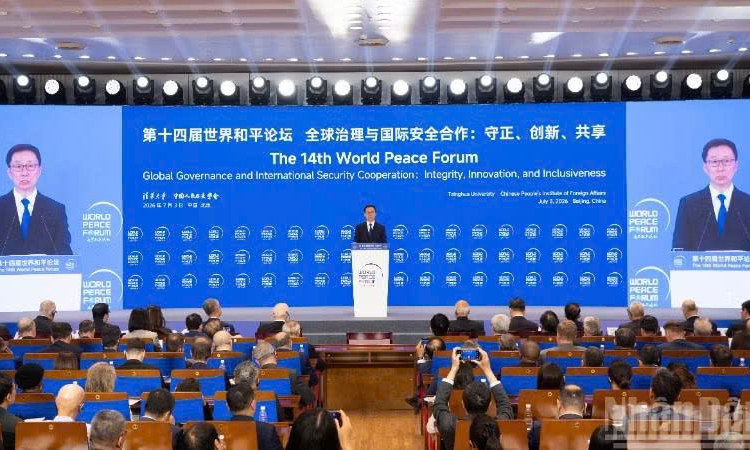
The 11th World Peace Forum opened in Beijing on July 2, 2023, bringing together international scholars, former diplomats, and policy experts to discuss the evolution of global governance and the necessity of international cooperation. Hosted by Tsinghua University and the Chinese People’s Institute of Foreign Affairs, the event serves as a high-level platform for addressing regional security challenges and the shifting dynamics of the international order, according to official conference materials published by the World Peace Forum Secretariat.
While the forum is a recurring academic and diplomatic exercise, the 2023 iteration focused heavily on the theme of “Stabilizing International Relations: Working Together for Stability and Cooperation.” The sessions highlighted growing concerns regarding the fragmentation of the global economy and the escalation of geopolitical tensions, as reported by Reuters. The event gathered participants from numerous nations to analyze how multilateral institutions can better manage conflict in an era of increased strategic competition.
The Role of Multilateralism in Global Governance
A central focus of the forum was the perceived erosion of traditional multilateral frameworks. Experts in attendance debated the effectiveness of current international organizations in resolving modern conflicts, particularly those involving major powers. According to documentation provided by China’s Ministry of Foreign Affairs, senior officials emphasized that the world is facing a “deficit of peace” and urged a return to dialogue-based diplomacy to prevent the hardening of regional blocs. This sentiment reflects a broader academic discourse regarding the transition toward a multipolar world order and the inherent risks of decoupling.
The discussions were structured to facilitate track-two diplomacy—an informal, non-governmental channel of communication—which allows retired officials and academics to explore solutions without the constraints of official state positions. This approach is intended to build trust and identify common ground on issues such as climate change, nuclear non-proliferation, and global health security. The forum utilizes these sessions to generate white papers and policy recommendations that are later distributed to international stakeholders, as noted by the Tsinghua University News Center.
Geopolitical Tensions and Regional Stability
Beyond the theoretical discussions on governance, the forum addressed specific hotspots impacting regional stability in the Asia-Pacific and beyond. Participants examined the impact of the ongoing conflict in Ukraine on global food and energy security, as well as the necessity of maintaining communication lines between the United States and China. According to reports from the South China Morning Post, speakers at the forum consistently identified the stabilization of bilateral ties between the world’s two largest economies as the most significant factor for global peace in the coming decade.
The urgency of these discussions stems from the increasing frequency of military posturing in contested waters and the intensification of trade restrictions. By providing a neutral venue for debate, the organizers aim to prevent miscalculations that could lead to direct confrontation. The forum serves as a barometer for how regional powers view their security obligations and their willingness to engage in collective security arrangements, provided their core interests are acknowledged within the negotiating framework.
What Happens Next for International Cooperation
The conclusions reached during the forum do not carry legal weight but serve to influence the policy agendas of the participating nations. As the international community prepares for subsequent global summits, such as the G20 and the UN General Assembly, the ideas debated in Beijing are expected to surface in formal diplomatic exchanges. The next steps for the participants involve the dissemination of the forum’s findings through academic journals and policy briefings aimed at government ministries globally.

Readers interested in the ongoing outcomes of this forum can monitor the official website of the World Peace Forum for periodic summaries of the panel discussions and access to the transcripts of key speeches. As global affairs continue to evolve, platforms like this will remain critical for tracking how nations balance national interests with the requirements of an interconnected international system. We invite our readers to share their thoughts on the effectiveness of non-governmental forums in shaping state policy in the comments section below.