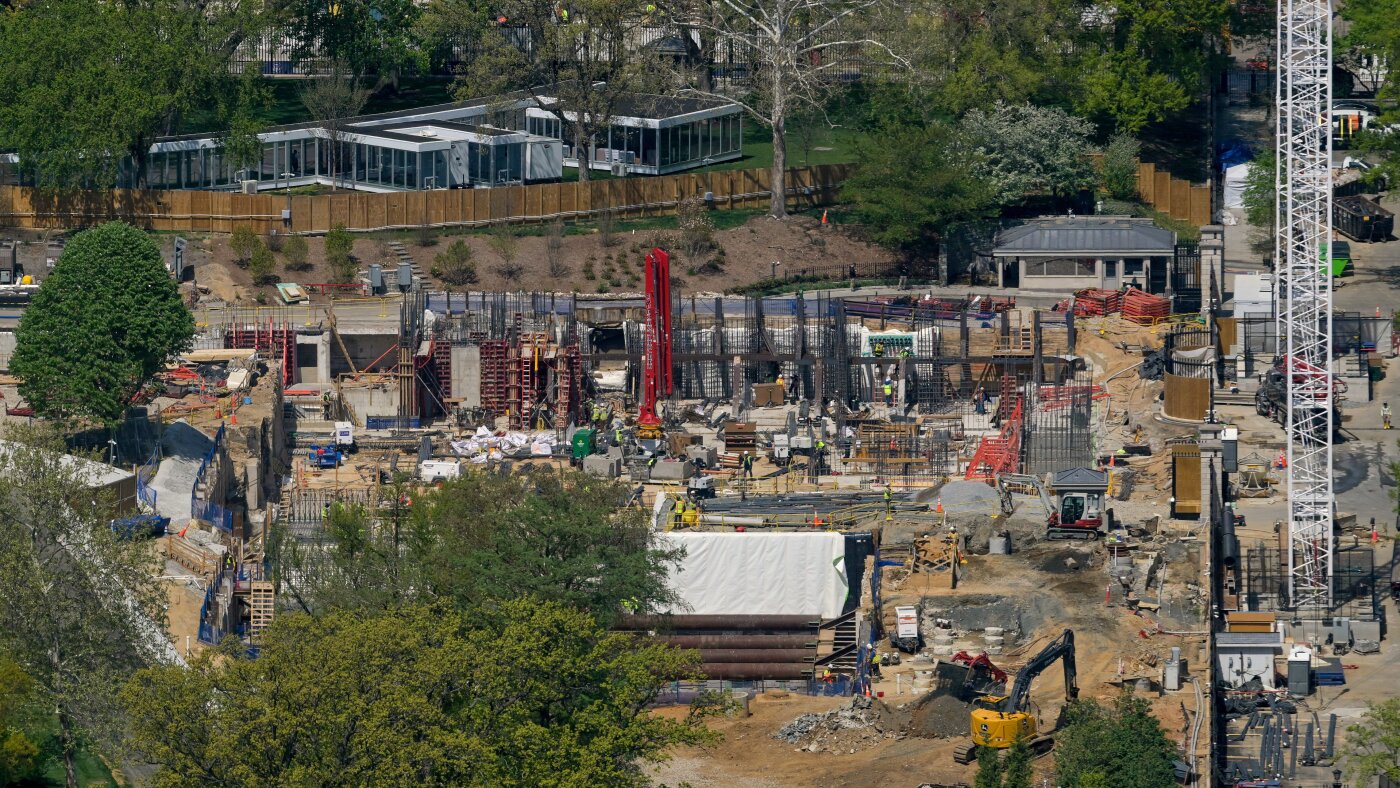
A federal appeals court has ruled that White House ballroom construction may proceed for the time being, providing a significant temporary victory for the Trump administration in its ongoing legal battle over the redesign of the executive mansion’s grounds.
The decision comes after a period of intense legal volatility surrounding the project, which involves the creation of a massive novel event space on the site of the now-demolished East Wing. The appeals court’s intervention pauses a lower court’s injunction that had previously ordered all work to stop, citing a lack of legislative authorization for the project.
The dispute centers on a $400 million project intended to expand the White House’s hosting capabilities. While the appeals court has allowed work to resume, the underlying legal challenge regarding the administration’s authority to build without a specific act of Congress remains unresolved.
Security Concerns and the Appeals Court Intervention
The Trump administration successfully argued before the appellate court that the sudden cessation of construction posed an immediate risk to the president’s safety. According to filings from the administration, leaving the site in its current state—essentially a construction zone where a primary wing of the White House once stood—created unacceptable security vulnerabilities .
By requesting an emergency stay, the administration sought to overturn the previous order to halt development. The appeals court’s decision to let construction continue “for now” suggests that the court viewed the potential security risks as outweighing the immediate require to preserve the site’s historic status until a final legal determination is made.
This move allows contractors to return to the site and continue the physical development of the structure, though the administration remains under the scrutiny of the federal judiciary as the case moves toward a final resolution.
The Initial Block: Judge Richard Leon’s Ruling
The current legal impasse began on March 31, 2026, when District Court Judge Richard Leon issued an order that construction “must stop” . Judge Leon’s ruling was a response to a lawsuit filed in December by The National Trust for Historic Preservation, an organization dedicated to protecting the architectural integrity of the United States’ most significant landmarks.
In his opinion, Judge Leon stated that no existing law “comes close” to granting the president the unilateral authority to construct a building of this scale at the White House without explicit authorization from Congress . The judge indicated that the National Trust for Historic Preservation was likely to prevail in the case, leading him to enjoin the Executive Office of the President from taking any further action toward the physical development of the ballroom.
The ruling was a sharp rebuke of the administration’s approach to the project, framing the construction as an overreach of executive power. Though, the administration appealed this decision almost immediately to the U.S. Circuit Court of Appeals for the District of Columbia Circuit .
Project Scope and the Loss of the East Wing
The project is one of the most ambitious alterations to the White House complex in decades. The proposed ballroom is designed to be a 90,000-square-foot facility . To produce room for this addition, the East Wing of the White House was demolished, with significant debris reported at the site as early as October 23, 2025 .
Architectural plans for the expansion were presented to the National Capital Planning Commission on January 8, 2026, by architect Shalom Baranes . The project’s cost, estimated at $400 million, has been a point of contention for critics who argue that the expenditure is excessive and the architectural changes are an affront to the building’s historic legacy .
The demolition of the East Wing effectively created a “point of no return” for the administration. With the original structure gone, the administration has argued that completing the ballroom is the only viable way to restore the perimeter and security of the White House complex.
Key Project Details at a Glance
| Detail | Specification |
|---|---|
| Estimated Cost | $400 million . |
| Project Size | 90,000 square feet . |
| Location | Former site of the East Wing |
| Lead Architect | Shalom Baranes |
| Primary Legal Opponent | The National Trust for Historic Preservation |
What This Means for the Future of the Site
While the appeals court has allowed White House ballroom construction to resume, this is a procedural victory rather than a final legal clearance. The core question remains: Does the president have the authority to fundamentally alter the White House without a mandate from Congress?
If the lower court’s ruling is eventually upheld, the administration could face a complex legal crisis. Having already demolished the East Wing, the government would be left with a partially completed, $400 million structure that it may not have the legal authority to finish. Conversely, if the appeals court eventually rules in favor of the administration, it could set a significant precedent regarding the extent of executive authority over federal historic properties.
The National Trust for Historic Preservation continues to argue that the project bypasses essential oversight and threatens the historical continuity of the executive residence. For the Trump administration, the ballroom is presented as a necessary modernization and an upgrade to the prestige of the American presidency.
The next confirmed checkpoint in this saga will be the final ruling from the U.S. Circuit Court of Appeals for the District of Columbia Circuit, which will determine whether the construction can proceed to completion or if the project must be halted permanently.
World Today Journal encourages readers to share their views on the balance between executive modernization and historic preservation in the comments section below.
Keep reading