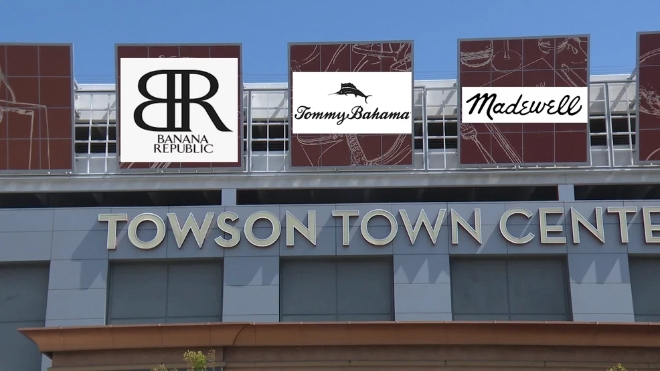
Apple is facing intensifying labor tensions following the announcement that it will close its retail store in Towson, Maryland—the first location in the United States where retail employees successfully formed a labor union. The decision, announced on Thursday, April 10, has sparked immediate backlash from workers and union representatives who allege the move is a strategic attempt to dismantle organized labor within the company’s retail operations.
The Apple first union store closure has become a flashpoint for broader discussions regarding corporate treatment of unionized workers. While Apple cites economic factors and a deteriorating shopping environment as the drivers for the closure, the International Association of Machinists and Aerospace Workers (IAM), which represents the Towson staff, views the timing and execution as a “cynical attempt” to weaken the union’s influence.
The Towson Town Center location is scheduled for permanent closure in June according to reports. This move is part of a larger retail footprint adjustment, as Apple also plans to shut down stores at the Trumbull Mall in Connecticut and the North County Mall in California.
As a journalist who has covered the intersection of software engineering and corporate policy for nearly a decade, I’ve seen how the shift toward organized labor in the tech sector often leads to friction. This particular conflict is significant because the Towson store served as a symbolic victory for retail workers in 2022, mirroring unionization trends seen at other American giants like Amazon, and Starbucks.
Economic Justifications vs. Labor Allegations
Apple has defended its decision by pointing to the decline of the physical shopping mall environment. The company stated that the closure was a “difficult choice” necessitated by the departure of several other retail tenants and the general deterioration of the Towson Town Center Mall’s environment as reported by Epoch Times. By framing the issue as a matter of “commercial area deterioration,” Apple is positioning the closure as a standard business optimization move rather than a labor-related retaliation.
However, the IAM union argues that the company’s narrative is a cover for union-busting. The union expressed “outrage” in a statement released on Thursday, asserting that the closure is intended to discourage other stores from organizing. A central point of contention is the discrepancy in how employees at the closing stores are being handled. At the Trumbull and North County locations, employees are reportedly being transitioned directly to nearby Apple retail stores.
In contrast, the employees at the unionized Towson store are not being offered direct transfers. Instead, Apple has stated that these workers will be eligible to apply for open internal positions per the company’s announcement. The union claims that Apple’s justification—that a collective bargaining agreement prevents direct transfers—is “plainly false” and a pretext to push out union members.
The Significance of the Towson Unionization
To understand why this closure is so contentious, one must look back to 2022. At that time, more than 100 employees at the Towson store voted to join the International Association of Machinists and Aerospace Workers (IAM). This was a landmark event, marking the first time a U.S. Apple Store had successfully unionized. It signaled a shift in the workforce’s expectations regarding pay, benefits, and working conditions within the highly controlled environment of Apple’s retail ecosystem.
The victory at Towson inspired similar efforts across the country. For instance, attempts to unionize were also seen in Atlanta around the same period, though those efforts were eventually withdrawn following allegations from employees that Apple had used threats to discourage the movement as noted in reports.
Comparing the Store Closures
The current restructuring involves three specific locations, but the treatment of the staff varies significantly based on the store’s union status. The following table outlines the reported differences in employee transitions:
| Store Location | Union Status | Reported Staff Transition Plan |
|---|---|---|
| Towson Town Center (MD) | Unionized (IAM) | Eligible to apply for internal open positions |
| Trumbull Mall (CT) | Non-Union | Transitioned to nearby Apple retail stores |
| North County Mall (CA) | Non-Union | Transitioned to nearby Apple retail stores |
The disparity in these transition paths is the primary evidence the IAM is using to claim that the company is targeting unionized workers. While Apple maintains that the environment at the Towson Town Center is uniquely degraded—citing the exit of major brands and a drop in foot traffic—the union views the “application-only” process for Towson staff as a punitive measure compared to the “direct transfer” provided to non-union staff according to Economy Tribune.
Financial Pressures and Mall Defaults
There is some evidence supporting Apple’s claims of mall instability. For example, the Trumbull Mall, where another store is closing, reportedly faced a default on a loan totaling $150 million per reports. This suggests that the broader crisis of the American shopping mall—characterized by high debt and the exodus of anchor tenants—is indeed affecting Apple’s operational decisions.
Despite these economic headwinds, the IAM maintains that the specific targeting of the first unionized store is too coincidental to be purely financial. The union is currently reviewing all legal avenues to challenge the closure, suggesting that this conflict may move from the retail floor to the courtroom.
What This Means for the Tech Industry
This conflict is not just about one store in Maryland; it is a bellwether for the “unionization wave” hitting the tech and service sectors. When a company as influential as Apple closes its first unionized site, it sends a powerful message to employees at other locations considering similar moves. If the perception grows that unionizing leads to store closures rather than better contracts, the momentum for labor organization could stall.

Conversely, if the IAM successfully challenges this closure in court, it could set a legal precedent that protects unionized locations from being singled out during corporate restructuring. This would fundamentally change how tech companies manage their physical retail presence in the face of labor organizing.
Key Takeaways for Stakeholders
- For Employees: The Towson closure highlights the precariousness of union-led victories in the face of corporate “restructuring.”
- For Investors: Apple’s move to exit deteriorating malls reflects a broader trend of optimizing physical footprints to match shifting consumer behaviors.
- For Labor Advocates: The legal battle over the Towson store will likely center on whether the closure was a “bona fide” business decision or an illegal act of retaliation.
The next critical checkpoint in this unfolding story will be the formal legal filings from the IAM union, as they have already announced their intention to pursue legal action against Apple’s decision. The industry will be watching closely to see if the union can prove that the closure was a “cynical attempt” to dismantle the labor organization rather than a response to a declining commercial market.
Do you believe corporate restructuring is being used as a tool to stifle labor unions in the tech sector? Share your thoughts in the comments below and join the conversation on the future of tech labor.