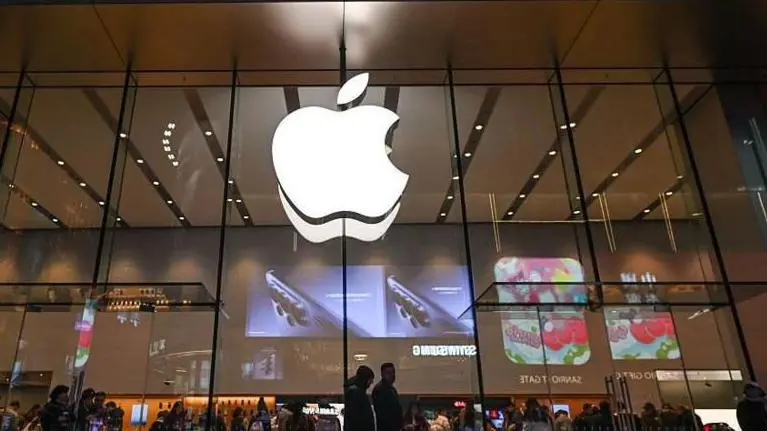
Apple has officially entered its fifth decade, marking a milestone that transcends mere corporate longevity to reflect a fundamental shift in how humanity interacts with technology. To commemorate this landmark, the company held high-profile Apple 50th anniversary celebrations, highlighted by a remote ceremony that bridged the gap between the company’s headquarters in California and the financial heart of New York City.
On March 31, 2026, Apple CEO Tim Cook rang the Nasdaq Opening Bell remotely from Apple Park, signaling a celebration of five decades of innovation and the company’s enduring philosophy of “thinking different.” The event, which took place between 9:15 AM and 9:45 AM ET, served as a public reflection on the breakthroughs that have shaped global connectivity, creativity, and learning [1].
For those of us following the industry from San Francisco, the symbolism of the event was clear: Apple is not merely celebrating its past, but using this anniversary to recalibrate its trajectory for the next fifty years. The ceremony was not held in the traditional Times Square setting but was broadcast live from 1 Apple Park Way, Cupertino, CA, emphasizing the company’s rootedness in its own architectural and technological ecosystem.
A Remote Tribute to Five Decades of Innovation
The Nasdaq ceremony began with remarks from Nasdaq Regional Vice President Dylan James, who noted his 16-year professional history with Apple. He was followed by Nasdaq Chair and CEO Adina Friedman, who expressed gratitude to Tim Cook and Apple’s leadership and employees. Friedman specifically lauded the company for “having pushed the boundaries of design, silicon, and software” over the course of the last 50 years.
Standing alongside a core group of Apple’s top executives—including John Ternus, Deirdre O’Brien, Greg Joswiak, Sabih Khan, and Eddy Cue—Tim Cook addressed a crowd of employees and the global financial community. His speech served as both a retrospective and a manifesto, grounding the company’s current success in its humble origins in Steve Jobs’ garage.
Welcoming @apple [APPL] to the @NasdaqExchange Opening Bell in celebration of their 50th founding anniversary. #Apple50 pic.twitter.com/mdgmDLg58H
— Nasdaq Exchange (@NasdaqExchange) March 31, 2026
Tim Cook’s Vision: Unlocking Human Potential
During his address, Cook shifted the spotlight away from the company’s internal achievements and toward the people who use its products. He explicitly credited Apple’s success to three primary groups: its users, its internal teams, and its shareholders. This attribution highlights a strategic emphasis on the ecosystem and the community that sustains the brand’s market dominance.
Cook articulated a mission centered on empowerment, stating that Apple will “keep pushing the limits of what technology can do to unlock human potential, to unleash possibility, to empower our users to shape the future” [3]. This focus on “human potential” suggests that the company’s future roadmap will continue to prioritize the intersection of hardware and user experience, rather than technology for technology’s sake.
The Pillars of Apple’s Legacy
The 50th anniversary celebrations provide an opportunity to analyze the three pillars mentioned by Adina Friedman that have defined the company’s trajectory:
- Design: The transition from functional computing to aesthetic objects that integrate seamlessly into daily life.
- Silicon: The move toward custom-designed chips that allow for tighter integration between hardware and software, increasing efficiency and performance.
- Software: The creation of intuitive operating systems that lowered the barrier to entry for personal computing and mobile technology.
These elements combined have allowed Apple to maintain a consistent identity across five decades, evolving from a niche computer company into a global conglomerate that influences multiple sectors of the consumer electronics market.
What This Milestone Means for the Tech Industry
Reaching a 50-year milestone is a rarity in the volatile world of consumer electronics, where companies often vanish within a decade. Apple’s ability to survive and thrive through various market cycles—from the early days of the personal computer to the mobile revolution and the current era of AI and spatial computing—underscores a unique capacity for adaptation.
The decision to ring the Nasdaq bell remotely from Apple Park is also telling. It demonstrates the company’s preference for controlling its own narrative and environment, showcasing the “spaceship” campus as a symbol of its current era of maturity and scale. By centering the celebration around its employees and users, Apple is reinforcing the emotional connection it shares with its global customer base.
Key Takeaways from the 50th Anniversary Event
| Detail | Information |
|---|---|
| Date | March 31, 2026 |
| Location | Apple Park, Cupertino, CA (Remote) |
| Key Speaker | Tim Cook (CEO) |
| Core Theme | Unlocking human potential and empowering users |
| Key Contributors | Users, Teams, and Shareholders |
As the company looks toward the next half-century, the focus remains on “pushing the limits” of technology. While the specific products of the next decade remain under wraps, the overarching goal expressed by Cook is to ensure that technology continues to serve as a tool for human empowerment.
With the official Nasdaq celebrations concluded, the industry now looks forward to Apple’s upcoming product cycles and strategic announcements to see how the company intends to translate this 50-year legacy into the next generation of iconic devices. We will continue to monitor official filings and company press releases for updates on the next phase of their innovation roadmap.
What do you believe has been Apple’s most impactful contribution to technology over the last 50 years? Share your thoughts in the comments below or share this article with your network.
Keep reading
- Lauter Nette Lieder – playlist by henric-wietheger – Spotify
- R&A drives AI critical networking infrastructure refresh at Open
- NYC Mayor Mamdani Celebrates “Righteous Dissent” On US 250th Anniversary Speech (newsdirectory3.com)
- Void Years, Explained: How NFL Teams Borrow From the Future (daybreakwire.com)