
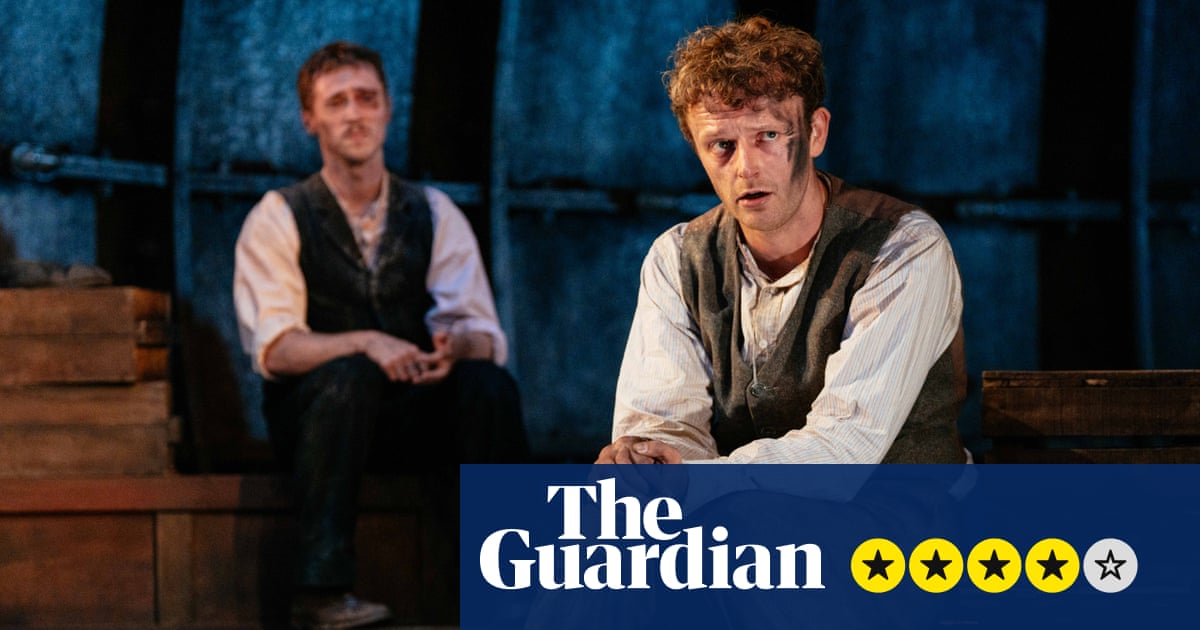
Rajiv Joseph’s 2025 play Archduke offers a tragicomic reimagining of the events leading to the assassination of Archduke Franz Ferdinand, shifting the focus from grand geopolitical strategy to the desperate, hungry lives of the young men tasked with carrying out the act. Set against the backdrop of pre-World War I tensions, the production explores how hunger and TB—as much as imperialism—pushed three young men toward a historic turning point in Sarajevo.
The play, currently staged at the Royal Court, London, follows the recruitment of Gavrilo Princip and his associates by a Slav nationalist. Joseph’s narrative centers on the human cost of these “lungers”—a term for those suffering from consumption—whose primary motivations are depicted as survival and hunger.
The Plot Behind the Assassination
In the world of Archduke, the historical figure Gavrilo Princip, portrayed by Stanley Morgan, is an unemployed, consumptive youth. He is recruited by Apis, played by Marc Wootton, a Slav nationalist who recruits Gavrilo and two other starving sick youths, Trifco (Abraham Popoola) and Nedeljko (Chris Walley), by filling their minds with a rant on historical wrongs and their bellies with the menus of his devout housekeeper, Sladjana (Janice Connolly). According to the production’s narrative, the recruits are motivated as much by the promise of food provided by the housekeeper Sladjana as they are by the nationalist rhetoric fed to them by their handler.

The play utilizes the recurring metaphor of “fancy sandwiches” to illustrate the stark contrast between the youths’ starvation and the high-stakes political theater they are being groomed to enter. By grounding the origins of the 1914-18 conflict in the personal desperation of the conspirators, Joseph challenges the traditional, textbook understanding of the assassination. The dramatization suggests that the ignition of the First World War was, in part, fueled by the volatile intersection of tuberculosis and hunger.
Historical Context and Dramatic License
The assassination of Archduke Franz Ferdinand and his wife, Sophie, in Sarajevo is an event that occurred almost exactly 112 years ago. This event served as the immediate catalyst for the 1914-18 conflict.

While Archduke draws on these established historical facts, it employs significant dramatic license to explore the scenarios surrounding the plotters. The play positions itself as a tragicomic departure from the standard historical narrative. Joseph’s work invites the audience to consider the intimate, often farcical, human failures that preceded the global catastrophe.
The Production Team and Performances
The production features a cast tasked with embodying the physical decline and ideological fervor of the historical conspirators. Stanley Morgan’s portrayal of Princip highlights the vulnerability of the young assassin, while Marc Wootton’s Apis serves as the architect of the group’s fate. The inclusion of Janice Connolly as Sladjana adds a domestic dimension to the tension, emphasizing the role of daily sustenance—and the lack thereof—in the lives of the characters.
The Royal Court, known for its commitment to new writing, provides a platform for this reimagining of the 1914 assassination. The play’s focus on the “lungers” serves to humanize figures who are frequently relegated to footnotes in history textbooks. By focusing on the hunger and TB that plagued these young men, the play highlights the desperation that can lead individuals to participate in world-altering violence.
Why the Perspective Matters
Understanding the motivations behind the Sarajevo assassination remains a key interest for historians. Archduke contributes to this discourse by suggesting that the macro-political goals of organizations were only achievable by exploiting the micro-level suffering of individuals.

For audiences, the play serves as a reminder that history is often shaped by the intersection of high-level political goals and the basic, often neglected, needs of the individuals on the ground. By centering the story on the men who pulled the triggers, the production offers a unique vantage point on one of the most studied events in modern history.
The play continues its run at the Royal Court, providing a contemporary lens through which to view the origins of the 1914-18 conflict. Readers are encouraged to share their thoughts on how modern drama handles historical events in the comments section below.