
As the 2025-26 NBA regular season draws to a close, the basketball world finds itself gripped by a singular, recurring debate: the MVP candidacy of Victor Wembanyama. The French phenom, whose physical profile and skill set have fundamentally disrupted traditional scouting models, has delivered a season of unprecedented statistical output. Yet, despite a campaign that has redefined the parameters of individual dominance, the Most Valuable Player trophy remains a distant prospect.
For a player of Wembanyama’s caliber, the question is no longer whether he is the most talented individual on the court, but rather whether his impact satisfies the complex, often subjective, criteria used by NBA voters. The disconnect between individual brilliance and the ultimate accolade highlights a perennial tension in professional basketball: the struggle to balance personal statistical supremacy with the team-oriented mandate of “value.”
The Analytics of a Generational Outlier
From a data-driven perspective, Wembanyama’s season has been nothing short of a statistical anomaly. In an era where advanced analytics—such as Player Efficiency Rating (PER), Win Shares, and Value Over Replacement Player (VORP)—have become the bedrock of MVP discussions, Wembanyama has consistently occupied the top tier. His ability to impact every facet of the game, particularly his unprecedented defensive metrics, makes him a unique case study for modern analysts.
In the current landscape of the NBA, defensive impact is increasingly quantified through tracking data. Wembanyama’s ability to alter shots, protect the rim, and disrupt passing lanes creates a “gravity” that traditional box scores often fail to capture fully. For tech-minded observers and analysts, his game represents a convergence of biological outliers and high-efficiency movement patterns that challenge existing predictive models. However, even the most robust datasets can struggle to translate defensive disruption into the “value” required to sway a voting body that still heavily weighs offensive production.
The Winning Mandate: The Spurs’ Competitive Ceiling
The most significant hurdle in Wembanyama’s MVP pursuit is the historical correlation between individual accolades and team success. The NBA’s “Most Valuable Player” title has long been reserved for players who lead their teams to the upper echelon of the standings. For Wembanyama, the context of the San Antonio Spurs remains the deciding factor.
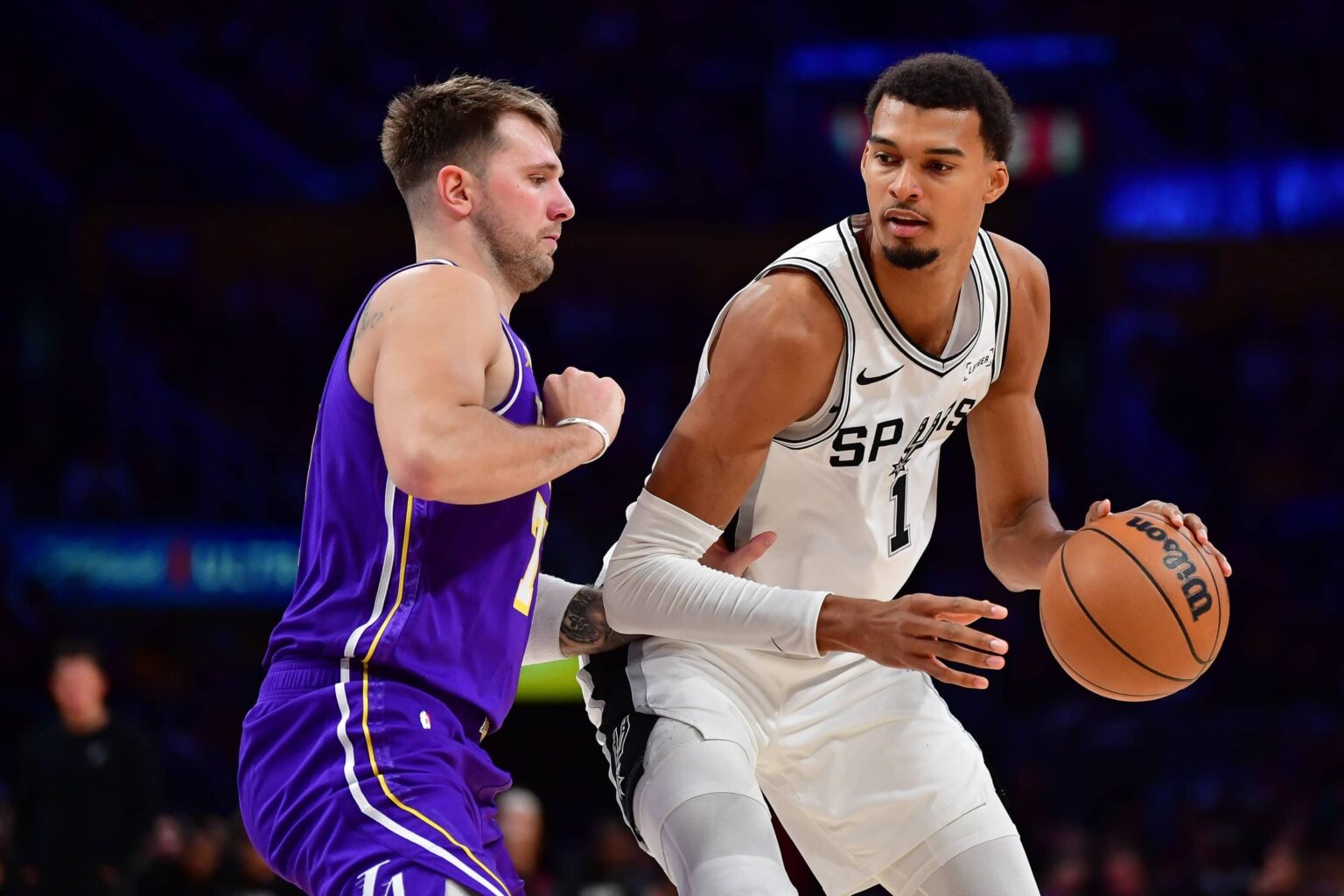
While Wembanyama has elevated the Spurs to a much more competitive level than in previous years, the team’s overall standing serves as a ceiling for his individual candidacy. The voting history suggests that unless a player is leading a top-tier seed, their statistical achievements are often viewed as “empty calories” or “stat-padding” in the eyes of more conservative voters. To secure the MVP, it is not enough for Wembanyama to be the best player on the court; he must be the engine of a team that is perceived as a legitimate championship contender.
This creates a demanding paradox for a young franchise in a rebuilding or transitional phase. The Spurs are clearly “calibrated” toward a bright future, but the gap between individual greatness and team-wide championship readiness is where Wembanyama’s MVP narrative currently stalls.
Narrative vs. Numbers: The Human Element of Voting
Beyond the spreadsheets and the win-loss columns, the MVP race is heavily influenced by narrative. Voters are often swayed by the “story” of a season—the rise of a superstar, the dominance of a veteran, or the redemption of a former star. Wembanyama’s story is one of unprecedented potential, but it lacks the “winning narrative” that typically accompanies the award.
There is also the challenge of voter perception regarding player roles. Because Wembanyama operates with a hybrid skill set—possessing the height of a center but the mobility and handling of a wing—he does not fit neatly into the traditional archetypes that voters have used for decades to categorize greatness. This lack of a clear “role” can occasionally lead to a lack of consensus, as different voters weigh his defensive dominance against the scoring outputs of more traditional offensive superstars.
Key Factors Influencing MVP Voting
- Team Winning Percentage: The historical necessity of leading a high-seeded team.
- Statistical Dominance: Leading major categories like points, rebounds, blocks, and advanced efficiency metrics.
- Two-Way Impact: The ability to influence the game on both the offensive and defensive ends of the floor.
- Narrative Weight: The ability to capture the media’s attention and build a compelling “season-long story.”
- Positional Uniqueness: How a player’s unique skill set is perceived relative to their peers.
The Path Forward
As the season moves into its final stages, Wembanyama’s path to the MVP trophy is clear, yet demanding. He must continue to drive the Spurs toward a higher seed while maintaining his historic statistical pace. The eyes of the league will be on whether he can bridge the gap between being a generational talent and being the most valuable player in the world.

Wembanyama’s candidacy serves as a litmus test for the NBA. It asks whether the league’s highest honor should reward the most statistically unique and impactful individual, or the player who most effectively translates that impact into team victory. Regardless of the final vote, his performance has already ensured that the conversation around player value has changed forever.
Next Milestone: Keep an eye on the final regular-season standings and the official announcement of the NBA All-NBA teams, which will serve as a primary indicator of Wembanyama’s standing in the MVP race.
What do you think is the most important factor for an MVP? Should it be stats, wins, or something else? Let us know in the comments below and share this article with your fellow basketball fans.
Related reading
- Ultra-Rare Brain-Eating Amoeba Infections: Toddler Survives Rare Pathogen That Stumps Doctors
- EA Sports FC 27 Pre-Order Deal: Get it for Under €61 at Amazon (PS5)
- Title Insurance Covers a Crime That Almost Never Happens (daybreakwire.com)
- Marquinhos Ready for the Trophée des Champions: “We Want to Win Every Trophy (archynewsy.com)