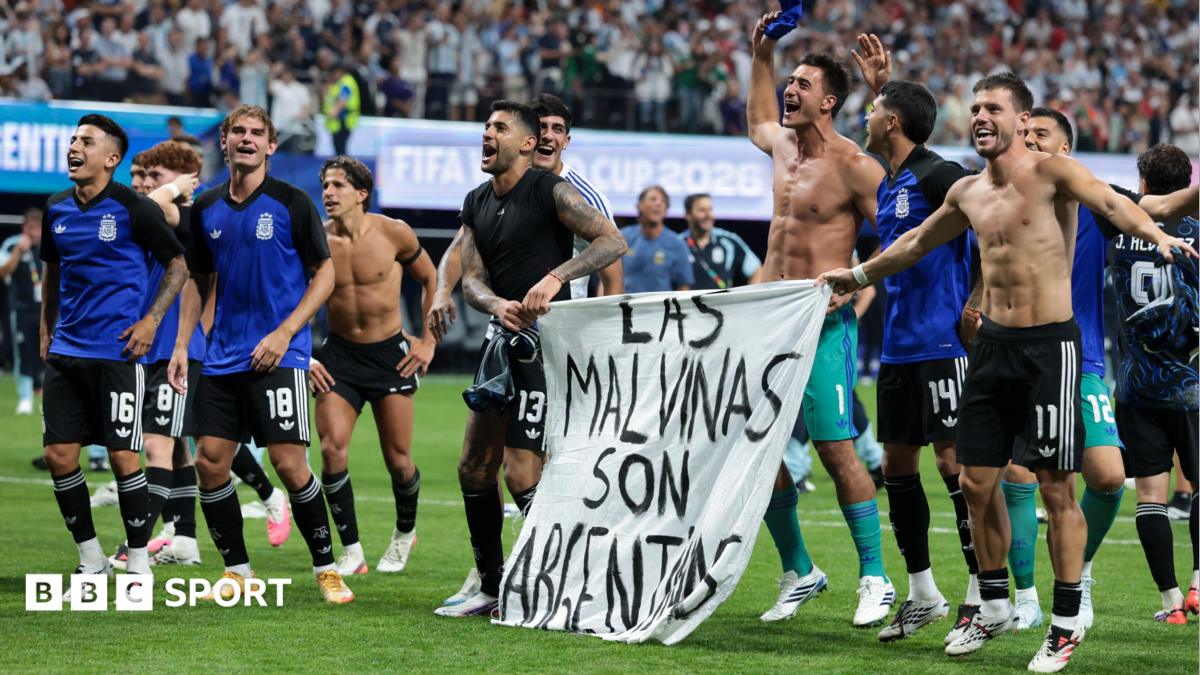
Argentina’s national football team faced disciplinary scrutiny from FIFA following a pre-match display during the 2022 World Cup, where players posed with a banner asserting sovereignty over the Falkland Islands, known in Argentina as the Islas Malvinas. The incident, which occurred ahead of a friendly match against Slovenia in La Plata, drew international attention to the long-standing territorial dispute between Argentina and the United Kingdom. FIFA’s disciplinary committee subsequently initiated an investigation into the matter, citing potential breaches of regulations regarding political demonstrations during official events.
The banner, which read “Las Malvinas son Argentinas” (The Malvinas are Argentine), was held by the squad during a team photo before the June 7, 2014, match at the Estadio Ciudad de La Plata. According to reports from Reuters, the demonstration prompted FIFA to open proceedings against the Argentine Football Association (AFA) for violating the organization’s statutes, which strictly prohibit the use of football matches for political statements. Under FIFA’s Disciplinary Code, member associations are held responsible for the conduct of their players and staff, with potential penalties ranging from reprimands to financial fines.
Historical Context and Diplomatic Tensions
The sovereignty of the Falkland Islands has remained a source of significant geopolitical tension between Buenos Aires and London for decades. The islands, a British Overseas Territory located in the South Atlantic, were the site of a 74-day war in 1982 that resulted in the deaths of 649 Argentine military personnel, 255 British soldiers, and three islanders, as documented by the BBC. Argentina maintains that the islands were illegally seized by Britain in 1833 and continues to advocate for a peaceful resolution through diplomatic negotiations.

For the Argentine public and the national team, the banner was viewed as a patriotic gesture rather than a political provocation. However, international sporting bodies like FIFA maintain a policy of political neutrality to ensure that stadiums remain venues for competition rather than forums for nationalist discourse. This incident was not the first time football has intersected with the Falklands issue; the historical weight of the 1982 conflict frequently surfaces in cultural and sporting exchanges between the two nations.
FIFA Regulatory Standards
FIFA’s stance on political gestures is codified to prevent the escalation of tensions in international sport. Article 60 of the FIFA Disciplinary Code explicitly bans the use of “political, religious or personal slogans, statements or images” in any language on the field of play. When incidents occur, the disciplinary committee reviews evidence, including match reports and photographic documentation, to determine if a fine or other sanction is appropriate.
In the aftermath of the 2014 incident, legal experts noted that FIFA’s primary concern was the precedent set by allowing teams to utilize the global platform of the World Cup to broadcast territorial claims. While the AFA argued that the banner reflected a national sentiment shared by the country’s populace, the governing body focused on the violation of the specific match-day protocol. The eventual outcome saw the AFA face scrutiny, highlighting the difficulty of separating national identity from international sport in regions where historical grievances persist.
Impact on Future International Relations
The 2014 incident underscored the complex role of athletes as representatives of their state’s foreign policy positions. By choosing to display the banner, the Argentine players brought a 19th-century territorial dispute into a 21st-century sporting arena. For FIFA, the challenge remains balancing the cultural expressions of its member nations with the mandates of its regulatory framework.
As of the most recent updates regarding FIFA disciplinary trends, the organization continues to enforce these rules strictly, often issuing fines to national associations that fail to control the conduct of players during official ceremonies. The incident involving the Falklands banner remains a case study in how international governing bodies manage the intersection of sport and state sovereignty. For further information on official disciplinary rulings or to review the current FIFA statutes, stakeholders can consult the official FIFA Legal portal.
This report summarizes verified events surrounding the 2014 disciplinary proceedings. We encourage readers to share their thoughts on the balance between national expression and sporting neutrality in the comments section below.
Keep reading
- Trump vs. Iran: Strait of Hormuz Tensions and the Global Oil Market Risk
- K-Beauty in China: Beyond Price and Quality to Brand Differentiation
- Argentina’s Dramatic Victory: Messi, Schweinsteiger, and World Cup Drama (world-today-news.com)
- BBC Shows 2026 World Cup Third-Place Match and Final Live (time.news)