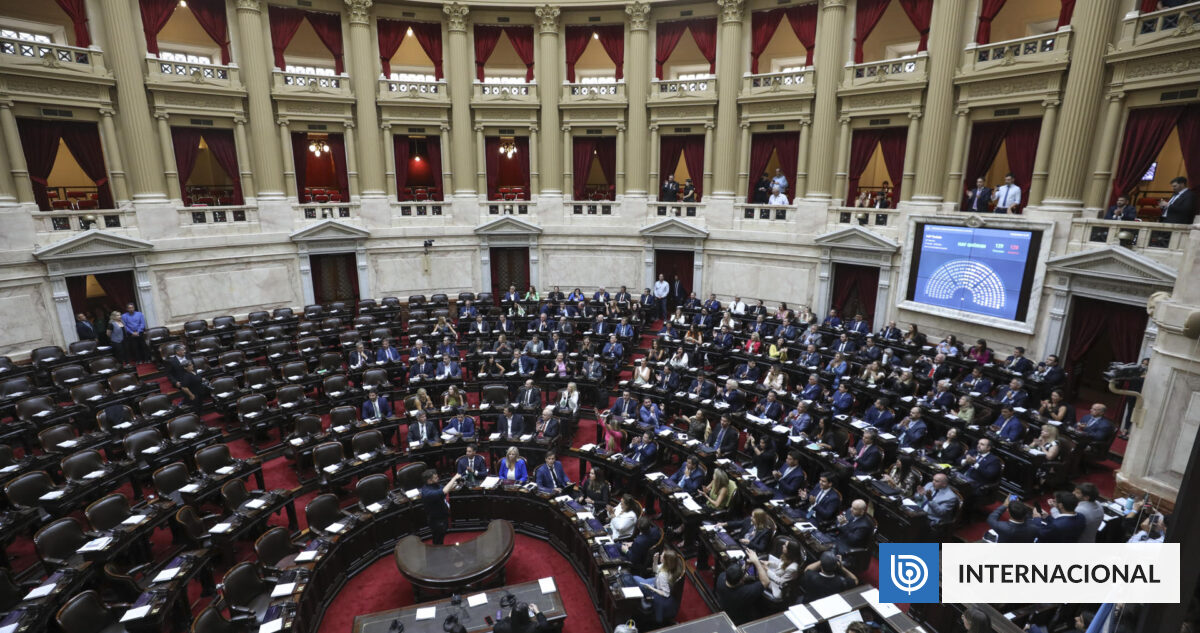
Buenos Aires – Argentina’s Chamber of Deputies approved a sweeping labor reform bill proposed by President Javier Milei’s administration on Friday, February 20, 2026, sending the legislation back to the Senate for final approval. The passage came amidst a nationwide general strike and protests that turned violent in the capital, highlighting the deep divisions surrounding the proposed changes to Argentina’s labor laws. The bill, officially known as the “Ley de Modernización Laboral” (Law of Labor Modernization), aims to overhaul decades-old regulations, a key component of Milei’s broader economic agenda.
The vote in the Chamber of Deputies concluded with 135 in favor, 115 against, and no abstentions, according to reports. The approval represents a significant victory for Milei, who has pledged to revitalize the Argentine economy and attract foreign investment. However, the path to implementation remains uncertain, as the bill must return to the Senate after a contentious article concerning sick abandon was removed to secure sufficient support.
Contentious Debate and Labor Unrest
The debate surrounding the labor reform has been highly charged, culminating in a 24-hour general strike called by Argentina’s largest labor federation. Protests in Buenos Aires escalated on Thursday, February 19, 2026, with demonstrators attempting to breach security barriers around the Congress building. Clashes between protesters and security forces resulted in confrontations, including reports of journalists caught in the crossfire. The unrest underscores the strong opposition to the reforms from labor unions and left-leaning political groups who fear the changes will erode worker protections.
Key Provisions of the Labor Reform
The proposed labor reform encompasses several significant changes to Argentina’s existing labor laws, which largely date back to 1974. One of the most debated aspects of the bill concerns the calculation of severance payments. The novel legislation proposes a revised formula that, in practice, is expected to reduce the amount of compensation paid to employees upon dismissal. The bill introduces a “time bank” system for overtime hours, allowing employers to offer employees time off in lieu of overtime pay.
Another key provision limits the right to strike by expanding the definition of essential services, requiring a higher minimum level of operation during strikes – either 50% or 75% depending on the sector. The bill also classifies actions such as blocking access to workplaces or disrupting non-striking workers as “exceptionally serious” offenses. These measures have drawn criticism from labor advocates who argue they will stifle workers’ ability to collectively bargain and defend their rights.
The initial version of the bill included Article 44, which proposed reducing sick leave benefits to 75% or 50% of an employee’s salary, depending on the cause of illness. This provision faced strong opposition, even from within Milei’s own coalition, “La Libertad Avanza” (LLA), and was ultimately removed to secure passage in the Chamber of Deputies. The removal of this article means the bill must now return to the Senate for reconsideration.
Political Reactions and Future Outlook
President Milei celebrated the passage of the bill in the Chamber of Deputies, stating, “Argentina will be great again.” His office issued a statement emphasizing the reforms’ potential to create jobs, reduce informality, and modernize labor relations. However, opposition lawmakers have condemned the bill as a rollback of workers’ rights. Sergio Palazzo, a representative from the “Unión por la Patria” (UxP) bloc, argued that the reforms represent “the most brutal regression” in Argentine labor history.
The bill’s journey through the Senate is expected to be challenging. While it previously passed the Senate on February 11, 2026, the removal of Article 44 necessitates a new vote. Milei’s ability to secure the necessary support will depend on his continued willingness to negotiate and compromise with centrist lawmakers. The outcome of the Senate vote will have far-reaching consequences for Argentina’s labor market and its broader economic prospects.
Impact on Workers and Businesses
The proposed reforms are expected to have a significant impact on both workers and businesses in Argentina. The changes to severance pay calculations could reduce the financial burden on employers, potentially encouraging hiring. However, workers may receive less compensation upon dismissal. The “time bank” system for overtime could offer employees greater flexibility, but it also raises concerns about potential exploitation if not properly regulated.
Martín Lousteau, a lawmaker from the Provincias Unidas bloc, highlighted that the bill may discourage workers from pursuing legal claims for unfair dismissal and that workers in the gig economy will receive reduced pension benefits – half of the current minimum pension, which currently stands at 359,219.42 Argentine pesos (approximately $254 USD as of February 20, 2026). This reduction in benefits for gig workers has sparked particular concern among advocates for the growing segment of the Argentine workforce engaged in platform-based employment.
The reforms also aim to address the issue of labor-related lawsuits, which have been a significant cost for businesses in Argentina. By streamlining regulations and reducing potential liabilities, the government hopes to create a more predictable and investor-friendly business environment. However, critics argue that the reforms will weaken workers’ ability to seek redress for unfair labor practices.
The passage of this bill marks the first major legislative test for President Milei following his landslide victory in October’s legislative elections, bolstered by support from former U.S. President Donald Trump. With approximately one-third of the seats in both chambers of Congress, Milei has demonstrated an ability to build coalitions with more centrist lawmakers to achieve legislative success.
The next step for the labor reform bill is a vote in the Senate. The date of this vote has not yet been announced, but it is expected to take place in the coming weeks. The outcome of this vote will determine whether President Milei’s ambitious agenda to modernize Argentina’s labor laws will be fully realized.
What we have is a developing story. Check back for updates.
Related reading