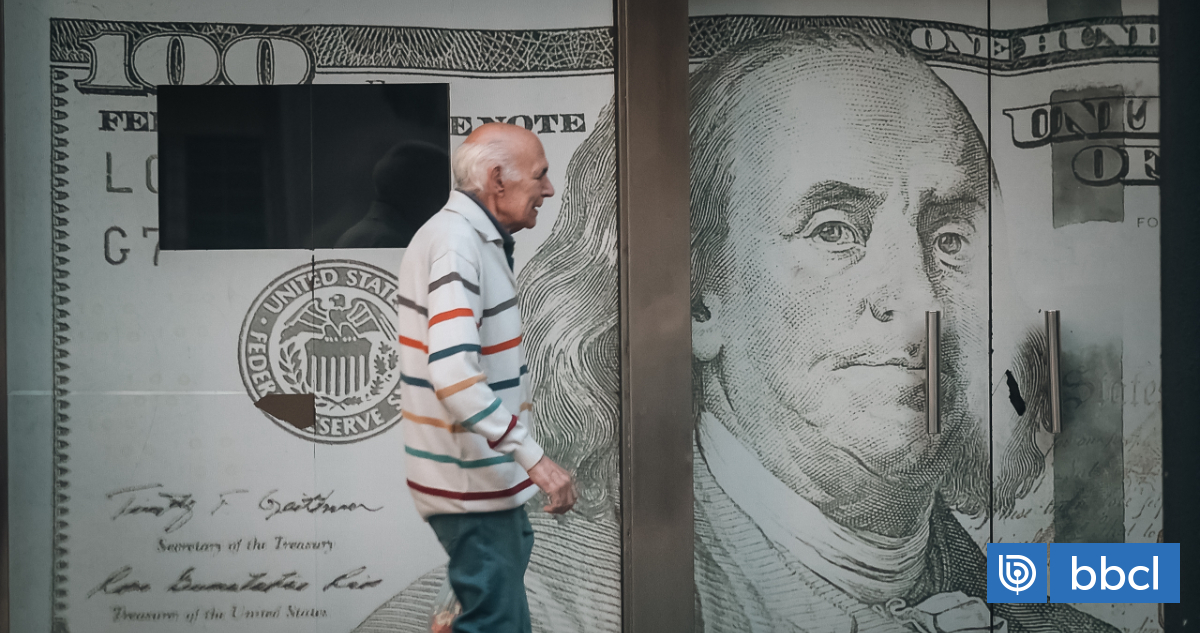
Argentina’s ongoing economic crisis has led to a significant increase in households storing devalued U.S. dollars under their mattresses, according to recent reports from the Argentine Central Bank. The phenomenon reflects deepening public distrust in the local currency, the peso, which has lost over 70% of its value against the dollar since 2020, according to data from the International Monetary Fund (IMF).
Official statistics reveal that an estimated $50 billion in U.S. currency is held in private residences across the country, a figure that has risen sharply amid persistent inflation and currency controls. “The informal dollarization of savings is a direct response to the erosion of purchasing power,” said Martín Guzmán, Argentina’s former economy minister, in a 2022 interview with *El País*. “When the currency becomes unreliable, people seek alternatives.”
The Economic Context of Argentina’s Currency Crisis
Argentina’s economic turmoil stems from a combination of fiscal imbalances, external debt pressures, and a lack of foreign exchange reserves. The country’s inflation rate reached 134% in 2023, the highest in the world, according to the World Bank. This hyperinflation has rendered the peso increasingly unstable, prompting citizens to turn to the U.S. dollar as a store of value.
The Central Bank of Argentina has struggled to stabilize the currency, implementing periodic devaluations and capital controls. In 2023, the government introduced a new exchange rate mechanism to curb speculative trading, but analysts argue the measures have had limited success. “The dollarization of savings is a symptom of a deeper structural crisis,” said Sebastián Calfat, an economist at the University of Buenos Aires. “Without credible fiscal reforms, the problem will persist.”
International financial institutions have repeatedly warned about Argentina’s economic vulnerabilities. The IMF’s 2023 Article IV consultation noted that “Argentina’s reliance on short-term debt and volatile capital flows continues to pose risks to macroeconomic stability.” The report also highlighted the need for “comprehensive fiscal consolidation and structural reforms to restore confidence in the peso.”
Impact on Household Savings
The shift toward dollar-based savings has had profound implications for Argentine households. A 2023 survey by the National Institute of Statistics and Census (INDEC) found that 68% of families hold at least some U.S. currency at home, compared to 42% in 2020. “I keep $10,000 under my mattress,” said María López, a teacher in Córdoba. “The bank accounts are a joke. The peso loses value every day.”

Financial experts warn that informal dollar hoarding exacerbates the country’s economic challenges. “When money is hidden away, it doesn’t circulate in the economy,” said Laura Gómez, a monetary policy analyst at the Universidad Torcuato Di Tella. “This reduces investment and slows growth, creating a vicious cycle.”
The practice also carries risks. In 2022, a fire in Buenos Aires destroyed a residence containing over $2 million in cash, highlighting the dangers of storing large sums at home. “It’s not just about inflation—it’s about security,” said Carlos Fernández, a small business owner. “If something happens, you lose everything.”
Government Response and Policies
The Argentine government has taken steps to address the crisis, including a 2023 agreement with the IMF for a $44 billion loan program. The deal includes measures to reduce the budget deficit and strengthen the peso, but critics argue the terms are too stringent. “This is a temporary fix, not a solution,” said Martín Redrado, a former Central Bank governor. “The real challenge is rebuilding public trust.”
Recent policy changes have also aimed to curb capital flight. In 2023, the government raised limits on currency conversions and introduced taxes on large transactions. While these measures have slowed the flow of dollars abroad, they have not eliminated the informal savings trend. “People still prefer the dollar,” said Nicolás Dujovne, an economist at the Universidad de San Andrés. “It’s a matter of survival.”
The Central Bank has also expanded its foreign exchange interventions, purchasing billions in dollars to stabilize the market. However, these efforts have been constrained by limited reserves. “We’re trying to manage the crisis, but the fundamentals are weak,” said Guido Sandleris, the bank’s president. “Without structural reforms, we’ll remain vulnerable.”
Expert Analysis and Global Comparisons
Argentina’s experience mirrors broader trends in emerging markets facing currency crises. In 2023, countries like Turkey and Venezuela also saw surges in dollar hoarding, according to the Bank for International Settlements (BIS). “When local currencies lose credibility, people naturally turn to foreign assets,” said José Víctor Gómez, a BIS economist. “This is a global phenomenon, but it’s particularly acute in Argentina.”

Comparisons to historical episodes highlight the severity of the crisis. In the 1990s, Argentina’s “convertibility plan” pegged the peso to the dollar, but the system collapsed in 2001, leading to a decade of economic turmoil. “We’re seeing similar patterns today,” said Alicia García-Herrero, a senior economist at ING. “The difference is that the current crisis is more about structural imbalances than a sudden shock.”
International observers emphasize the need for long-term solutions. “Argentina must address its fiscal deficit, improve governance, and attract sustainable investment,” said Kristalina Georgieva, IMF managing director. “Without these steps, the cycle of crisis and dollarization will continue.”