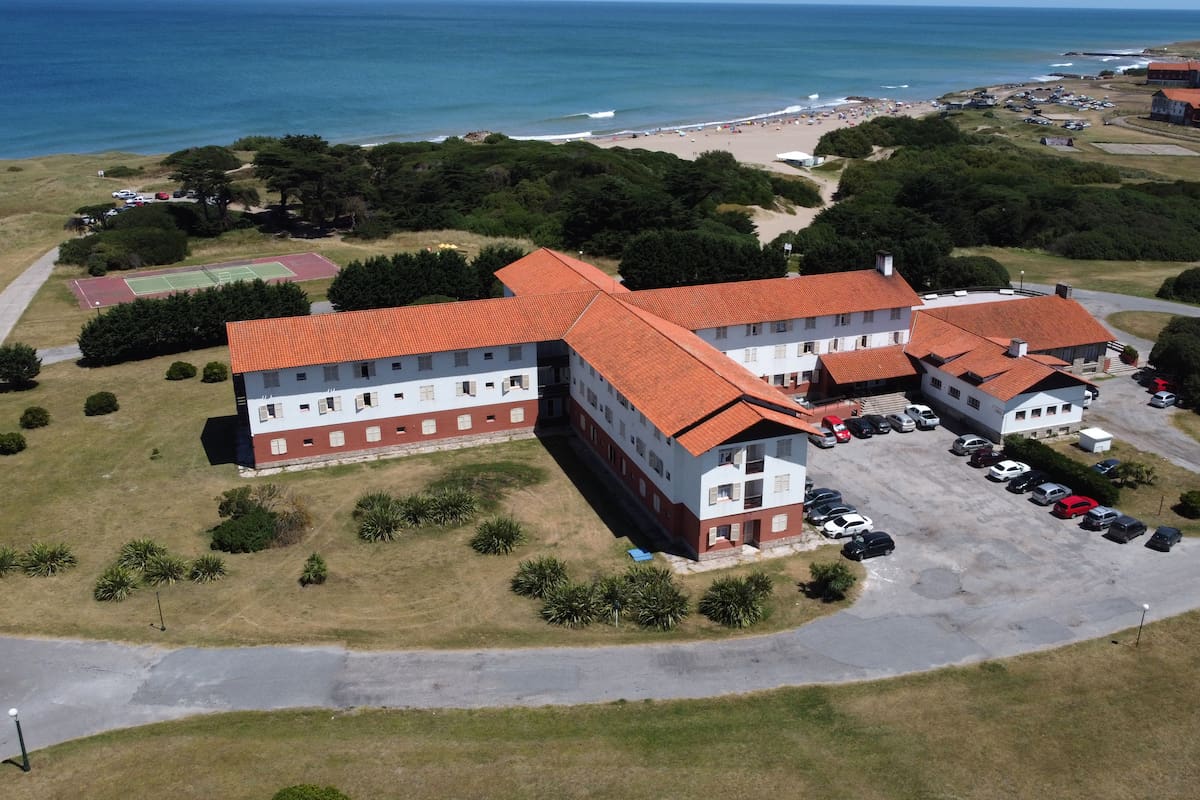
The Argentine government has initiated the eviction of employees and their families from the historic Chapadmalal tourist complex, marking a significant shift in the management of one of Peronism’s most symbolic state-owned properties. Located in the coastal town of Chapadmalal in Buenos Aires Province, the sprawling seaside resort has long served as a retreat for workers affiliated with labor unions and Peronist political movements. Recent announcements confirm that occupants must vacate their residences within a 10-day period as part of a broader plan to concession the site to private operators, a move that has drawn sharp criticism from union leaders and cultural heritage advocates.
The decision, confirmed by national tourism authorities, ends decades of preferential access for state workers and their families to the complex, which includes hotels, bungalows, and recreational facilities originally developed during the mid-20th century under Peronist administrations. Officials frame the action as necessary to modernize the aging infrastructure and attract private investment, arguing that the current model is financially unsustainable. However, critics contend that the eviction undermines a longstanding social benefit and erodes a tangible symbol of Peronist ideals centered on worker welfare and state-supported leisure.
According to verified reports from local news outlets and union representatives, approximately 30 families residing in on-site housing units have been formally notified to leave the premises by early April 2024. The notice, issued by the National Tourism Secretariat, cites an ongoing public bidding process for the concession of the Chapadmalal complex, which aims to transfer operational control to private entities under a long-term lease agreement. Union leaders from the Hotel and Gastronomic Workers’ Union (UTHGRA) and the State Workers’ Association (ATE) have denounced the timeline as insufficient, particularly for elderly residents and those with limited mobility, and have called for an extension and dialogue with government officials.
The Chapadmalal complex, inaugurated in 1949 during Juan Domingo Perón’s first presidency, was conceived as a flagship project of the Peronist welfare state, offering affordable vacations to unionized workers and their families. Over the decades, it evolved into a cultural landmark, hosting generations of Argentines and becoming emblematic of the movement’s emphasis on dignity, rest, and social tourism. Its Art Deco architecture, expansive grounds, and direct beach access have made it a unique asset in Argentina’s public tourism portfolio.
Despite its historical significance, the site has faced chronic underinvestment in recent years, leading to deteriorating conditions in some buildings and facilities. Government officials acknowledge these challenges but maintain that privatization through concession is the most viable path to restoration and long-term sustainability. The bidding process, overseen by the National Agency for Tourism Promotion, requires prospective operators to commit to preserving certain architectural elements and maintaining public access to portions of the grounds, though the extent of continued access for former beneficiaries remains unclear.
Legal and Procedural Context of the Eviction
The eviction process is being carried out under the framework of Argentina’s National Tourism Law and related administrative regulations governing the utilize of state-owned tourist properties. Official documents reviewed by journalists indicate that the notice to vacate was issued under Resolution 120/2024 of the National Tourism Secretariat, published in the Official Gazette on March 20, 2024. The resolution authorizes the commencement of eviction proceedings to prepare the site for concession and sets a 10-business-day deadline for occupants to vacate their assigned residences.
Legal experts consulted on the matter note that while the government holds the legal authority to manage and reconfigure the use of state properties, the process must comply with due process protections, particularly when long-term occupants are involved. Some labor lawyers have questioned whether adequate alternative housing or compensation has been offered, pointing to potential violations of housing rights under national and international human rights frameworks. As of late March 2024, no formal legal challenge had been filed in federal court, but union leaders confirmed they are evaluating all available legal avenues to delay or halt the evictions.
The National Tourism Secretariat has not released a public breakdown of how many employees versus family members are affected, nor has it detailed specific relocation assistance programs. However, internal memos cited by union representatives suggest that the government is offering a one-time stipend equivalent to one month’s salary for eligible workers, a proposal rejected by union leaders as inadequate given the long-term nature of the residency arrangements and the lack of affordable housing alternatives in the region.
Political and Cultural Reactions
The decision to evict Chapadmalal’s longtime residents has reignited debates over the legacy of Peronism and the direction of Argentina’s tourism policy under the current administration. Peronist lawmakers and provincial officials from Buenos Aires have condemned the move as a betrayal of historical principles, arguing that the complex represents more than just real estate—it is a living monument to social inclusion and workers’ rights. Several legislators have called for a parliamentary inquiry into the concession process and have requested transparency regarding the evaluation criteria used to select potential private operators.
Conversely, supporters of the reform argue that maintaining the status quo imposes an unfair fiscal burden on the state and limits the complex’s economic potential. They point to successful concession models in other Latin American countries, where public-private partnerships have revitalized underperforming state assets while preserving public access. Tourism analysts note that Chapadmalal’s prime location—just south of Mar del Plata—makes it attractive for high-end boutique hotel development or eco-tourism ventures, though such models would likely exclude the traditional beneficiary base.
Cultural preservation groups have also weighed in, urging the government to enforce strict heritage protections in any concession agreement. The complex includes several buildings recognized for their architectural value, and advocates warn that without enforceable clauses, renovations could compromise the site’s historical integrity. The Argentine branch of ICOMOS (International Council on Monuments and Sites) has not issued an official statement but has previously emphasized the need to balance development with conservation in state-owned heritage sites.
Impact on Workers and Families
For many of the affected families, the eviction represents not only a loss of housing but also a disruption to deep-rooted community ties and seasonal traditions. Interviews conducted by local media reveal that some residents have spent decades at Chapadmalal, returning each year for extended stays that serve as both vacation and reunion. Workers employed in maintenance, hospitality, and administrative roles at the complex often lived on-site with their spouses and children, benefiting from subsidized housing as part of their employment package.
One longtime employee, who requested anonymity due to fears of retaliation, described receiving the eviction notice as “a shock after 35 years of service.” Others expressed concern about where they would go, noting that rental prices in nearby coastal towns have risen significantly in recent years, making market-rate housing unaffordable on public sector salaries. The timing of the eviction—just before the peak southern hemisphere summer season—has added urgency, as many families had already planned their annual visits.
Union representatives have established a support committee to assist affected workers with information on housing options, legal aid, and potential compensation claims. They are also coordinating with provincial social development offices to explore emergency housing possibilities, though officials acknowledge that capacity is limited. The UTHGRA has announced plans for a peaceful demonstration in front of the National Tourism Secretariat’s headquarters in Buenos Aires, scheduled for the first week of April 2024, to demand a reversal of the eviction order and the opening of formal negotiations.
Next Steps and Official Outlook
The next confirmed step in the process is the opening of technical bids for the concession of the Chapadmalal complex, scheduled for April 15, 2024, according to the National Tourism Secretariat’s procurement portal. This date marks the deadline for private companies to submit formal proposals outlining their investment plans, operational models, and compliance with heritage and accessibility requirements. The evaluation phase will follow, with a tentative award date set for late May 2024, pending administrative review.
Government officials have stated that the concession agreement will include clauses requiring the winning bidder to invest a minimum of USD 15 million in renovations over the first five years of the contract, a figure cited in the bidding documents published on March 25, 2024. They also emphasize that public access to beaches and certain green spaces will be preserved, though access to hotel facilities and recreational amenities may be subject to fees or restrictions under the new management model.
As the April 15 deadline approaches, tensions remain high between the administration and organized labor. Unless a last-minute agreement is reached or a judicial injunction is granted, the eviction of Chapadmalal’s resident workers and families is expected to proceed as planned in the coming days, closing a chapter on one of Argentina’s most enduring experiments in social tourism.
For ongoing updates, readers can consult the Official Gazette of the Argentine Republic or the National Tourism Secretariat’s website, where resolutions, bidding documents, and procedural notices are published. World Today Journal will continue to monitor developments and provide verified reporting on this evolving story.
If you have information or personal experience related to the Chapadmalal eviction process, we encourage you to share your thoughts in the comments below or reach out via our secure tips line. Your insights help us deliver deeper, more accurate coverage.
Keep reading