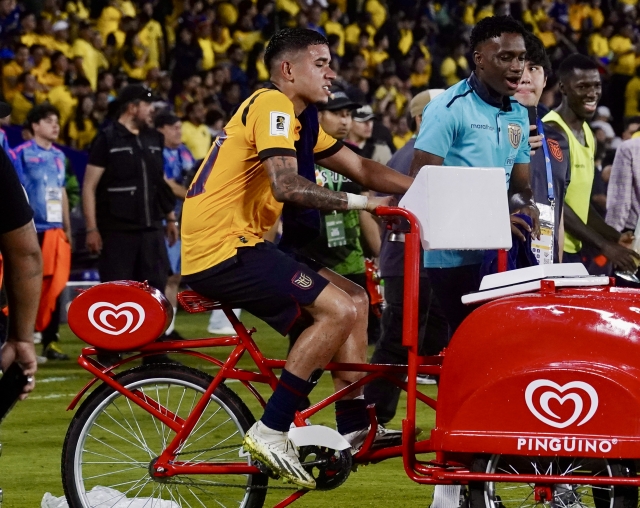
The conversation surrounding the next generation of Ecuadorian football often centers on the immense talent of Kendry Páez, a youth sensation currently associated with River Plate. However, a recent interview has brought a different perspective into the fold, as former Ecuadorian midfielder Armando Paredes weighed in on the frequent comparisons between his own storied, yet tumultuous, career and the trajectory of the rising star.
During a candid discussion with journalist Diego Arcos for TC Televisión, Paredes addressed the parallels some fans and analysts draw between himself and Páez. While acknowledging the technical quality of the youngster, Paredes was quick to establish a distinction in their impact on the pitch, suggesting that the young playmaker still has room to grow in terms of game influence.
The dialogue highlights a recurring theme in sports: the tension between raw talent and the “consequence” or presence a player maintains during a match. For Paredes, the comparisons with Kendry Páez serve as a starting point to discuss not just technical skill, but the ability to dictate the outcome of a game through consistent protagonism.
Paredes, whose own career was often overshadowed by off-field controversies and a lifestyle that contrasted with the discipline required for longevity in professional sports, did not shy away from his past. Instead, he used the platform to offer a balanced critique of the current state of Ecuadorian midfield talent, blending praise for the youth with a reflection on his own playing style.
Analyzing the Difference: “Protagonism” vs. Talent
When specifically asked if he saw similarities between his playing style and that of Kendry Páez, Armando Paredes focused on the concept of presence. While he praised the youth’s abilities, he noted a specific void in Páez’s current game compared to his own peak years.
“I had more consequence in football, I appeared more. I had more protagonism,” Paredes stated, suggesting that while Páez possesses the quality, he lacks the decisive impact that Paredes believes he brought to his matches. He explicitly noted that this is the area where the young player is currently lacking, though he remained complimentary of the overall talent.
Despite these distinctions, Paredes was generous in his praise for the “Joya” (Jewel). He admitted, “He is a good player, in fact, I like him very much,” and described Páez as a “great player” who simply needs more development to reach a level of consistent dominance in the midfield.
Dos talentos distintos, pero con esa pausa, visión y calidad que marcan diferencia en el medio campo 🪄⚽️🇪🇨 pic.twitter.com/X6OnPJZzix
— TC Deportes 🇪🇨 (@TCdeportesEC) April 12, 2026
Influences and Idols: From Aguinaga to Modric
The interview extended beyond the comparison with Páez, providing a glimpse into the footballing philosophy of Armando Paredes. The former midfielder revealed the figures he admires, bridging the gap between local legends and global icons.
Within the context of Ecuadorian football, Paredes cited Agustín Aguinaga as his primary reference. “I always admired Aguinaga,” he expressed, acknowledging the influence of one of the most decorated players in the history of the national team.
On the international stage, Paredes pointed to Luka Modrić as a benchmark for midfield excellence, citing the Croatian’s characteristics on the field as a key point of admiration. This preference for players with vision, pause, and control aligns with the traits he sees in the modern Ecuadorian game.
Interestingly, Paredes too highlighted a lesser-known contemporary talent. When discussing current Ecuadorian players he finds “different,” he mentioned Luis Fragozo, signaling that his eye for talent extends beyond the most publicized stars of the national setup.
The Weight of Legacy and Cautionary Tales
The framing of the discussion—specifically the phrase “Cuidado con el despenadero” (Beware of the cliff/drop)—serves as a subtle reminder of the volatility of a professional sports career. Paredes is well aware that his trajectory was not a linear path of success, but one marked by “the night, controversies, and extra-sporting situations.”
By separating the footballing analysis from the personal trajectory, Paredes attempted to provide a professional critique of Páez’s game while implicitly acknowledging the dangers of the fame and pressure that accompany a talent like the one River Plate has acquired. The “cliff” refers to the risk of a promising career being derailed by the same factors that impacted Paredes’ own journey.
For the global audience following the rise of South American talents, this exchange underscores the importance of mental fortitude and discipline. While the technical ability of a player like Kendry Páez is evident, the “protagonism” and “consequence” Paredes speaks of are often forged through experience and the avoidance of the pitfalls that can lead to a premature decline.
Key Takeaways from the Paredes Interview
- Technical Praise: Armando Paredes views Kendry Páez as a “great player” and expresses a genuine liking for his talent.
- The “Protagonism” Gap: Paredes believes he had more influence and a more decisive presence in matches than Páez currently exhibits.
- Idols: Paredes cites Agustín Aguinaga (Ecuador) and Luka Modrić (Croatia) as his primary footballing inspirations.
- New Talent: He identified Luis Fragozo as a “different” and noteworthy current Ecuadorian player.
- Career Reflection: The discussion touched upon the dangers of off-field distractions, contrasting Páez’s current rise with Paredes’ own controversial history.
As Kendry Páez continues his development and prepares for his future transitions in professional football, the insights from veterans like Paredes provide a roadmap of both the technical requirements for dominance and the personal discipline required to sustain it. The footballing world will continue to watch whether the “Joya” can bridge the gap in “consequence” that Paredes identified.
For further updates on Ecuadorian football and the progress of young talents in international leagues, stay tuned to our sports section. We welcome your thoughts on whether technical talent or “match protagonism” is more vital for a midfielder’s success in the comments below.