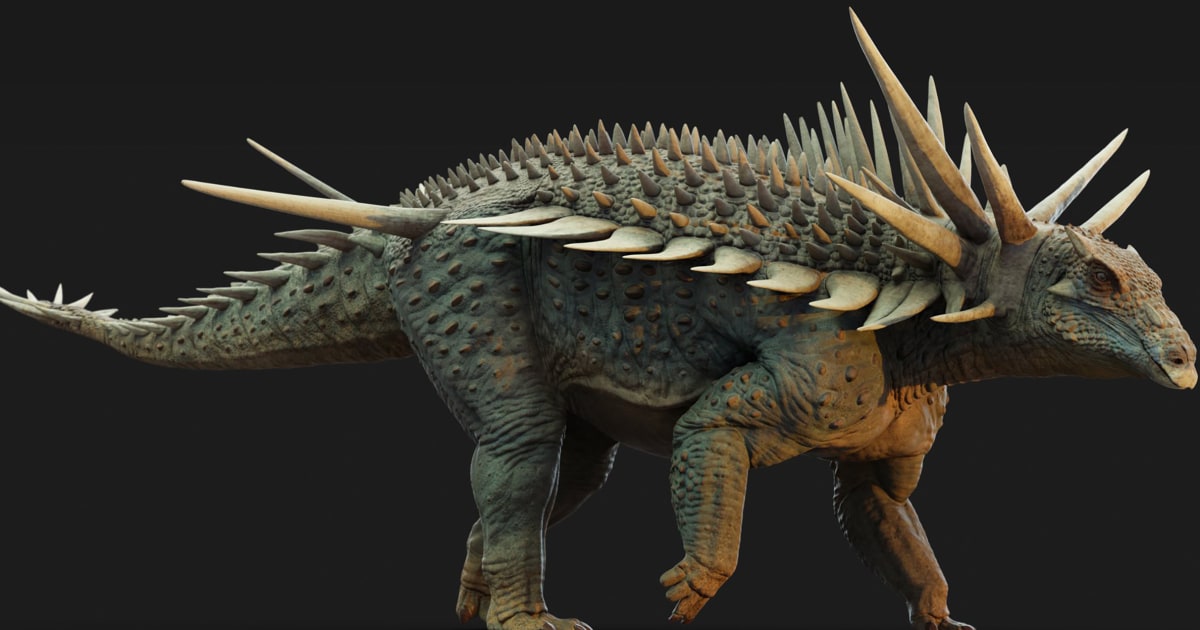
Spicomellus: Unearthing the “Spiky Hell” Dinosaur That Rewrites Paleontological Understanding
A groundbreaking revelation in Morocco has paleontologists buzzing: Spicomellus, a truly bizarre dinosaur unlike anything previously known. This Jurassic period herbivore, nicknamed the “spiky hell” due to its extraordinary array of bony protrusions, is forcing scientists to reconsider dinosaur evolution and highlights Africa’s untapped potential for paleontological finds.
A Dinosaur Unlike Any Other
The Spicomellus fossils,first unearthed in 2018,presented an immediate puzzle. As project co-lead richard Butler of the University of Birmingham explains, “We just couldn’t believe how wierd it was and how unlike any other dinosaur, or indeed any other animal we certainly know of, alive or extinct.” The sheer abundance and placement of the spikes – covering the dinosaur’s entire body – are what set it apart.
Imagine a reptilian porcupine, and you’re getting close. Vertebrate paleontologist Steve Brusatte, who wasn’t involved in the research, described it as “truly one of the weirdest, wackiest dinosaurs I’ve ever seen.” These spikes weren’t just for show; they likely served as a formidable defense mechanism against the meat-eating dinosaurs of the Jurassic period.
What Makes Spicomellus So Significant?
this discovery isn’t just about adding another dinosaur to the list. Spicomellus challenges existing assumptions about dinosaur morphology and evolution. Here’s why it matters:
Unique morphology: The extensive, body-covering spikes are unprecedented in the dinosaur fossil record.
Evolutionary Implications: Spicomellus suggests that dinosaur evolution took paths we hadn’t previously imagined, demonstrating a wider range of adaptations than previously understood.
African Paleontology: The find underscores the immense,largely unexplored paleontological wealth of Africa,notably morocco.
The Challenges of Unearthing Spicomellus
Bringing this discovery to light wasn’t easy. The research team faced significant hurdles, including the COVID-19 pandemic. A planned meeting between the U.K.and Moroccan teams in 2020 was delayed until 2022 due to a national lockdown imposed by british Prime Minister Boris Johnson.
Despite these setbacks, the project ultimately proved a major step forward for scientific collaboration and research capacity in Morocco. Driss Ouarhache, who led the Moroccan team, emphasized the study’s impact: “this study is helping to drive forward Moroccan science.”
Why Morocco is a Paleontological Hotspot
For years, paleontological research has been concentrated in regions like North America and Asia. Though,Spicomellus is a powerful reminder that Africa holds a treasure trove of undiscovered fossils. As study co-lead Susie Maidment of the London’s Natural History museum points out, the continent is “wildly undersampled compared to the other continents.”
Morocco, in particular, is emerging as a critical location for paleontological discoveries. The Spicomellus project demonstrates the potential for groundbreaking finds and the importance of investing in research within the region.
Frequently Asked Questions About Spicomellus
Q: What exactly is Spicomellus, and why is it called the ”spiky hell”?
A: Spicomellus is a newly discovered dinosaur from the Jurassic period found in Morocco. the nickname “spiky hell” comes from the incredibly dense covering of bony spikes protruding from its entire body, making it a uniquely formidable-looking creature.
Q: How does the discovery of Spicomellus change our understanding of dinosaur evolution?
A: Spicomellus demonstrates that dinosaur evolution was more diverse and experimental than previously thought. Its unique morphology – the extensive spikes – suggests evolutionary pathways we hadn’t considered, broadening our understanding of dinosaur adaptations.
Q: What purpose did the spikes on Spicomellus likely serve?
A: While the exact purpose is still being investigated, the most likely clarification is defense. The spikes would have made Spicomellus* a very arduous meal for any predatory dinosaur, acting as a deterrent and perhaps inflicting injury.Q: Why is Morocco becoming increasingly important for dinosaur discoveries?
A: Morocco, and Africa more broadly, has been historically under-explored in terms of paleontological research.