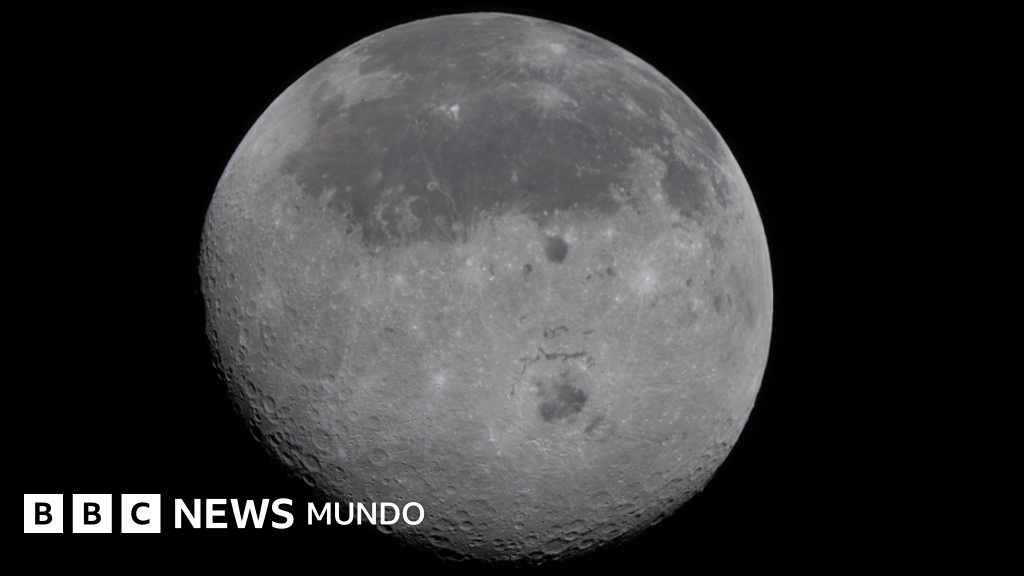
The boundaries of human exploration have shifted once again. As of Tuesday, April 7, 2026, the crew of the Artemis II mission is currently navigating the return leg of a historic journey, having successfully completed a flyby of the Moon. This mission represents the first time humans have ventured back toward the lunar vicinity in half a century, marking a pivotal moment in NASA’s strategy to establish a sustainable human presence on the Moon and eventually reach Mars.
The mission, which launched from the Kennedy Space Center on April 1, 2026, at 22:35:12 UTC via the Space Launch System (SLS) rocket, has already rewritten the record books. By venturing beyond the orbit of Earth, the four-person crew has eclipsed the previous record for the farthest human spaceflight, pushing the limits of deep space navigation and communication.
For the astronauts aboard the Orion spacecraft, the experience has been one of profound discovery. The mission reached a critical milestone on Flight Day 6, when the crew wrapped up a historic lunar flyby, passing within 4,067 miles (6,545 km) of the lunar surface according to mission data. This trajectory allowed the crew to witness the lunar landscape and the Earth from perspectives that have remained unseen by human eyes since the Apollo era.
Breaking Records in Deep Space
The Artemis II crew—comprising Reid Wiseman, Victor Glover, Christina Koch, and Jeremy Hansen—has spent the last several days testing the endurance of both human psychology and high-tech machinery in the harsh environment of deep space. The mission is designed as a 10-day test flight as planned by NASA to demonstrate a broad range of capabilities required for future lunar surface landings.

The journey has not been without its technical rigors. On Flight Day 5, the crew successfully completed a critical correction burn, ensuring the spacecraft remained on the precise trajectory needed for the lunar flyby. By Flight Day 7, the crew began their return journey to Earth, making a long-distance call home to share their experiences and the awe of seeing the Moon and Earth from the depths of space via NASA flight logs.
The mission’s significance extends beyond the record-breaking distance. The flyby provided a unique opportunity to capture images and data from the lunar environment, including perspectives of the Moon’s far side. This phase of the mission is essential for validating the “deep space systems” that will support astronauts during longer stays on the lunar surface in the coming years.
The Engineering Marvels: SLS and Orion
At the heart of this achievement are two pieces of cutting-edge technology: the Space Launch System (SLS) rocket and the Orion spacecraft. The SLS is NASA’s new heavy-lift rocket, designed specifically to propel the massive Orion capsule and its crew toward the Moon. The Orion spacecraft, specifically the CM-003 Integrity and the ESM-2 European Service Module, serves as the exploration vehicle that sustains the crew during their transit according to technical specifications.
Orion was developed to be capable of sending astronauts to the Moon and serves as a crucial stepping stone for future Mars missions. The spacecraft’s design focuses on life support, radiation protection, and the ability to withstand the intense heat of re-entry into Earth’s atmosphere. With a launch mass of 78,000 lb (35,000 kg) and a landing mass of 20,500 lb (9,300 kg) as documented in mission specs, the vehicle is a testament to modern aerospace engineering.
The collaboration between Lockheed Martin, which manufactured the Orion capsule, and Airbus, which produced the European Service Module, highlights the international nature of the Artemis program. This synergy of global expertise is what allows NASA to push the boundaries of exploration while managing the immense risks associated with deep space travel.
Paving the Way for Future Lunar and Mars Missions
Artemis II is not a destination in itself, but a rigorous test of the systems that will enable Artemis III and beyond. While the current crew performed a flyby rather than a landing, their mission validates the heat shield, communication arrays, and life support systems necessary for humans to survive in the void between worlds. By demonstrating these capabilities, NASA is paving the way for the first woman and first person of color to land on the lunar surface.
The long-term vision of the Artemis program is the creation of a sustainable lunar presence, which will serve as a proving ground for the eventual human mission to Mars. The lessons learned from the Artemis II crewed lunar flyby—specifically regarding the psychological impact of deep space and the reliability of the Orion spacecraft—will inform every subsequent mission in the program as stated by NASA.
The ability to successfully execute a correction burn and manage a high-speed flyby of the Moon proves that the navigation and propulsion systems are ready for the more complex maneuvers required for lunar orbit insertion and surface descent.
Artemis II Mission Quick Facts
| Detail | Specification |
|---|---|
| Launch Date | April 1, 2026 |
| Crew Members | Reid Wiseman, Victor Glover, Christina Koch, Jeremy Hansen |
| Spacecraft | Orion CM-003 Integrity / ESM-2 |
| Flyby Distance | 4,067 mi (6,545 km) |
| Planned Duration | 10 Days |
As the crew continues their journey home, the world watches with anticipation. The mission has already achieved its primary goal of demonstrating crewed deep space capabilities, and the data gathered will be analyzed for years to come to ensure the safety of future explorers.
The next major checkpoint for the mission is the planned splashdown in the Pacific Ocean. The landing is currently scheduled for No Earlier Than (NET) April 11, 2026, at 00:21 UTC according to mission timelines. Once the crew is safely recovered, NASA will begin the extensive process of debriefing the astronauts and analyzing the spacecraft’s performance.
What do you think about the return to the Moon? Do you believe these missions are the first step toward a permanent colony on Mars? Share your thoughts in the comments below and follow our tech section for the latest updates on the Artemis program.
Keep reading