
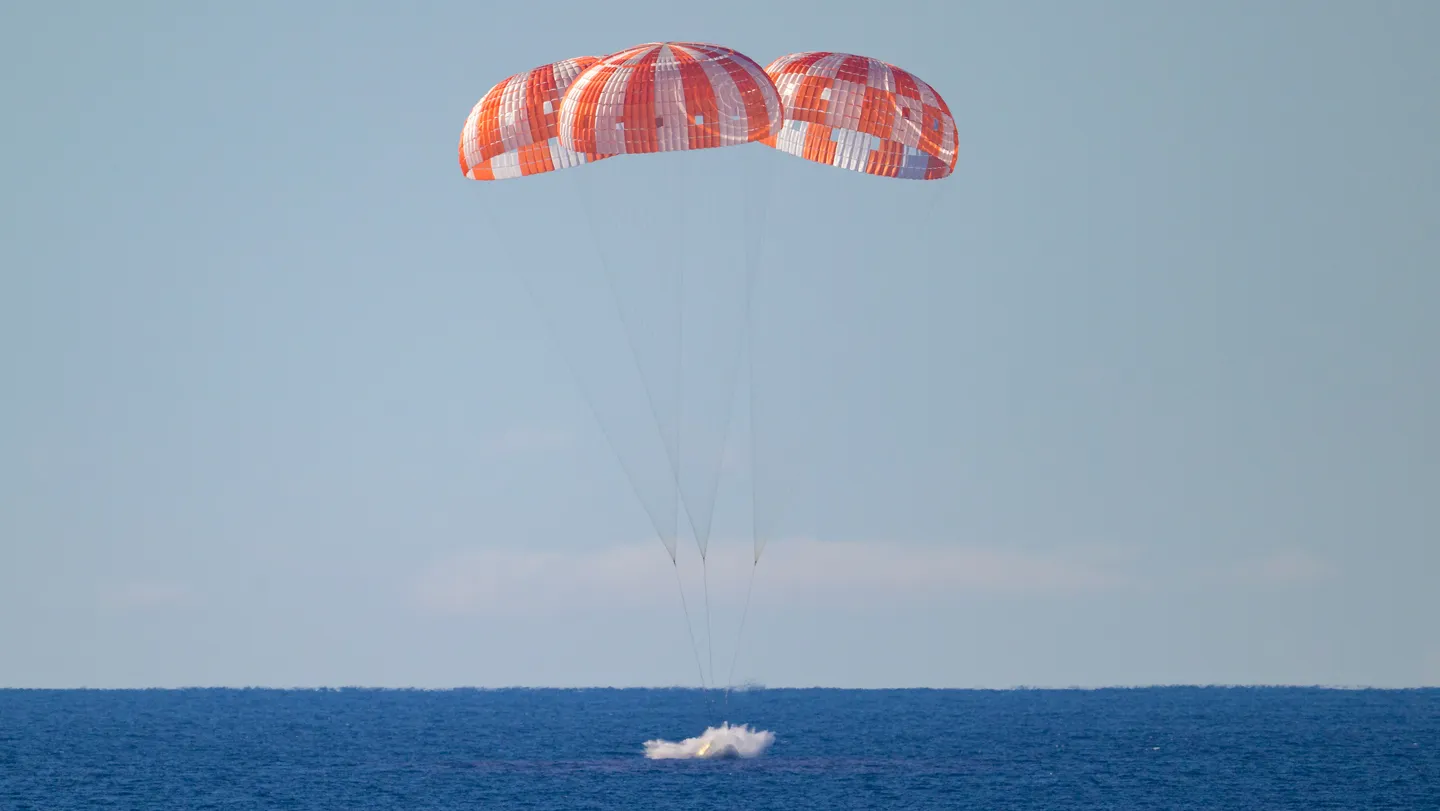
The Artemis II crew has successfully returned to Earth, marking the conclude of a historic nine-day journey that pushed human exploration further into deep space than ever before. After looping around the moon, the four astronauts splashed down in the Pacific Ocean on Friday, April 10, 2026, completing the first crewed flight of NASA’s Artemis program.
This mission, which launched on April 1, 2026, represents the first time humans have ventured beyond low Earth orbit since the Apollo 17 mission in 1972. By testing critical deep space systems, the Artemis II mission serves as a vital precursor to future lunar surface landings and the eventual goal of sending crews to Mars.
The crew—commander Reid Wiseman, pilot Victor Glover, and mission specialists Christina Koch and Jeremy Hansen—traveled a total distance of 694,481 miles (1,117,659 km) during their flight. Their safe return confirms the viability of the Orion spacecraft’s heat shield and life-support systems under the extreme conditions of lunar re-entry.
A Record-Breaking Lunar Flyby
The mission began at the Kennedy Space Center in Florida, where the crew launched from Launch Complex 39B aboard the Space Launch System (SLS) rocket. The SLS, described as NASA’s new heavy-lift rocket, provided the payload mass and departure energy necessary to propel the Orion spacecraft toward the moon NASA Artemis II.

Upon entering space, the crew spent their first 24 hours orbiting Earth to rigorously test the Orion capsule. This phase was critical, as approximately 90% of the capsule’s life-support system had not been previously tested in space. Commander Reid Wiseman noted prior to launch that this orbit allowed the team to verify if the systems could scrub carbon dioxide and maintain a breathable, hydrated environment for the crew.
The mission reached its peak on April 6, 2026, when the spacecraft made its closest approach to the moon at a distance of 4,067 miles (6,545 km). This flyby allowed the crew to push deeper into space than any human in history, setting a new record for the farthest distance traveled from Earth CBS News Artemis II Highlights.
Technical Triumphs of the Orion Spacecraft
The success of the mission relied heavily on the Orion spacecraft (specifically CM-003 Integrity and ESM-2), developed by Lockheed Martin and Airbus. The vehicle was designed to sustain the crew during the transit to the moon and ensure their safe return through the Earth’s atmosphere.
One of the most significant tests was the capsule’s heat shield. As the crew returned from the moon, the spacecraft had to withstand the intense heat generated by re-entering the atmosphere at high speeds. The successful splashdown in the Pacific Ocean, southwest of San Diego, confirms that the heat shield performed as intended.
The mission also provided an opportunity for the crew to test manual controls. Pilot Victor Glover utilized the capsule’s manual systems during the early stages of the mission, ensuring that the crew maintains the ability to navigate the spacecraft should automated systems fail.
Artemis II Mission Timeline
| Event | Date | Details |
|---|---|---|
| Launch | April 1, 2026 | Launched from Kennedy Space Center, LC-39B |
| Closest Lunar Approach | April 6, 2026 | Reached distance of 4,067 miles from the Moon |
| Splashdown | April 10, 2026 | Recovered by USS John P. Murtha in the Pacific Ocean |
| Total Duration | 9 Days, 1 Hour, 32 Minutes | First crewed flight beyond low Earth orbit since 1972 |
The Path Toward Lunar Surface Missions
The completion of Artemis II is more than a technical achievement; We see a strategic stepping stone. NASA has framed this mission as a “key step” toward a long-term return to the Moon. By verifying the performance of the Orion spacecraft and the SLS rocket with a human crew, NASA has cleared the way for Artemis III, which aims to land astronauts on the lunar surface.
The data gathered during the 10-day journey—including the effects of deep space radiation and the performance of the environmental control and life support systems—will be analyzed to ensure the safety of future explorers. This mission effectively bridges the gap between the unmanned tests of Artemis I and the crewed landings of the near future.
The recovery of the crew by the USS John P. Murtha marks the official end of the flight phase, but the scientific analysis of the mission’s telemetry and crew health will continue for months. These insights are essential for the eventual goal of establishing a sustainable human presence on the Moon and preparing for future crewed missions to Mars Wikipedia Artemis II.
With the safe return of Wiseman, Glover, Koch, and Hansen, the world has witnessed the first piloted moonshot in 53 years, reviving the spirit of the Apollo era while utilizing 21st-century technology to expand the boundaries of human reach.
NASA will provide further updates as the crew undergoes post-flight medical evaluations and the Orion spacecraft is analyzed for wear and tear. We invite you to share your thoughts on this historic achievement in the comments below.