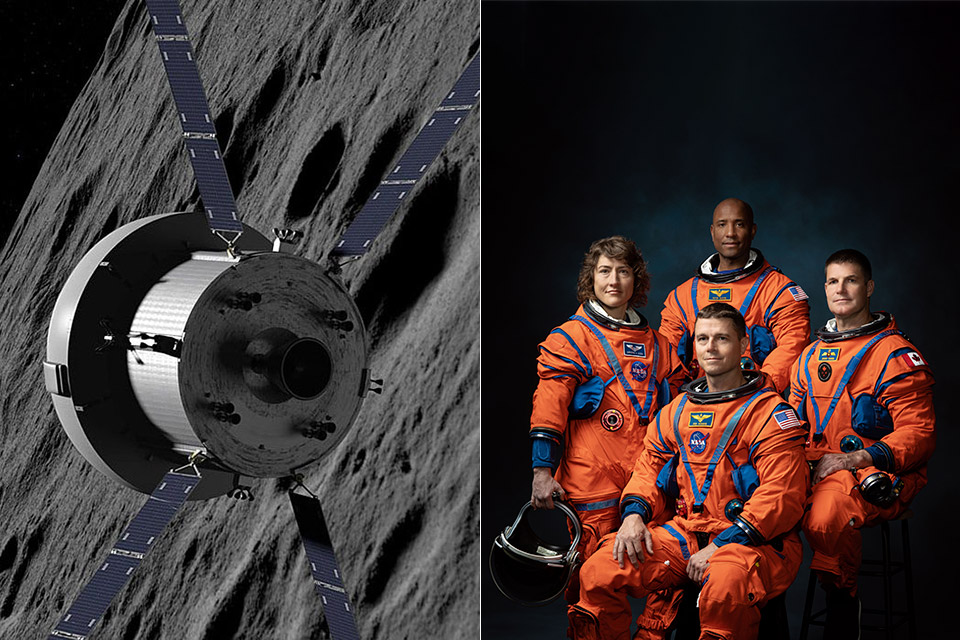
Cape Canaveral, FL – After years of development and a series of carefully choreographed tests, NASA’s Artemis II mission is officially underway. The Space Launch System (SLS) rocket, carrying a crew of four astronauts, lifted off from Kennedy Space Center on April 1, 2026, at 6:35 p.m. EDT, embarking on a ten-day journey that will grab them around the Moon and back. This marks the first crewed mission in NASA’s Artemis program, and the first time humans have ventured to lunar distance since the Apollo 17 mission in December 1972. The launch represents a pivotal moment not only for the United States’ space program but for international collaboration in space exploration.
The Artemis II crew consists of Commander Reid Wiseman, Pilot Victor Glover, Mission Specialist Christina Koch, and Canadian Space Agency astronaut Jeremy Hansen. Wiseman, a veteran NASA astronaut, previously served as the chief astronaut at Johnson Space Center. Glover is the first African American astronaut to be assigned to a lunar mission. Koch holds the record for the longest single spaceflight by a woman, and Hansen is the first Canadian to travel beyond Earth orbit. Their mission is not a landing, but a rigorous test flight designed to validate the performance of the SLS rocket and the Orion spacecraft in the harsh environment of deep space. The mission’s success is crucial for paving the way for future Artemis missions, including Artemis III, which is slated to land astronauts on the lunar surface near the Moon’s South Pole.
The launch wasn’t without its challenges. Originally planned for February, the mission faced delays due to hydrogen fuel leaks and issues with the upper stage propellant pressurization system. As reported by CBS News, NASA engineers worked diligently to resolve these issues, ultimately clearing the way for a successful launch. The SLS rocket, the most powerful operational booster in the world, performed flawlessly, sending the Orion spacecraft on its trajectory towards the Moon. The Orion capsule, developed to carry astronauts to the Moon and eventually to Mars, is a critical component of NASA’s long-term space exploration goals.
Testing the Boundaries of Deep Space Travel
Artemis II is fundamentally a test mission. While the crew will travel approximately 250,000 miles, reaching a maximum distance from Earth similar to that of the Apollo missions, the primary objective is to assess the spacecraft’s systems and the crew’s ability to operate in deep space. This includes evaluating life support systems, navigation, communication, and thermal control. The crew will perform a series of checks and experiments throughout the flight, providing valuable data for future missions. According to NASA, the mission will demonstrate a broad range of capabilities needed for long-duration space travel, including those required for eventual missions to Mars.

One of the key aspects of the mission is the evaluation of Orion’s performance during re-entry into Earth’s atmosphere. The spacecraft will experience extremely high temperatures as it descends, and engineers will be closely monitoring the heat shield to ensure its integrity. The data collected during re-entry will be crucial for refining the design of future Orion spacecraft and ensuring the safety of astronauts on future missions. The mission likewise serves as a vital test for the Space Launch System rocket, which is intended to be the workhorse for NASA’s deep space exploration efforts.
Life Aboard Orion: A Ten-Day Journey
Living and working in the confined space of the Orion spacecraft for ten days presents unique challenges for the Artemis II crew. As VRT News reported, astronauts will need to adapt to a carefully planned schedule for eating, sleeping, and personal hygiene. Food will be pre-packaged and designed for consumption in zero gravity. Sleeping arrangements will involve securing themselves in sleeping bags attached to the spacecraft’s walls. Perhaps surprisingly, the crew even faced a last-minute troubleshooting effort regarding Orion’s toilet system, which was successfully resolved by the crew and ground teams.
Maintaining physical and mental health during the mission is also a priority. The crew will engage in regular exercise to combat the effects of prolonged exposure to zero gravity. Communication with Mission Control will be continuous, providing the crew with support and guidance throughout the flight. The psychological impact of being isolated in deep space will also be carefully monitored, as it is a critical factor for long-duration missions. The crew’s experiences will provide valuable insights into the challenges of living and working in space for extended periods.
International Collaboration and Public Engagement
The Artemis II mission is not solely an American endeavor. The inclusion of Canadian astronaut Jeremy Hansen highlights the importance of international collaboration in space exploration. Canada has been a long-standing partner with NASA, contributing expertise and resources to numerous space missions. The European Space Agency (ESA) is also playing a key role in the Artemis program, providing the European Service Module for the Orion spacecraft. This module provides essential power, propulsion, and life support capabilities.
The launch of Artemis II captured the imagination of people around the world. HLN reported that onlookers in Limburg, Belgium, gathered to witness the launch, expressing their excitement about the mission. Spectators in the United States also flocked to Kennedy Space Center and surrounding areas to witness the historic event. The mission has generated significant media coverage, inspiring a fresh generation of scientists, engineers, and explorers. Even passengers on airplanes captured unique perspectives of the launch, sharing their footage online.
Key Takeaways
- Artemis II is the first crewed mission of NASA’s Artemis program, sending four astronauts on a ten-day journey around the Moon.
- The mission is a critical test flight to validate the performance of the SLS rocket and the Orion spacecraft.
- International collaboration is a key component of the Artemis program, with contributions from Canada and the European Space Agency.
- The mission will provide valuable data for future lunar landings and eventual missions to Mars.
The Artemis II mission is currently progressing as planned, with the crew continuing to perform checks and experiments. The spacecraft is expected to return to Earth on April 11, 2026, splashing down in the Pacific Ocean. Following the mission, NASA will analyze the data collected and use it to refine the design of future Artemis spacecraft and systems. The next major milestone in the Artemis program will be the Artemis III mission, currently scheduled for 2026, which will aim to land astronauts on the lunar surface for the first time in over 50 years. Stay tuned to www.world-today-journal.com for continued coverage of the Artemis program and the latest developments in space exploration.
The next scheduled update from NASA regarding the Artemis II mission is expected on April 7, 2026, when the crew will conduct a mid-mission press conference. We encourage our readers to share their thoughts and reactions to this historic mission in the comments below.
Worth a look