No Fooling: NASA Targets April 1 for Artemis II Lunar Flyby
After a series of setbacks requiring a return to the Vehicle Assembly Building (VAB) at Kennedy Space Center, NASA is now targeting April 1, 2026, as the launch date for Artemis II, the first crewed mission around the Moon in over 50 years. The mission, a critical step in the Artemis program aiming to establish a sustained human presence on the lunar surface, faced a recent hurdle with a helium flow issue in the rocket’s upper stage. Engineers have since resolved the problem, and preparations are underway for the rocket’s rollout to the launch pad.
The Artemis II mission represents a monumental undertaking, not only for NASA but for international space exploration. The 10-day flight will carry a crew of four – NASA astronauts Reid Wiseman, Victor Glover, and Christina Koch, alongside Canadian Space Agency astronaut Jeremy Hansen – on a trajectory that will take them approximately 6,400 miles (10,300 kilometers) beyond the Moon. This mission is designed to test the Orion spacecraft’s life support systems and assess crew performance in the harsh environment of deep space, paving the way for future lunar landings. Glover will make history as the first person of color, Koch as the first woman, and Hansen as the first non-American to journey beyond Earth orbit and around the Moon.
The recent issue stemmed from a seal within a quick disconnect that regulates helium flow to the upper stage of the Space Launch System (SLS) rocket. Helium is crucial for pressurizing the rocket’s fuel tanks and ensuring proper engine operation. According to a NASA update posted on March 3, 2026, the team removed the faulty quick disconnect, reassembled the system, and successfully validated the repairs by running a reduced flow of helium through the mechanism. Engineers are now analyzing the cause of the seal’s dislodgement to prevent recurrence. NASA’s blog post details the repair process and ongoing assessments.
From Hydrogen Leaks to Helium Flow: A Challenging Path to Launch
The April 1 launch date is a recovery from earlier projections. The SLS rocket initially underwent a key fueling test on February 21, 2026, successfully loading super-cold propellants without significant issues, seemingly resolving a previous hydrogen leak that had delayed the mission. However, the subsequent helium flow problem necessitated the rocket’s return to the VAB on February 25, 2026, for repairs. The VAB, a massive structure at Kennedy Space Center, is the only facility equipped to handle the complex repairs required on the upper stage.
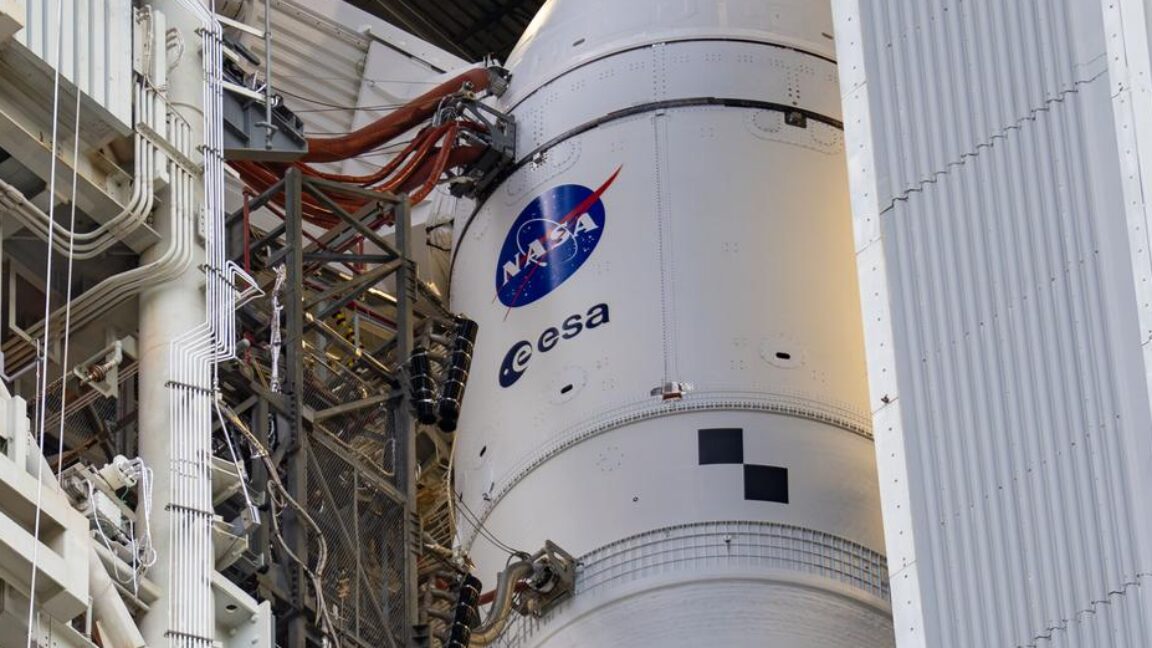
The SLS, a powerful heavy-lift launch vehicle, is central to NASA’s Artemis program. The Artemis II mission will be the second flight of the SLS, following the uncrewed Artemis I mission which successfully orbited the Moon in 2022. The Orion spacecraft, built by Lockheed Martin, is designed to carry astronauts on deep-space missions. The European Space Agency (ESA) provides the European Service Module (ESM-2) for Orion, which provides propulsion, power, thermal control, and life support. According to Wikipedia, the Orion CM-003 Integrity is the capsule being used for this mission.
Viewing Opportunities and the Kennedy Space Center Experience
For those eager to witness the launch firsthand, Kennedy Space Center Visitor Complex is offering viewing packages, though the most sought-after options are already sold out. The “Main Visitor Complex Launch Viewing Package,” priced at $99 plus tax, provides access to viewing areas on the complex grounds, approximately 8 miles from the launch pad. The “Feel the Heat Launch Viewing Package,” which costs $250 plus tax, offers a closer vantage point from the Apollo/Saturn V Center, just 3.5 miles from the launch pad. The Kennedy Space Center website provides details on these packages and emphasizes the necessitate for flexibility, as the launch date could shift. Both packages include admission for two launch attempts and a one-day admission ticket for apply after the launch.
The Kennedy Space Center Visitor Complex has cautioned that launch viewing packages are valid for any date associated with Artemis II’s first launch attempt, and purchasers should be prepared for potential delays. NASA’s Artemis II Mission Availability for Early 2026 provides potential launch dates and times, but the agency stresses that the launch could occur at any time of day or night. The complex rolled the Artemis II rocket back to the Vehicle Assembly Building (VAB) on February 23, 2026, as reported by Kennedy Space Center’s Artemis II landing page.
The Significance of Artemis II and the Future of Lunar Exploration
Artemis II is more than just a test flight; it’s a crucial step towards establishing a long-term human presence on the Moon and, eventually, Mars. The mission will gather valuable data on the performance of the SLS and Orion in a real-world deep-space environment, validating the systems and procedures necessary for future lunar landings. The data collected will inform the development of technologies and strategies for sustainable lunar exploration, including resource utilization and habitat construction.
The Artemis program, initiated in 2017, aims to land the first woman and the first person of color on the Moon, building upon the achievements of the Apollo program. Artemis III, planned for 2026, will attempt the first crewed lunar landing of the 21st century. The program represents a collaborative effort involving NASA, ESA, the Japan Aerospace Exploration Agency (JAXA), and the Canadian Space Agency (CSA), demonstrating the international commitment to space exploration. The success of Artemis II is paramount to the continued momentum of the Artemis program and the realization of its ambitious goals.
What Happens Next?
Following the completion of repairs and ongoing validation testing, the SLS rocket and Orion spacecraft will be rolled back out to Launch Complex 39B at Kennedy Space Center. NASA will then conduct a final series of checkouts and preparations before the launch window opens on April 1, 2026. The mission is scheduled to last 10 days, culminating in a splashdown in the Pacific Ocean, where the crew will be recovered by the U.S. Navy. The next major update from NASA is expected in late March 2026, following a Flight Readiness Review, which will formally assess the readiness of the hardware and software for launch.
The Artemis II mission is a testament to human ingenuity and the enduring spirit of exploration. As we approach the launch date, the world will be watching with anticipation, eager to witness this historic moment and the dawn of a new era in space travel. Share your thoughts on the upcoming mission in the comments below, and be sure to share this article with your network!
Related reading