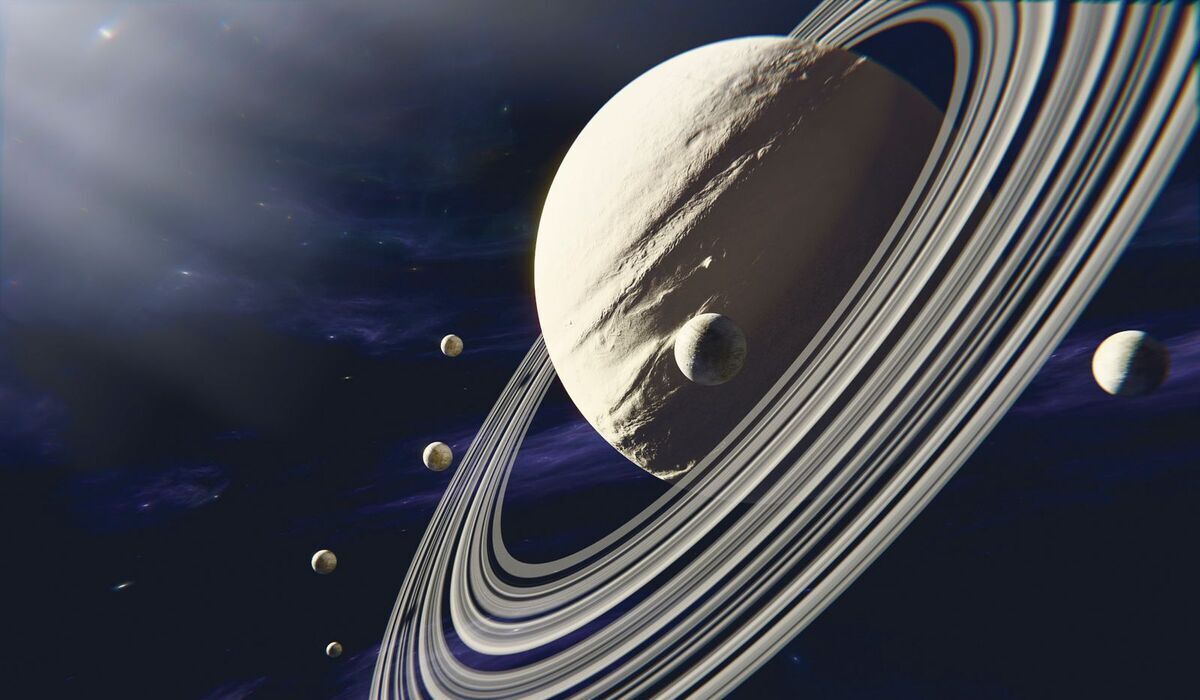
The Recent Origin of Saturn’s Rings and the Dragonfly Mission to titan
Saturn’s majestic rings, a defining feature of the planet, are surprisingly young – potentially less than 400 million years old. A leading theory suggests these rings are not remnants from the formation of Saturn itself, but rather the debris of a shattered moon or moons. Within Saturn’s gravitational reach, material attempting to coalesce back into a moon was rather torn apart, resulting in the icy particles that now form the ring system.
Update on the 2028 Dragonfly Mission: A Chemical Laboratory on Titan
To investigate this theory and unlock the secrets of Saturn’s system, NASA is preparing the Dragonfly mission. As of February 2026, the nuclear-powered rotorcraft has entered Phase D, focusing on hardware integration and comprehensive system testing at the Johns Hopkins Applied Physics Laboratory.https://www.nasa.gov/dragonfly
Dragonfly is slated for launch in July 2028, with an anticipated arrival at Titan in 2034. This groundbreaking mission will utilize a unique “hop” capability, making vertical takeoffs and landings to traverse Titan’s surface. The rotorcraft will analyse the chemical composition of the soil and atmosphere in situ, searching for prebiotic chemistry and geological evidence related to the moon’s formation – and potentially, the origin of Saturn’s rings.
Titan, Saturn’s largest moon, is of particular interest.its dense atmosphere and unique chemical environment make it a prime location to study the building blocks of life. dragonfly will investigate whether Titan harbors signs of past or present microbial life.
Why Titan?
Titan is a interesting world with a surface hidden by a thick,hazy atmosphere. It’s the only moon in our solar system with a substantial atmosphere, and the only body besides Earth known to have liquid on its surface – though these liquids are hydrocarbons like methane and ethane, not water.
The atmosphere is overwhelmingly composed of nitrogen (over 95%), with a significant amount of methane. Scientists believe this nitrogen originated from ammonia ice trapped during the early formation of the Saturnian system, later released through internal heating or photolysis in the atmosphere.https://science.nasa.gov/saturn/moons/titan/
Can Titan Support Human Life?
While Titan is not currently habitable for humans without advanced life support systems, its rich organic chemistry makes it a compelling place to search for microbial life.The extremely cold temperatures and lack of oxygen pose significant challenges.
When will we certainly know More?
definitive geological insights, including isotopic analysis of Titan’s surface, are expected from the Dragonfly mission in the mid-2030s. This data will be crucial in understanding the moon’s origins and potentially shedding light on the formation of Saturn’s rings.
(Image Credit: NASA, Cassini–Huygens Mission Archive/H-3)
Keep reading