Tensions Flare as India Defeats Pakistan in Asia Cup Clash
The recent Asia Cup match between India and Pakistan was marked by more than just competitive cricket, reflecting the ongoing geopolitical tensions between the two nations. Following a military conflict earlier this year, the atmosphere surrounding the game was noticeably strained, extending beyond the field of play. this resulted in a visible lack of traditional post-match courtesies and several on-field incidents.
A Match Played Under a cloud
The rivalry between India and Pakistan is always intense, but last Sunday’s encounter carried added weight. It was the first meeting since April’s military conflict, sparked by a militant attack in India-administered Kashmir. Pakistan lodged a formal complaint regarding the lack of handshakes, even questioning their continued participation in the tournament.
Captains refrained from the customary pre-match acknowledgement at the toss. Later, players from both sides eschewed the traditional post-match handshake after India secured a seven-wicket victory, chasing down a target of 172 with seven balls remaining.
On-Field Heat and Off-Field Concerns
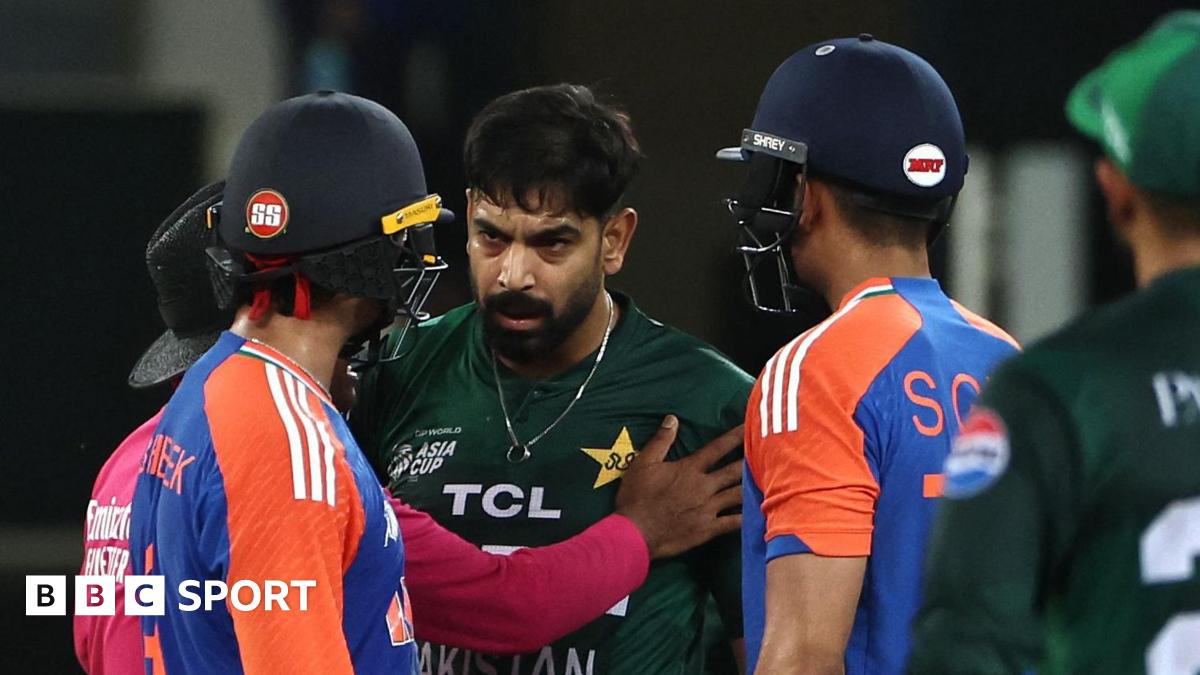
Several heated exchanges occurred during India’s chase. Umpires were forced to intervene during a notably tense moment between Indian opener Abhishek Sharma and Pakistani bowler Haris Rauf. Sharma later expressed his displeasure with what he perceived as unwarranted aggression from the Pakistani team.
“The way they were coming to us without any reason I didn’t like at all,” Sharma stated after the match. “I just wanted to deliver for my team.”
Further friction arose as Abhishek sharma and Shubman Gill engaged in verbal exchanges with Pakistani bowlers throughout their opening partnership, which yielded 105 runs in 59 balls. Gill contributed 47 runs, while Sharma top-scored with a brisk 74 off 39 deliveries. Tilak Varma ultimately sealed the win with a final six, extending India’s winning streak against Pakistan across all formats to seven consecutive matches.
provocative Celebrations and Underlying Tensions
adding to the charged atmosphere,Pakistan opener Sahibzada Farhan mimicked firing a gun after reaching his half-century.This gesture, while seemingly celebratory, was viewed by some as insensitive given the recent conflict.
Earlier in the innings, Pakistan had a strong start, reaching 91-1 after 10 overs. However, they lost momentum in the middle overs, ultimately finishing on 171-5. India’s bowlers, particularly Shivam Dube (2-33), effectively stifled their scoring rate during a 40-ball boundary drought.
A Silent Post-Match
Notably, both captains – Suryakumar Yadav of india and Salman Agha of Pakistan – avoided any direct reference to the broader political situation during the post-match presentation. This contrasted with Yadav’s previous tribute to India’s armed forces following their initial encounter.
What’s next?
* Pakistan will face Sri Lanka on Tuesday.
* India will play Bangladesh on Wednesday.
If both teams finish in the top two of the Super Four group, they will meet again in the final on Sunday. You can expect continued scrutiny and heightened emotions as the tournament progresses, given the complex relationship between these two cricketing powerhouses. The outcome of these matches will not only determine the Asia Cup champion but also further shape the narrative surrounding this intense rivalry.
This article aims to provide a extensive overview of the events surrounding the India-Pakistan Asia Cup match, acknowledging the political context and on-field tensions. It’s designed to be informative and engaging for readers interested in both cricket and the broader geopolitical landscape.
Keep reading