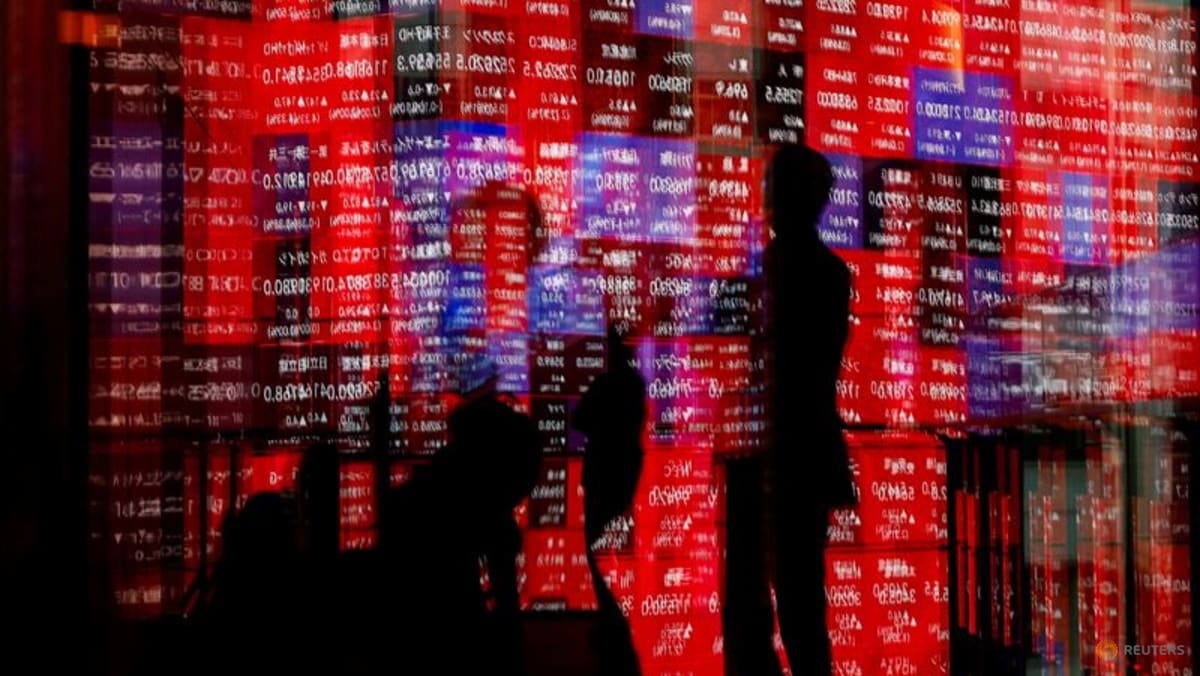
LONDON – Global markets exhibited cautious trading on Monday, February 23, 2026, as investors digested the fallout from a series of unpredictable policy shifts in the United States and braced for key economic data releases. Uncertainty surrounding U.S. Tariffs, coupled with geopolitical tensions in the Middle East, contributed to a hesitant mood, while all eyes are now on Nvidia’s earnings report this week, a crucial indicator of the health of the artificial intelligence sector. The dollar slipped against major currencies amid the trade policy confusion, reflecting investor anxieties about the direction of the world’s largest economy.
The immediate catalyst for the market unease stems from a dramatic series of events following the U.S. Supreme Court’s decision to strike down President Donald Trump’s sweeping tariffs. The ruling, intended to resolve a legal challenge to the tariffs, instead triggered a flurry of conflicting announcements from the administration. Initially, President Trump announced a new 10% tariff on all imports, only to subsequently raise it to 15% – a move that reportedly surprised even some within his own administration. This rapid succession of changes has created a climate of uncertainty, leaving businesses and investors struggling to assess the potential impact on global trade and economic growth. The situation underscores the volatility inherent in the current geopolitical and economic landscape.
Turbulent Trade Policy and Market Reaction
The Supreme Court’s decision on Friday invalidated President Trump’s earlier tariff initiatives, which had been implemented under Section 232 of the Trade Expansion Act of 1962, citing overreach of executive power. As reported by Livemint, the initial ruling led to a positive market reaction, but this was quickly overshadowed by the subsequent tariff announcements. The lack of clarity regarding the scope and duration of the new tariffs – including which countries would be affected and potential exemptions – has fueled investor apprehension. Economists are concerned that the ongoing uncertainty could stifle investment and disrupt supply chains.
Rodrigo Catril, a senior FX strategist at NAB, articulated the prevailing sentiment, stating, “The tariff landscape is now more uncertain than before, uncertainty is not good news for any economy or market.” He warned of a potentially cyclical pattern of tariff announcements and reversals, creating a destabilizing effect on global trade. The ambiguity surrounding the implementation of the 15% tariff – including the timing and potential exclusions – further exacerbates the situation. Some countries, like the United Kingdom and Australia, previously benefited from a 10% tariff rate under the earlier rules, while many Asian nations faced higher rates, adding to the complexity.
Despite the overall cautious tone, Asian stock markets showed modest gains. MSCI’s broadest index of Asia-Pacific shares outside Japan edged up 0.5% in light trading. South Korea’s benchmark index continued its upward trajectory, rising by 2.0% after a significant 5.5% jump the previous week, reaching all-time highs. Yet, Japan’s Nikkei remained closed for a holiday, and futures trading indicated a relatively stable opening. These gains were tempered by declines in S&P 500 and Nasdaq futures, reflecting concerns about the potential impact of the tariff uncertainty on U.S. Markets.
Nvidia Earnings: A Barometer for the AI Sector
Beyond the tariff drama, investors are keenly awaiting the earnings report from Nvidia, the semiconductor giant and a key player in the artificial intelligence revolution. Nvidia’s fourth-quarter performance is expected to provide valuable insights into capital expenditure trends within the AI sector. The Australian Financial Review notes that Nvidia’s results are particularly significant given its substantial weight within the S&P 500 index, accounting for nearly 8% of the benchmark.
Analysts predict a 71% rise in Nvidia’s earnings per share to $7.76, although estimates vary considerably, ranging from $6.28 to $9.68. Options trading suggests that the company’s share price could swing by at least 6% in either direction following the announcement. This volatility underscores the high expectations surrounding Nvidia and the sensitivity of the market to any potential surprises. The earnings report will be closely scrutinized for indications of sustained demand for AI-related hardware and software, as well as any signs of a slowdown in investment within the sector.
Geopolitical Risks and Commodity Markets
Adding to the global economic uncertainty are escalating tensions between the United States and Iran. Reports suggest that the U.S. Administration is considering military action against Iran, potentially as early as this week, following an increase in naval forces in the Middle East aimed at pressuring Iran to renegotiate its nuclear constraints. This heightened geopolitical risk has contributed to a rise in oil prices, as traders anticipate potential disruptions to supply in the event of a military conflict. Yahoo Finance reported that oil prices ended the previous week up roughly 5.5%, with monthly returns around 11%.
Brent crude oil edged down 0.6% to $71.29 a barrel on Monday, while U.S. Crude lost 0.8% to $65.95 per barrel. However, the underlying risk premium remains elevated due to the potential for military escalation. Negotiations between the United States and Iran are scheduled to take place in Geneva on Thursday, offering a potential pathway to de-escalation, but the outcome remains uncertain. The situation in the Middle East continues to be a major source of concern for global markets, adding to the already complex economic and political landscape.
U.S. Economic Data on the Horizon
In addition to Nvidia’s earnings and geopolitical developments, investors are also awaiting a series of key U.S. Economic data releases this week. On February 23, data on factory orders for December will be released. Later in the week, the Producer Price Index (PPI) for January and consumer confidence metrics for February will provide further insights into the state of the U.S. Economy. The February Chicago PMI report will also be closely watched for indications of manufacturing activity. These data points will be crucial in assessing the trajectory of inflation and the likelihood of future interest rate adjustments by the Federal Reserve.
The probability of a June rate cut by the Federal Reserve has decreased slightly, from over 60% to around 52%, reflecting the mixed economic signals. While economic growth fell short of forecasts in the December quarter, core inflation surprised on the upside. This divergence in economic data has created uncertainty about the Fed’s monetary policy path, contributing to volatility in financial markets. The Treasury market has also been affected by the tariff news, as it raises the risk of increased government borrowing and a wider fiscal deficit.
Key Takeaways
- Tariff Uncertainty: The U.S. Supreme Court’s ruling on tariffs and the subsequent policy reversals have created significant uncertainty for global markets.
- Nvidia’s Influence: Nvidia’s earnings report will be a key indicator of the health of the artificial intelligence sector and could significantly impact market sentiment.
- Geopolitical Risks: Escalating tensions between the U.S. And Iran continue to pose a threat to global stability and contribute to volatility in commodity markets.
- Economic Data Watch: Upcoming U.S. Economic data releases will provide crucial insights into the trajectory of inflation and the Federal Reserve’s monetary policy decisions.
The coming days promise to be pivotal for global markets, as investors navigate a complex interplay of economic data, geopolitical risks, and policy uncertainty. The situation demands careful monitoring and a nuanced understanding of the evolving dynamics. The next key event to watch will be the release of the January Producer Price Index data later this week, which will provide further clues about the direction of inflation in the United States.
This article provides general information and should not be considered financial advice. Please consult with a qualified financial advisor before making any investment decisions.