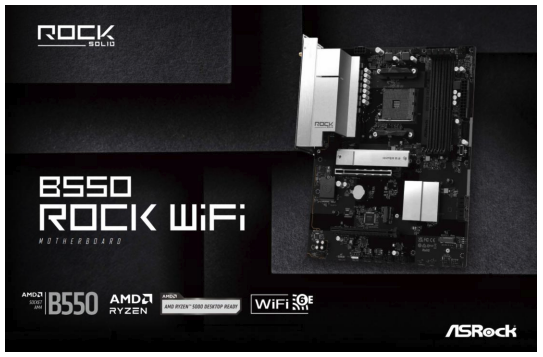
ASRock has expanded its hardware lineup with the introduction of the B550 Rock WiFi, a new motherboard designed to support AMD’s Ryzen 5000 series processors. This latest entry into the B550 chipset market aims to provide a mid-range platform for users seeking compatibility with the Zen 3 architecture, while integrating modern wireless connectivity standards to meet the demands of contemporary desktop builds.
The B550 chipset remains a popular choice for PC enthusiasts due to its balance of performance and cost, particularly as it offers PCIe 4.0 support for primary graphics and NVMe storage slots. According to official product documentation from ASRock, the new board is engineered to handle the thermal and power requirements of the Ryzen 5000 series, including higher-core-count models like the Ryzen 9 5950X, provided the BIOS is updated to the required version.
Technical Specifications and Core Features
At the heart of the B550 Rock WiFi is the AMD B550 chipset, which provides a stable foundation for system builders moving into the AM4 ecosystem. The board features a reinforced power delivery system, a critical requirement for maintaining system stability during sustained workloads or high-performance gaming. ASRock has implemented a robust VRM (Voltage Regulator Module) design, which is typical for the manufacturer’s mid-to-high-tier boards, ensuring that the processor receives consistent voltage even under load.
Storage and expansion capabilities are central to the B550 design. The board includes a primary M.2 slot that supports PCIe 4.0 x4 speeds, allowing for high-speed NVMe SSD performance. This is complemented by additional SATA 6Gbps ports for legacy storage needs. For networking, the inclusion of the “WiFi” designation signifies the integration of an 802.11ax (Wi-Fi 6) module, which provides lower latency and higher throughput compared to previous Wi-Fi 5 standards, a feature verified by industry-standard Wi-Fi 6 certification guidelines.
Compatibility with AMD Ryzen 5000 Series
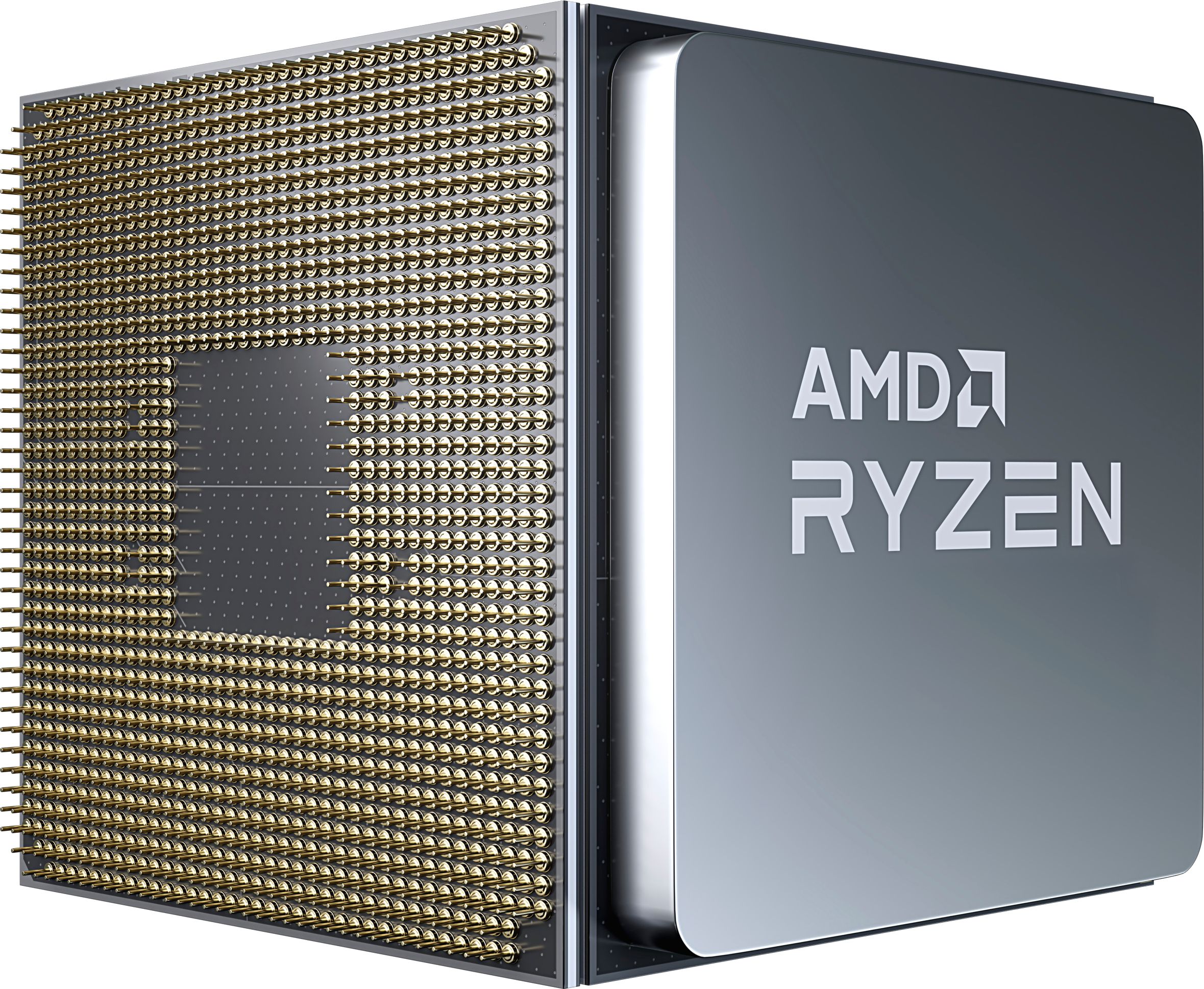
The primary draw of the B550 Rock WiFi is its native support for the Ryzen 5000 series, which utilizes the Zen 3 architecture. Users transitioning from older Ryzen 2000 or 3000 series processors will find that the AM4 socket remains consistent, though the B550 chipset specifically requires a BIOS update to recognize the 5000 series chips, as noted by AMD’s official chipset specifications.

For those building a new PC, the board provides a “Flashback” feature, allowing users to update the BIOS without needing a compatible CPU already installed. This is a significant advantage for users who may purchase a new processor and motherboard simultaneously, as it eliminates the “boot-loop” issues often associated with outdated firmware. The memory support includes dual-channel DDR4 slots, with ASRock’s design supporting high-frequency XMP profiles to maximize the performance of the Infinity Fabric architecture inherent in Ryzen processors.
Thermal Management and Build Quality
ASRock has incorporated integrated heatsinks for both the VRM and the primary M.2 slot. Effective thermal management is essential for the B550 chipset, which can generate localized heat during intensive data transfers or gaming sessions. The use of high-quality chokes and capacitors, which ASRock markets under its “Super Alloy” branding, is intended to extend the operational lifespan of the motherboard components.
The board also features a multi-layered PCB (Printed Circuit Board) design to reduce signal interference. This is particularly important for the high-speed traces required by PCIe 4.0, which are more sensitive to electromagnetic noise than the slower PCIe 3.0 standard. By isolating these traces, the B550 Rock WiFi aims to provide a more reliable signal for both the GPU and the M.2 storage drives.
Market Positioning and Next Steps
The B550 Rock WiFi enters a crowded market of AM4 motherboards. While newer platforms like AM5 are now available, the B550 remains a cost-effective solution for users who already own or prefer the established Ryzen 5000 series processors. The choice to include Wi-Fi 6 as a standard feature reflects the shifting requirements of home and office setups where wired Ethernet is not always immediately available.
.png "Market Positioning and Next Steps")
Consumers looking to purchase this motherboard should verify their specific CPU model against the official ASRock Support and Compatibility list before installation. As of the latest product updates, ASRock continues to provide BIOS patches to improve memory compatibility and system security. Users are encouraged to check the ASRock website periodically for new BIOS releases, as these updates often contain critical microcode improvements for the Ryzen platform.
Future updates regarding the availability of this model in specific regional markets are expected to be announced through ASRock’s official distribution channels. Readers are invited to share their experiences with AM4 motherboard builds in the comments section below.