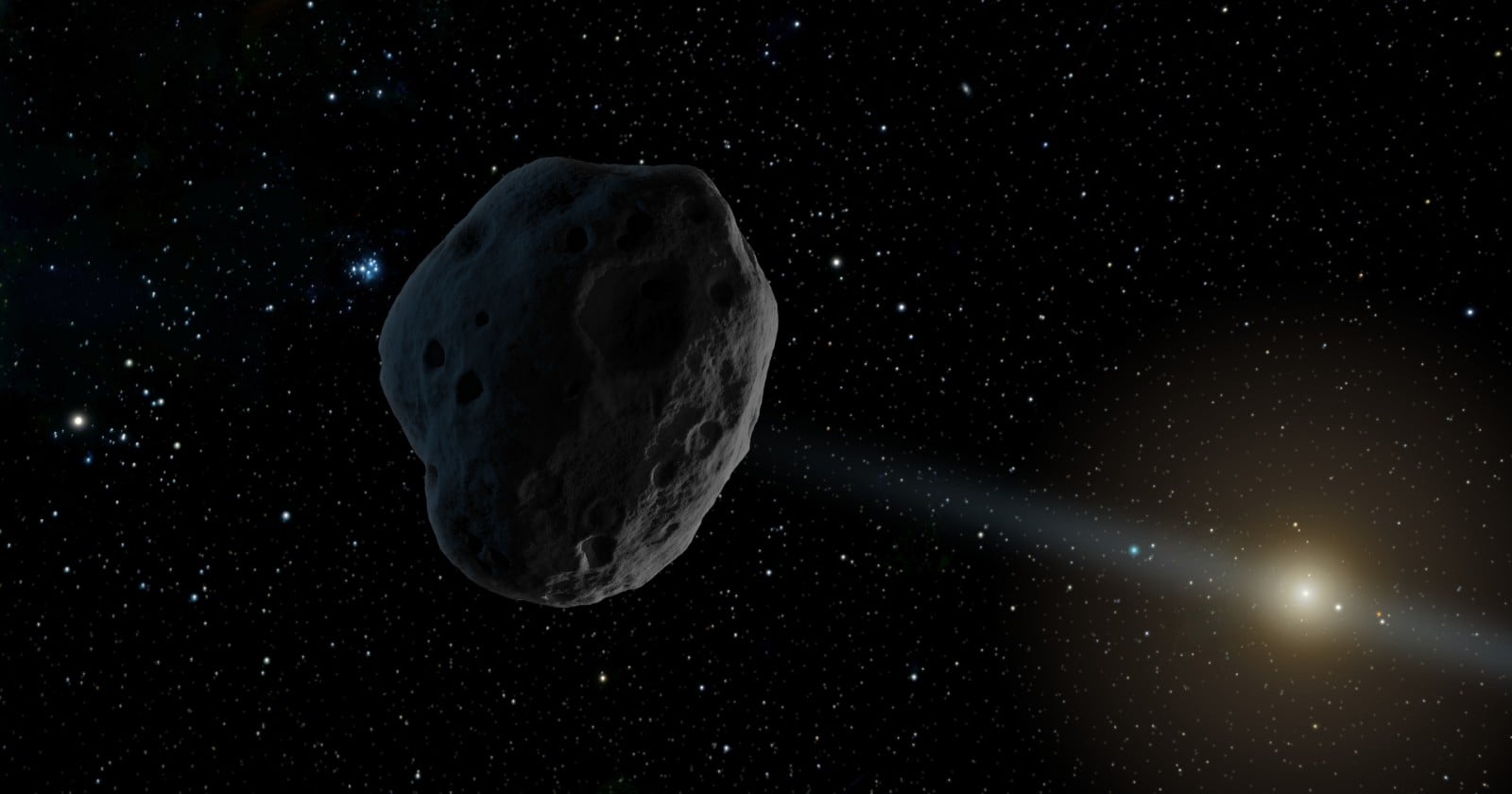
A near-Earth object long classified as an asteroid has been reidentified as a comet following a study published in the journal Nature Astronomy. The object, 1998 SH2, had been tracked since its discovery in 1998, but failed to appear at its predicted location when it passed within 0.02 astronomical units—approximately 3 million kilometers—of Earth in late August 2025.
According to Spacedaily, the discrepancy was discovered when NASA’s Goldstone complex antenna swept the expected position on August 26, 2025, and received no radar echo. After the orbit was corrected, the radar system successfully re-acquired the object on September 2.
Identifying the Cause of Orbital Deviation
A team led by navigation engineer Davide Farnocchia of NASA’s Center for Near-Earth Object Studies at the Jet Propulsion Laboratory analyzed data from 1998 to 2025 to determine why the object deviated from its expected path. They measured a small transverse acceleration of approximately 1.4 hundred-billionths of a meter per second squared.
While sunlight can exert a force on rotating bodies known as the Yarkovsky effect, researchers determined this force was insufficient to explain the motion of 1998 SH2. Instead, the team concluded that ice warming beneath the object’s surface was venting gas into space. This weak cometary outgassing
acted like a thruster, pushing the object off the trajectory that gravity alone would have dictated.
After we measured the nongravitational perturbations affecting the motion of 1998 SH2 and recognized they weren’t compatible with the object being an asteroid, we suspected the object could be an active comet, Farnocchia
Confirming Cometary Activity
Initial observations by the Asteroid Terrestrial-impact Last Alert System between early September and early October 2025 showed 1998 SH2 as an ordinary dot, indistinguishable from an asteroid. However, more powerful observatories provided evidence of its true nature. On September 17, the 3.6-meter Canada-France-Hawaii Telescope on Maunakea recorded a low-surface-brightness tail extending about 20 arcseconds westward.
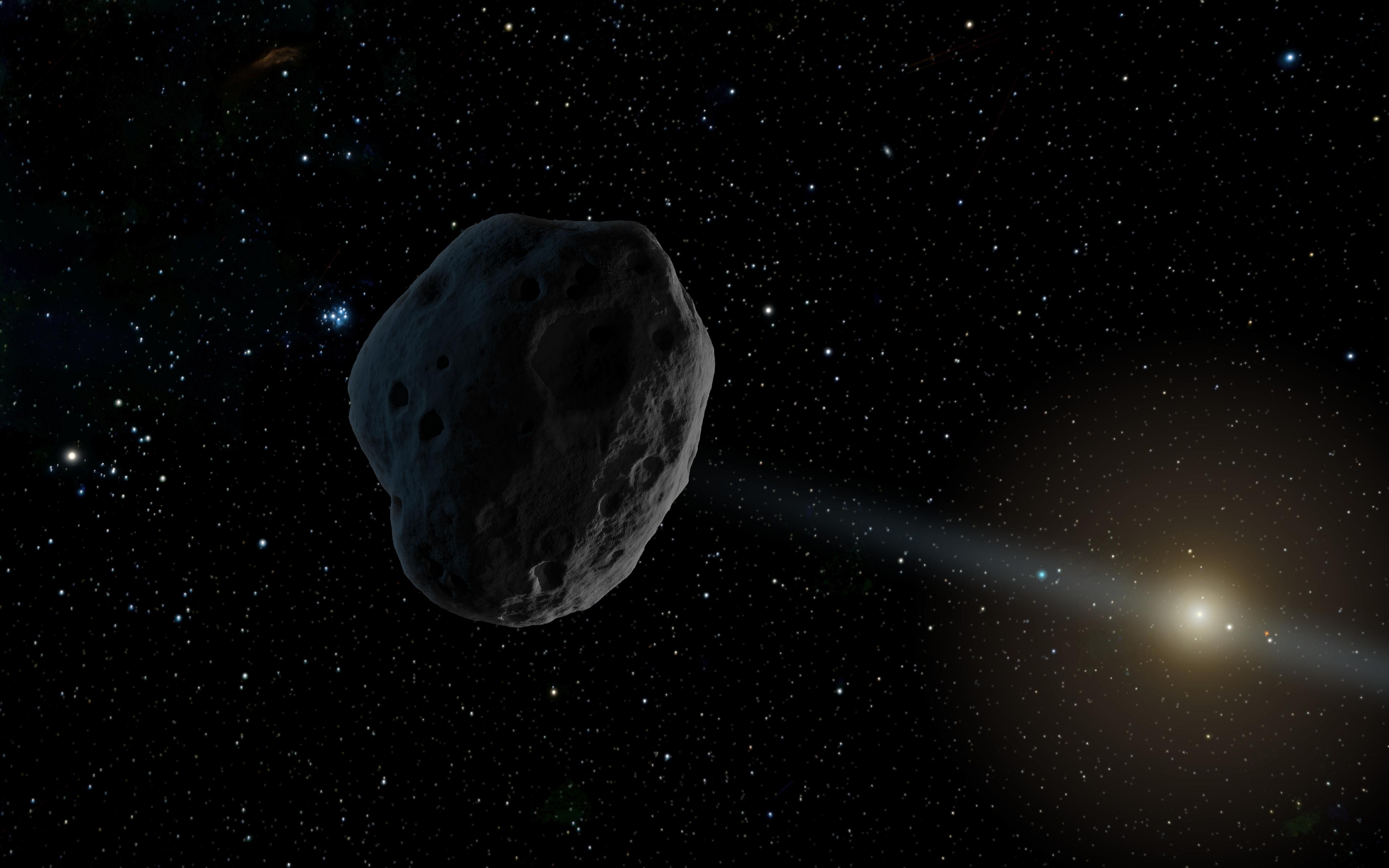
Olivier Hainaut, an astronomer with the European Southern Observatory and a coauthor of the study, confirmed that images from these observatories revealed a weak but clear tail. The Minor Planet Center has since assigned the object a second identity: P/1998 SH2. At an estimated 380 meters across, it is the smallest comet ever observed by radar. Its surface reflects radio waves weakly, consistent with comet nuclei rather than typical asteroids, and infrared measurements indicate a dark surface that reflects only about 6 percent of incoming sunlight.
Implications for Planetary Defense
The reclassification of 1998 SH2 provides insight into “dark comets,” a class of objects that exhibit significant orbital perturbations but often lack visible features like a coma or tail. Researchers suggest that other objects currently classified as asteroids may also be dark comets that have not yet been observed with sufficiently powerful equipment.
While the unexpected orbital shift of 1998 SH2 highlights the challenges in tracking near-Earth objects, officials have confirmed there is no indication that the object poses an impact threat to Earth in the foreseeable future. The study notes that because outgassing causes more significant perturbations in motion than those experienced by asteroids, identifying these hidden comets is vital for refining long-term impact forecasts and designing future deflection missions.
Keep reading