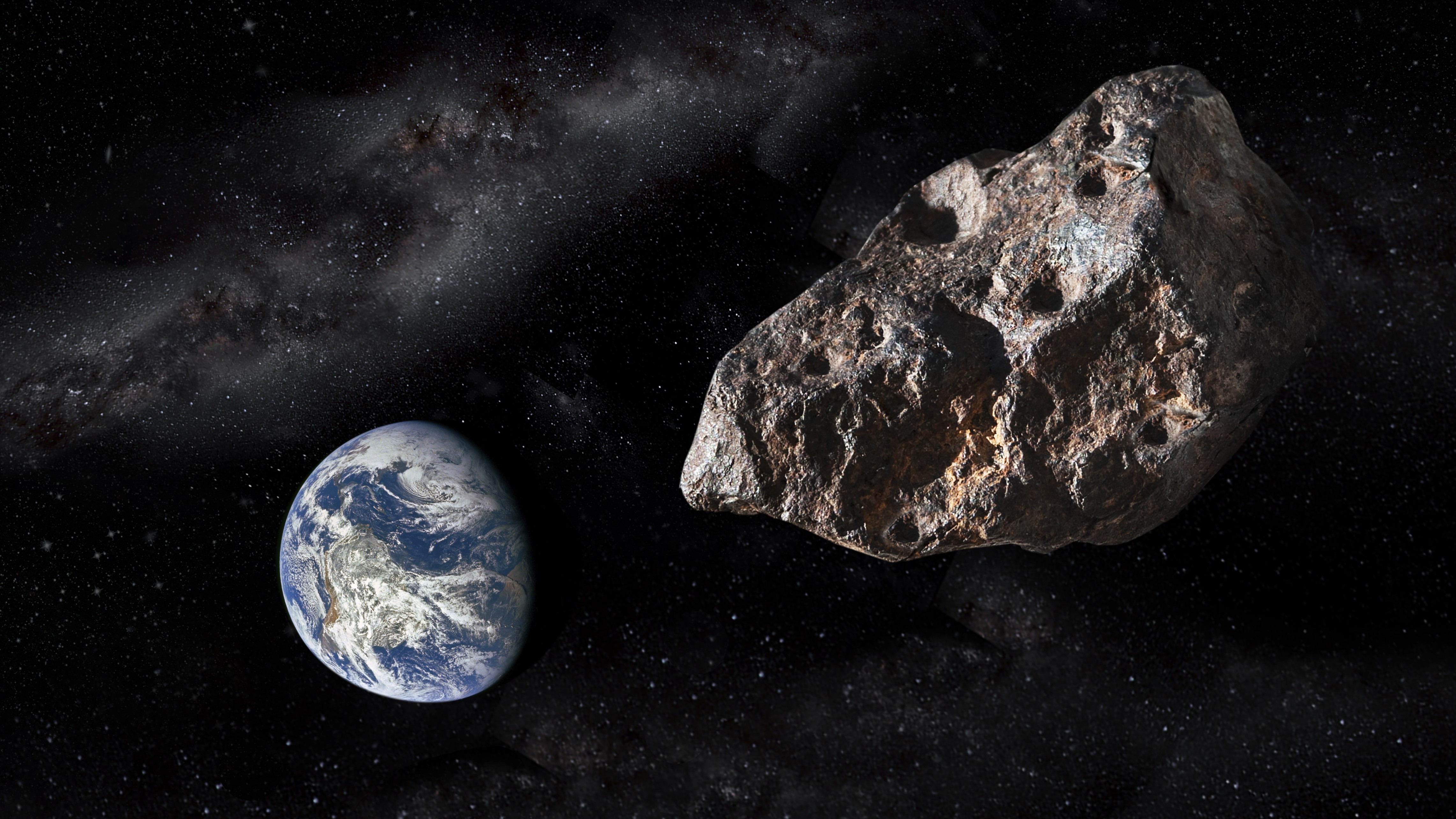
Potential Asteroid Threat: How Scientists Are Preparing for 2024 YR4
A newly discovered asteroid, 2024 YR4, presents a small but notable potential threat to Earth. While a direct impact is unlikely, scientists are already exploring methods to deflect or disrupt the space rock, should it become necessary. This proactive approach highlights the growing field of planetary defense and the dedication to safeguarding our planet.
Understanding the Risk
Currently, there’s a 96% probability that 2024 YR4 will safely pass by the Moon without incident. Though, the remaining 4% chance warrants serious consideration. The asteroid is estimated to be roughly 69 feet (21 meters) across,and its close approach in 2032 will offer a crucial chance to refine our understanding of its trajectory and composition.
You might be wondering why even a small chance requires such attention. Even a relatively small asteroid can cause significant regional damage. Thus, preparation is key.
Lessons from DART: A Proof of Concept
Scientists do have valuable experience to draw upon.NASA’s Double Asteroid Redirection Test (DART) mission successfully demonstrated the feasibility of altering an asteroid’s path.
* In 2022,DART intentionally collided with Dimorphos,a moonlet orbiting the asteroid didymos.
* This impact slightly changed Dimorphos’s orbit, proving the kinetic impactor technique works.
However, applying this method to 2024 YR4 presents challenges. Researchers concluded that deflecting this particular asteroid would be “impractical” due to uncertainties surrounding its mass and the limited time available for observation.
Exploring Alternative Strategies: Breaking It Up
given the limitations of deflection, scientists are investigating alternative strategies, primarily focused on disrupting the asteroid itself. Here are the main options being considered:
- Kinetic Disruption: A spacecraft, similar to DART, could be sent to break the asteroid into smaller pieces rather than altering its course. This is an untested concept,but NASA has a window of opportunity between April 2030 and April 2032 to develop and launch such a mission.
- Nuclear Option: As a last resort,a nuclear detonation - either on or near the asteroid – could be employed. While also untested, this method is theoretically possible. The launch window for a nuclear mission is slightly tighter,falling between late 2029 and late 2031.
Its important to note that the nuclear option is viewed as a contingency plan, reserved for scenarios where other methods are deemed insufficient.
Why This Matters: A Call for Further Research
This situation isn’t just about 2024 YR4. It’s a valuable opportunity to advance our capabilities in planetary defense. Researchers are actively calling for:
* Spacecraft Design & Build Time Estimates: Collaboration is needed to determine realistic timelines for constructing spacecraft capable of carrying out these missions.
* Innovative Designs: Developing a wider range of spacecraft designs will ensure we’re prepared for various asteroid threats.
Ultimately, proactive research and advancement are crucial for protecting Earth from potential asteroid impacts. You can rest assured that the scientific community is taking this threat seriously and working diligently to ensure our planet’s safety.
Sources:
* https://www.livescience.com/tag/nasa
Keep reading