
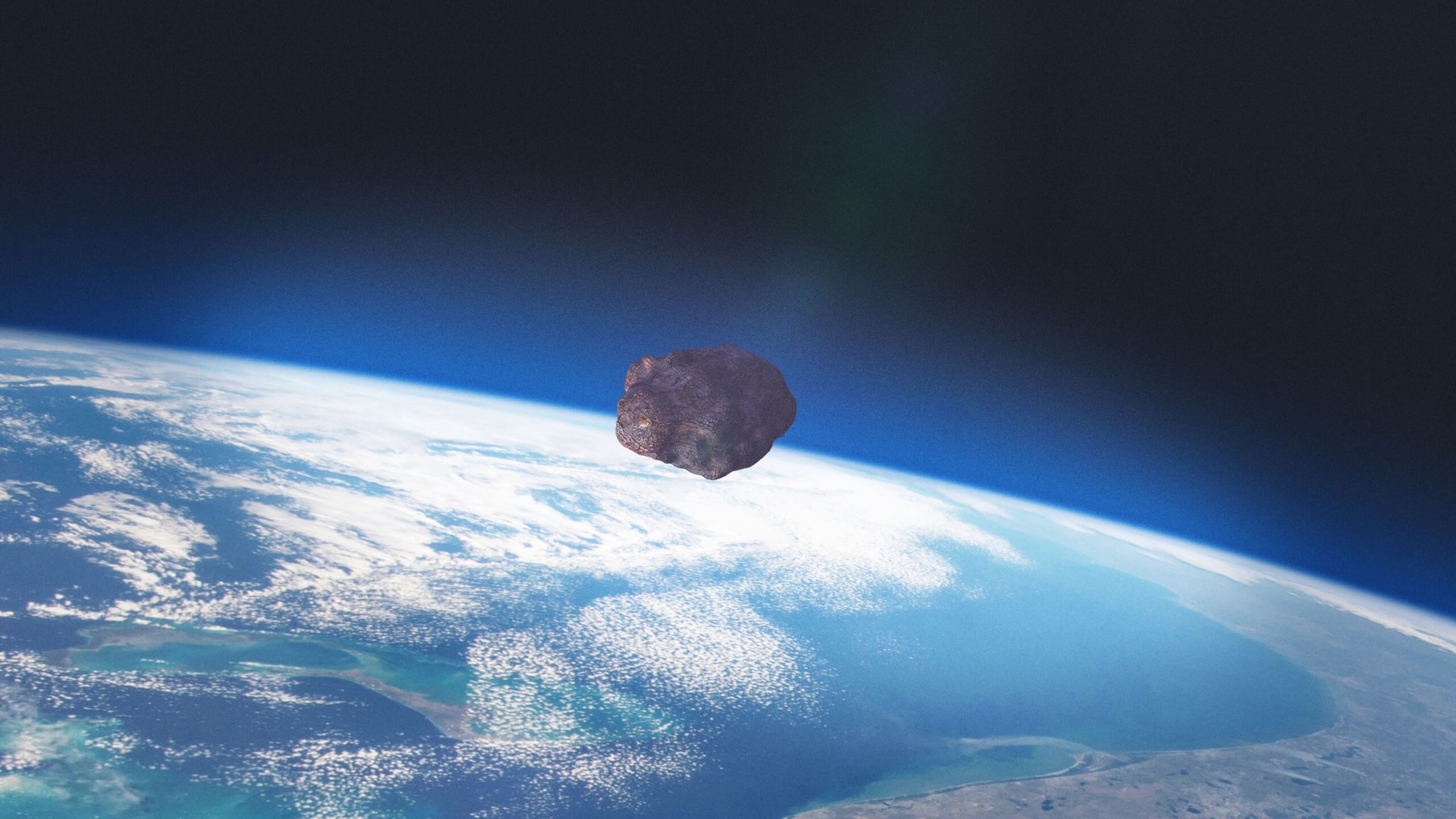
Space enthusiasts and astronomers are preparing for a rare celestial event as the asteroid 99942 Apophis is set to make an extraordinarily close flyby of Earth on April 13, 2029. This near-Earth asteroid, which has been the subject of intense scientific scrutiny since its discovery, will pass so close to our planet that it will be visible to the naked eye for observers in certain regions, marking a once-in-a-lifetime stargazing spectacle.
The asteroid will reach its closest approach at a distance of approximately 20,000 miles (32,000 kilometers) from Earth’s surface. To put this into perspective, this distance is closer than many satellites in geosynchronous orbit, which typically maintain an altitude of about 22,236 miles (36,000 kilometers) NASA Science. The event is expected to be particularly visible over Europe and Africa.
Whereas the asteroid is classified as a potentially hazardous object due to its size and orbit, NASA has confirmed that there is no risk of Apophis impacting Earth for at least the next 100 years NASA Science. This certainty comes after years of close tracking by astronomers to refine the asteroid’s trajectory.
The History and Discovery of 99942 Apophis
Apophis was first discovered on June 19, 2004, by astronomers Roy Tucker, David Tholen, and Fabrizio Bernardi at the Kitt Peak National Observatory in Tucson, Arizona NASA Science. Upon its initial discovery, the asteroid caused a brief period of global concern. In December 2004, initial observations suggested a 2.7% probability that the asteroid would either hit or pass Earth on April 13, 2029 Wikipedia.

Over the following two decades, continuous monitoring and improved data collection allowed scientists to rule out an impact. The asteroid is an “Aten” category near-Earth object, characterized by an orbit that brings it inside Earth’s orbit around the Sun Wikipedia. Its physical dimensions are approximately 450 meters (1,480 feet) by 170 meters (560 feet) Wikipedia.
Scientific Exploration and the OSIRIS-APEX Mission
Since the 2029 flyby provides such an unprecedented opportunity to study a potentially hazardous asteroid up close, NASA has redirected a spacecraft to intercept it. The OSIRIS-APEX mission is tasked with studying Apophis during its closest approach to Earth. One of the most intriguing aspects of this mission is the potential use of thrusters to stir up rocks and dust on the asteroid’s surface, which would allow scientists to examine the material just beneath the surface NASA Science.
In addition to the spacecraft, Earth-based telescopes will be closely observing the asteroid. Previous data collection has already provided significant insights; for instance, in March 2021, radio antennas at the Deep Space Network’s Goldstone complex in California and the Green Bank Telescope in West Virginia recorded images of Apophis when it was 10.6 million miles (17 million kilometers) away from Earth NASA Science.
Physical and Orbital Characteristics
The asteroid’s composition and behavior are of high interest to the scientific community. According to available data, Apophis has an assumed mass of 6.1 × 10¹⁰ kg and a mean density of approximately 2.6 to 3.2 g/cm³ Wikipedia. It is also known to be “tumbling,” with a complex rotation period involving a precession period of 27.38±0.07 hours Wikipedia.
| Characteristic | Detail |
|---|---|
| Dimensions | 450m x 170m |
| Closest Approach Date | April 13, 2029 |
| Minimum Distance from Earth | ~20,000 miles (32,000 km) |
| Discovery Date | June 19, 2004 |
| Classification | Potentially Hazardous Asteroid (Aten) |
What to Expect During the 2029 Flyby
For the general public, the event will be a rare “naked-eye” asteroid sighting. On the night of April 13, 2029, the asteroid will appear as a moving point of light in the sky. The most optimal viewing conditions are expected to be in the Sahara Desert and other parts of Africa and Europe, where the asteroid will blaze across the sky Space.com.
This event is significant not only for the visual spectacle but for the data it provides. The proximity allows scientists to observe how Earth’s gravity affects the asteroid’s orbit and surface, providing critical data for planetary defense strategies. By analyzing the “tidal” effects of Earth’s gravity on the asteroid, researchers can better understand the internal structure of such objects.
Frequently Asked Questions
- Will Apophis hit Earth in 2029? No. NASA is confident that there is no risk of impact for at least 100 years NASA Science.
- How close will it get? It will come within approximately 20,000 miles (32,000 kilometers) of the planet’s surface NASA Science.
- Who discovered it? It was discovered in 2004 by Roy Tucker, David Tholen, and Fabrizio Bernardi NASA Science.
- Can I notice it without a telescope? Yes, it is expected to be a naked-eye event for observers in parts of Europe and Africa Space.com.
As we approach the 2029 date, the scientific community will continue to refine the trajectory and prepare the OSIRIS-APEX spacecraft for its encounter. The next major milestone will be the continued tracking and eventual arrival of the spacecraft to study the asteroid during its closest approach. We invite you to share your thoughts on this upcoming celestial event in the comments below.