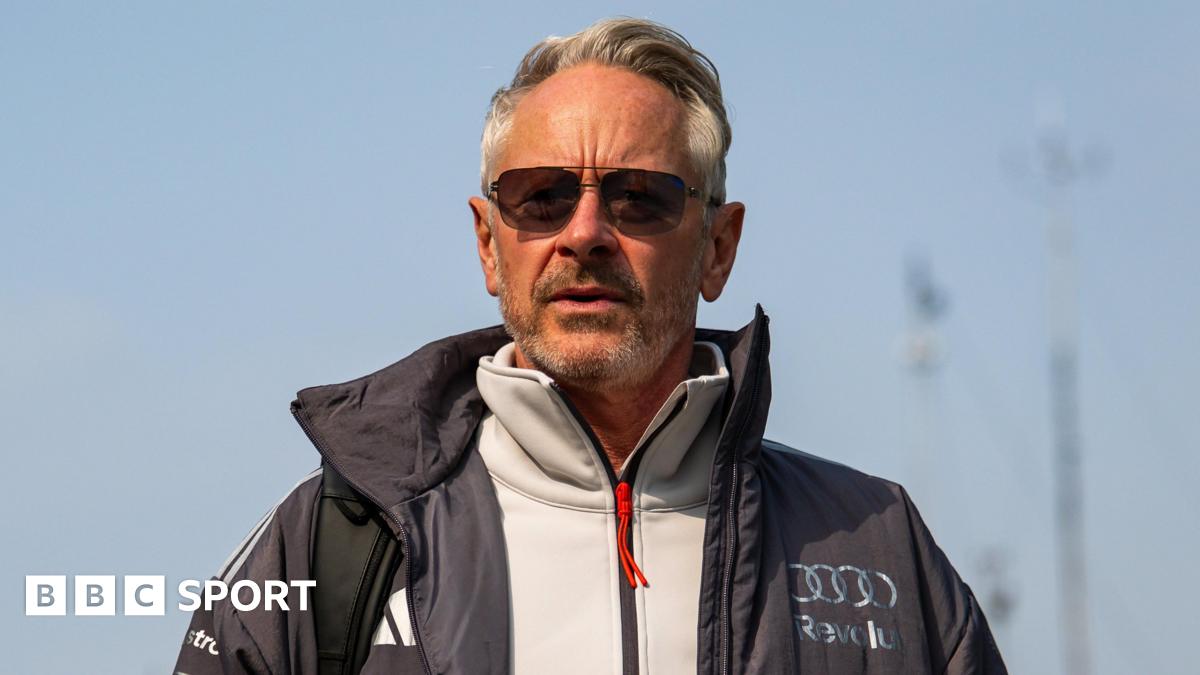
The Formula 1 landscape is bracing for another shift in leadership as Aston Martin targets Jonathan Wheatley, currently at Audi, to take on the role of team principal. This move comes as Adrian Newey steps back from full team leadership, aiming to refocus his efforts on technical matters, a decision that underscores the challenges facing the ambitious Silverstone-based outfit. The news, confirmed by multiple sources, signals a period of restructuring as Aston Martin seeks to unlock its potential and compete at the highest level of the sport.
Aston Martin’s ambitions have been substantial, fueled by significant investment from owner Lawrence Stroll. The team aimed to grow title contenders under the current regulations and Newey’s arrival in March 2025 was seen as a pivotal moment in achieving that goal. However, the team currently finds itself in a difficult position, struggling to deliver on expectations. The team is currently last in the world championship standings, a stark contrast to the aspirations that accompanied Newey’s appointment. The situation is complicated by a challenging partnership with Honda, with engine reliability and performance proving to be significant hurdles.
Newey’s Role Evolves Amidst Performance Concerns
Adrian Newey, widely regarded as the most successful car designer in Formula 1 history, initially took on the role of managing technical partner and shareholder at Aston Martin. He subsequently assumed the full team boss role this season following the departure of Andy Cowell. However, sources indicate that Newey’s position as team principal was always intended to be an interim arrangement. Now, the team is looking to Wheatley to provide stable leadership although Newey concentrates on the technical aspects of the car’s development. According to ESPN, an Aston Martin spokesperson stated, “The team will not be engaging in media speculation about its senior leadership team. Adrian Newey continues to lead the team as Team Principal and Managing Technical Partner.”
The shift in responsibilities comes at a critical juncture for Aston Martin. The team has faced difficulties integrating the new Honda power unit, experiencing significant vibrations that have impacted both performance and driver comfort. Fernando Alonso was forced to withdraw from the Chinese Grand Prix due to these vibrations, stating, “I could not probably finish the race anyway. Vibrations level were very high today. At one point, from lap 20 to 35, I was struggling a little bit to feel my hands and my feet. We were one lap behind, we were last. It was probably no point to keep on going.” This issue highlights the challenges the team faces in maximizing the potential of its new engine partnership.
Wheatley’s Potential Arrival and Audi’s Restructuring
Jonathan Wheatley’s potential move to Aston Martin would mark a significant change for both teams. He currently serves as the team boss at Audi, a role he assumed after a long and successful tenure at Red Bull Racing. Wheatley spent 20 years at Red Bull, working alongside Newey during periods of dominance in Formula 1. His experience and understanding of Newey’s working methods could prove invaluable as Aston Martin seeks to improve its performance. ESPN reports that no agreement has been reached yet, but Wheatley is the likely hire.
However, Wheatley’s potential departure represents further instability within the Audi F1 project. This would be the third management restructure at Audi in less than two years. Previously, Mattia Binotto’s title was changed to head of Audi F1 project from chief operating and technical officer, and CEO Adam Baker left the company, as noted in a BBC Sport report. This ongoing restructuring raises questions about the long-term stability and direction of Audi’s entry into Formula 1.
The Honda Engine Challenges and Impact on Performance
The core of Aston Martin’s current struggles lies with the Honda engine. The power unit has been plagued by reliability issues and a lack of power, particularly in its electrical recovery systems. The vibrations experienced by drivers Alonso and Lance Stroll have not only impacted their comfort but also threatened the integrity of the car’s components. While a temporary workaround was found to isolate the batteries from the vibrations, the issue persists, and the underlying cause remains elusive. Honda has acknowledged the problem but has yet to identify a definitive solution.
The engine’s shortcomings have significantly hampered Aston Martin’s ability to compete. Despite Alonso’s impressive overtaking maneuvers in the opening laps of races, he has been unable to maintain position due to the car’s lack of power and energy recovery. This highlights the critical importance of engine performance in modern Formula 1, where efficient energy management is crucial for both lap time and race strategy. The team’s struggles underscore the complexities of integrating a new power unit and the challenges of achieving optimal performance.
Beyond Wheatley: Other Candidates Considered
While Jonathan Wheatley appears to be the frontrunner for the team principal role, Aston Martin reportedly considered other candidates. Sources have indicated that Max Verstappen’s long-time race engineer, Gianpiero Lambiase, and former McLaren boss Andreas Seidl were also sounded out for the position. This demonstrates the team’s commitment to finding the best possible leadership to guide its future success. The fact that multiple experienced figures were considered suggests that Aston Martin is taking a thorough approach to filling this crucial role.
The decision to pursue Wheatley ultimately reflects his established relationship with Newey and his proven track record in Formula 1. His experience at Red Bull, a team renowned for its technical excellence and competitive success, makes him a particularly attractive candidate. The hope is that Wheatley can provide the operational leadership necessary to translate Newey’s technical vision into on-track performance.
Newey’s Confidence in Chassis Development
Despite the engine challenges, Adrian Newey remains confident in the potential of the Aston Martin chassis. He believes that the car can be made competitive over the course of the season, even with the current power unit limitations. However, the team’s development has been hampered by issues with its new wind tunnel, which has delayed progress. Newey’s optimism suggests that he sees a clear path to improvement, but the team will need to overcome significant hurdles to realize its potential.
The wind tunnel issues, combined with the engine problems, have created a challenging environment for Aston Martin. The team is facing a race against time to develop the car and address the underlying issues before the championship slips further out of reach. The arrival of a new team principal, coupled with Newey’s continued technical leadership, will be crucial in navigating these challenges and charting a course for future success.
Key Takeaways:
- Adrian Newey is stepping back from day-to-day team leadership at Aston Martin to focus on technical matters.
- Jonathan Wheatley, currently at Audi, is the leading candidate to become Aston Martin’s new team principal.
- The team is facing significant challenges with its Honda engine, including reliability issues and a lack of power.
- Audi is experiencing further management restructuring, adding to the uncertainty surrounding its F1 project.
- Newey remains confident in the potential of the Aston Martin chassis, despite delays caused by wind tunnel issues.
The next key development will be the official confirmation of Jonathan Wheatley’s appointment as team principal, which is expected in the coming weeks. Aston Martin fans and Formula 1 enthusiasts will be watching closely to see how this leadership change impacts the team’s performance and its pursuit of championship success. Share your thoughts on this developing story in the comments below, and be sure to share this article with your fellow F1 fans.
Worth a look
- 2026 Wimbledon Semifinal: Alexander Zverev vs. Arthur Fery Picks, Odds, Predictions
- Games to Watch This Weekend: Friday Through Sunday Match Schedule
- Doc Martin Star Natalia Dontcheva Dies at 56 After Long Illness (archynewsy.com)
- Phil Foden signs new Man City deal and pledges fresh start under Enzo Maresca (time.news)