
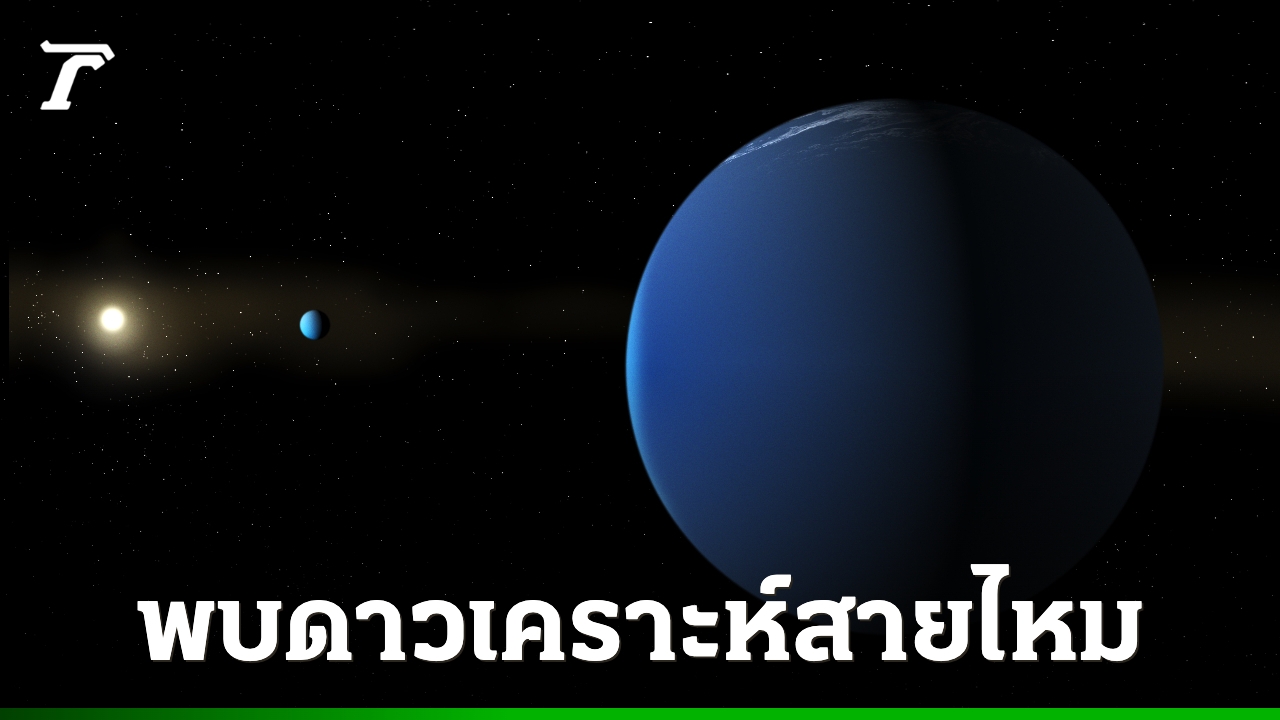
Astronomers have identified a rare “cotton candy” exoplanet, officially designated WASP-193b, which possesses an exceptionally low density that challenges current models of planetary formation. Located approximately 1,200 light-years from Earth, this gas giant is roughly 50% larger than Jupiter but holds only about 10% of its mass, resulting in a density comparable to that of sugar candy or cotton candy, according to findings published by the National Aeronautics and Space Administration (NASA).
The discovery was made by an international team of researchers using the Wide Angle Search for Planets (WASP) survey. The planet orbits an Earth-like star, WASP-193, every 6.25 days. Because the planet is so light and fluffy, its atmosphere is significantly more extended than that of most known gas giants, providing a unique laboratory for scientists to study how such extreme planetary structures can exist in the universe.
Understanding the Density of WASP-193b
The defining characteristic of WASP-193b is its incredibly low density, calculated at approximately 0.059 grams per cubic centimeter. For comparison, Earth has a density of about 5.51 grams per cubic centimeter, while Jupiter’s density is roughly 1.33 grams per cubic centimeter. This makes WASP-193b one of the least dense exoplanets ever recorded, a phenomenon that has surprised the astronomical community, as reported in the Monthly Notices of the Royal Astronomical Society.
Planetary formation theories generally suggest that gas giants should compress over time due to their own gravity. However, the extreme “puffiness” of WASP-193b suggests that its interior may be heated by mechanisms that scientists do not yet fully understand. While many “hot Jupiters” exhibit inflated atmospheres due to proximity to their host stars, the scale of inflation observed in WASP-193b remains an outlier that requires further investigation through advanced spectroscopic analysis.
How Astronomers Detect “Cotton Candy” Planets
Detecting such a low-density planet requires precise measurement of both its radius and its mass. Researchers typically employ the transit method, which observes the slight dip in a star’s brightness as a planet passes in front of it. By measuring the duration and depth of this transit, scientists can determine the planet’s radius. The mass is then calculated by measuring the “radial velocity” or the “wobble” of the host star caused by the planet’s gravitational pull, according to technical documentation provided by the NASA Exoplanet Archive.

The challenge with WASP-193b was its extremely low mass, which created a very subtle gravitational signal. The research team spent years collecting data to confirm that the signal was indeed a planet and not a stellar artifact or a background binary system. The confirmation of its physical parameters allows researchers to refine models regarding the evolution of gas giants orbiting close to their stars.
Why This Discovery Matters for Planetary Science
The study of low-density worlds like WASP-193b helps scientists answer fundamental questions about the diversity of planetary systems. Most known exoplanets are either rocky worlds like Earth or dense gas giants like Saturn and Jupiter. Finding an object that sits so far outside these categories forces a re-evaluation of the processes that govern atmospheric retention and thermal regulation in young solar systems.
Future observations using the James Webb Space Telescope (JWST) are expected to provide insights into the chemical composition of the planet’s atmosphere. If researchers can identify the presence of specific elements, they may be able to determine whether the planet is losing mass to its star or if it has maintained this inflated state since its formation. Understanding this transition is essential for building a comprehensive map of how planets evolve across the galaxy.
Next Steps in Exoplanetary Research
The international research team continues to monitor WASP-193b to refine its orbital parameters and atmospheric data. Further peer-reviewed studies are anticipated as additional transit observations are scheduled to occur throughout the coming year. These efforts are part of a broader global initiative to categorize the vast array of exoplanets identified by ground-based surveys and space-based observatories.

For those interested in the latest updates on space exploration and exoplanetary discoveries, the NASA Exoplanet Exploration program provides regular briefings and databases for public review. As research progresses, the scientific community expects to determine whether WASP-193b is a one-of-a-kind anomaly or the first of many similar “cotton candy” worlds waiting to be discovered in the deep reaches of space. Please share your thoughts or questions regarding this discovery in the comments section below.