
Myanmar’s military government announced on Thursday, April 30, 2026, that the detained democracy leader and Nobel Peace laureate Aung San Suu Kyi has been moved from prison to house arrest. The move coincides with a blanket reduction in prison sentences across the country, a measure implemented by the military regime to mark a Buddhist holiday.
The 80-year-old former leader, who has been held in detention since the military coup on February 1, 2021, saw her remaining sentence reduced as part of a one-sixth cut applied to all prisoners by President Min Aung Hlaing according to reports from Al Jazeera. While the reduction offers a marginal reprieve, she still faces a significant term of imprisonment.
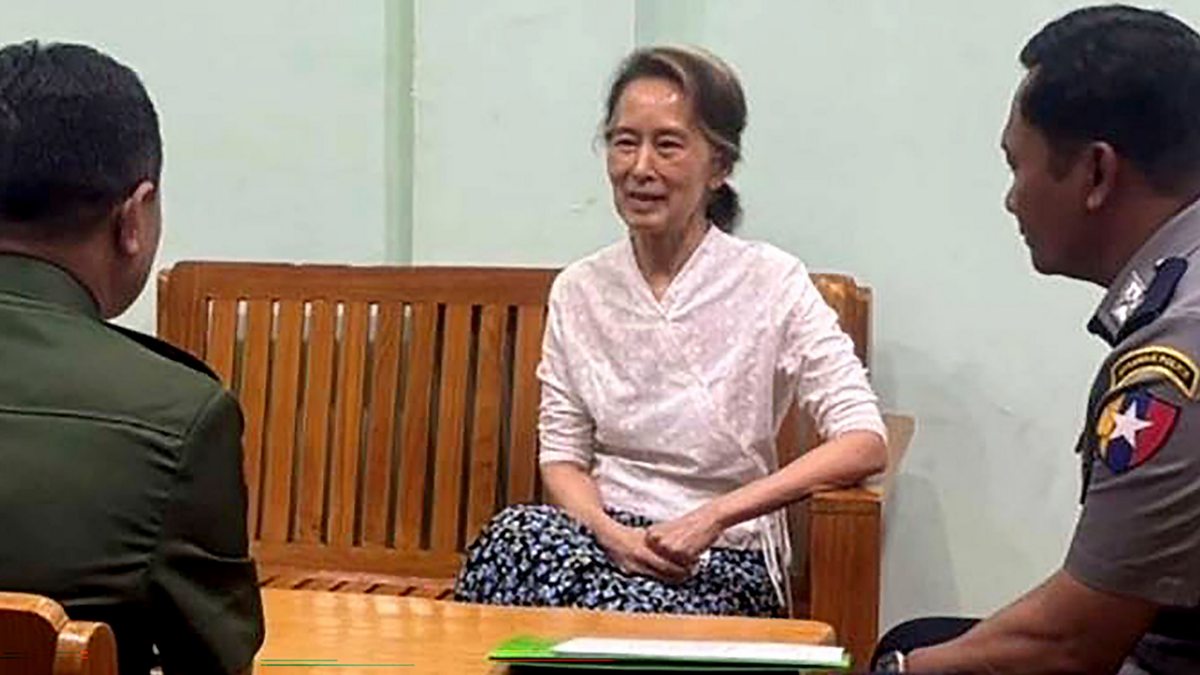
The transition to house arrest follows years of solitary confinement and restricted access to the outside world. State television broadcast the news Thursday night, accompanying the announcement with a photograph of the former president sitting on a wooden bench in a traditional white blouse and skirt, facing two unidentified men as reported by The Washington Post.
Sentence Reduction and Legal Status
The legal landscape for Aung San Suu Kyi remains complex, characterized by a series of politically motivated convictions. Originally sentenced to 33 years in prison, her term has been subject to intermittent reductions. Following the most recent one-sixth blanket reduction, legal representatives indicate she now has just over 18 years left to serve according to Channel News Asia.

Despite the move to house arrest, the military government maintains strict control over her environment. For the past five years, she has been held largely incommunicado, believed to be in a military prison in the capital, Nay Pyi Taw. This isolation has led to growing international concern regarding her health and wellbeing, especially as she enters her ninth decade.
Family Skepticism and Health Concerns
The release of the image by state media has not been met with universal acceptance. Her son has challenged the authenticity of the photograph, suggesting the image is old and does not reflect her current condition. He has stated that he has received no definitive reassurance that his mother is still alive, highlighting the profound lack of transparency surrounding her detention.
Human rights organizations and her legal team have repeatedly warned of her deteriorating health. The lack of independent medical access and the psychological toll of long-term solitary confinement have made her current status a focal point for global human rights monitors.
Timeline of Detention and Legal Actions
| Date | Event | Status |
|---|---|---|
| February 1, 2021 | Military Coup | Removed from power and detained |
| 2021–2025 | Trial and Sentencing | Sentenced to 33 years on multiple charges |
| April 30, 2026 | Sentence Reduction | One-sixth reduction applied to all prisoners |
| April 30, 2026 | Change of Custody | Moved from prison to house arrest |
Geopolitical Implications of the Move
Analysts suggest that the military’s decision to move the Nobel laureate to house arrest may be a strategic attempt to soften its international image or a response to internal pressures. By granting a “mercy” reduction tied to a religious holiday, the junta attempts to project a facade of benevolence while maintaining absolute political control.

The international community, including the United Nations and various Western governments, continues to call for her immediate and unconditional release. The move to house arrest is viewed by many as a tactical shift rather than a genuine step toward democratic restoration in Myanmar.
For those seeking further updates on the humanitarian situation in Myanmar or the legal status of political prisoners, official advisories and reports can be found through the Office of the United Nations High Commissioner for Human Rights (OHCHR).
The next critical checkpoint will be any official update from the military government regarding her access to legal counsel or family visits, which have remained severely restricted.
We invite our readers to share their perspectives on this development in the comments below. Please share this report to keep the global community informed on the status of Myanmar’s democracy leaders.